Surprises in Flora and Fauna | Wild Gardening
Surprises are an essential part of gardening: both positive and negative. Discover unexpected plant growth, deer interactions, and the fascinating life of honeybees in your garden.
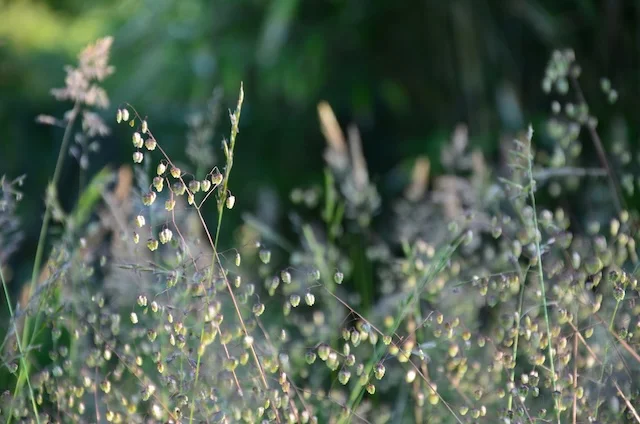
Surprises are an essential part of gardening: both positive and negative. There’s the perennial that thrives magnificently in a location that, contrary to all expert descriptions, seems quite unsuitable. Or the small tree that was supposed to reach a maximum height of three meters but has already exceeded that significantly after just a few years – despite suboptimal soil conditions. Our gardening deer always bring surprises, ensuring they are frequently mentioned in blog posts.
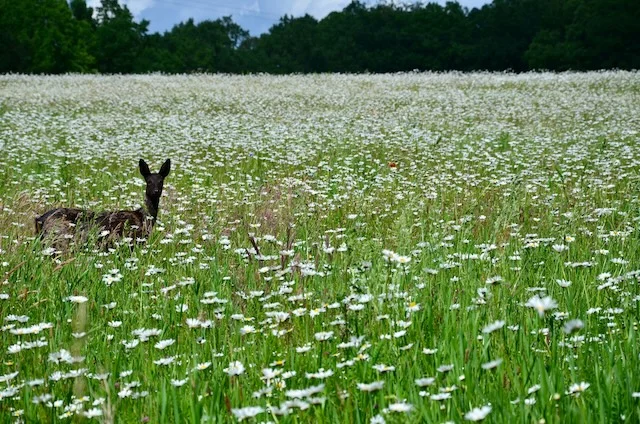
This dark doe has been living with us for some time and gives birth to twin fawns every year. They are still quite small and spend their days hidden somewhere in the garden.
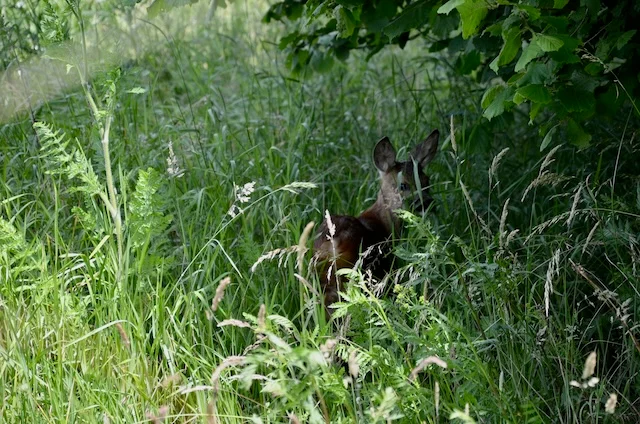
This year’s fawn from the light doe is a bit older. It usually walks with its mother but occasionally ventures out on its own. This is very displeasing to the doe, which soon calls it back with a high-pitched bleat.
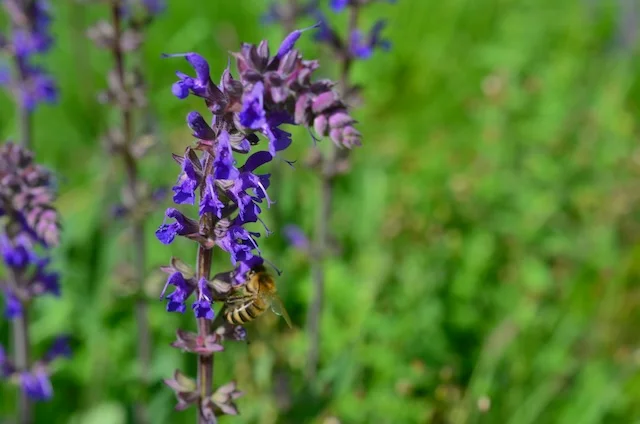
In the May post, I touched on the topic of deer resistant plants: In addition to the perennials and shrubs mentioned there, various species of sage fall into this category, such as Salvia nemorosa ‘Ostfriesland’ shown in the picture. Perhaps the essential oils of the perennials do not appeal to the deer. However, many insects are big fans of sage. Since most species are also very drought-resistant, we have several representatives of this genus in our sunny beds.
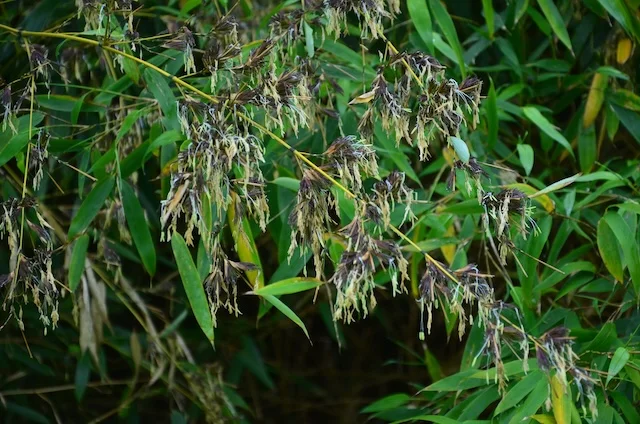
One of the unpleasant surprises this month is the full bloom of Phyllostachys humilis. The fact that the bamboo is not showing any new culm shoots during the current growing season should have raised my suspicions. Although there have been scattered reports from other locations that this species is blooming, it is not as widespread as, for example, the Phyllostachys nigra varieties at this time.
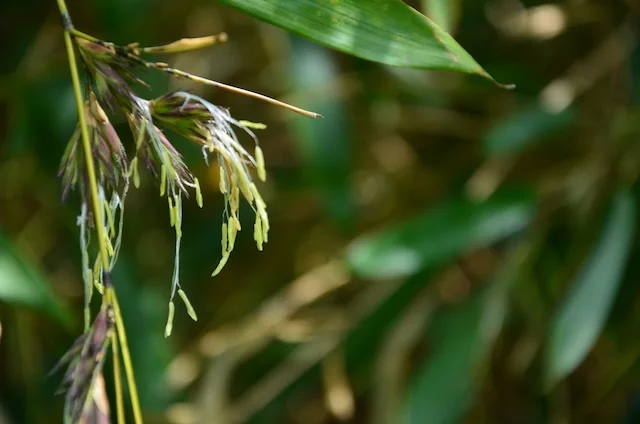
After a full bloom, the mother plant may die, making way for the new generation. While most plants set flowers annually, bamboo only does so approximately every 80 to 100 years. Since Phyllostachys humilis belongs to the leptomorphic species – which spread continuously through their rhizomes – there is a greater chance that the plant will survive compared to clumping (pachymorphic) species. Now we must wait until next year.
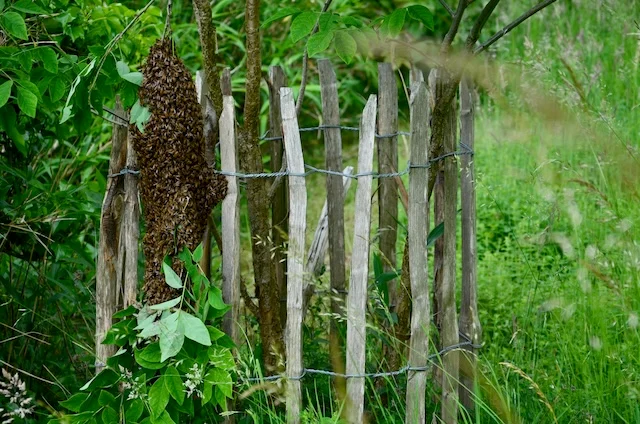
Another surprise in June came from our honeybees. Although “our” is not to be taken literally. A friend who is a beekeeper places several hives in our garden for a few months each year. This year, one colony with its queen decided to swarm. I happened to discover the swarm: it had gathered around a branch of the Asian yellowwood (Maackia amurensis) and a section of the surrounding fence (the reason for the fence, as you might guess, is protection from prancing deer). The bees showed foresight in their choice of location – the flowers of the yellowwood are a top-notch bee forage.
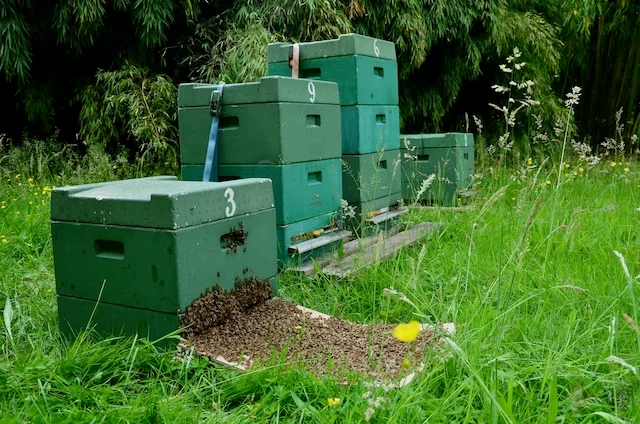
However, they could not stay there. In a bold action, they were shaken into a bucket; bees in such a swarm are surprisingly peaceful. Then it was necessary to find the queen in the commotion and place her in a new hive. Thanks to the pheromones she released, the whole swarm eventually followed – the move was accomplished.