With the Church We Have Encountered!
If you love gardens and are a wine enthusiast, this garden is for you! Discover the rich history and beauty of Bordeaux's gardens and vineyards.

If you love gardens and are a wine enthusiast, this garden is for you!
This world of ethnology and viticulture has enriched many regions across the globe. When we think about wine, various regions come to mind, and one of the first to be mentioned when talking about France is Bordeaux.
We all recognize Merlot and Cabernet Sauvignon, which, along with other varieties and the skill of the inhabitants of this region, have sustained the viticultural and, consequently, economic strength of Bordeaux since ancient times.

Just a few hints from the entrance.

In the area of the winery itself.
Many well-known gardens have been symbols of their owners' ostentation, and even today, some still are... this is nothing new. The garden I bring to the blog today is another example of this. Undoubtedly supported by the wealth generated by the "fermented grape juice" of this Bordeaux winery. Let's add one more component to the equation: it was owned by Pope Clement V himself.
Yes, this property in the town of Pessac was planted in 1252, gifted to Bertrand de Got by his brother upon being appointed Archbishop of Bordeaux. It seems they had means in the Got household... Over time, Bertrand rose to prominence, eventually being elected Pope, taking the name Clement V. The winery then came into the possession of the archdiocese but was still linked to the former owner, Château Pape Clément. During the French Revolution, it passed into state hands, later being sold. Today, it is privately owned, managed by a well-known wine entrepreneur.

Vegetable garden/Rose garden with a more rustic or medieval air, and in the background, the vineyards.


A shadier area where heaths, hydrangeas... a pathway with an oriental touch.
This estate predominantly cultivates grapes to produce red wines on-site (according to some sources, the estate's area ranges from 30 to nearly 100... I do not have verified data). They host events, tastings, offer guided tours, a luxurious hotel/restaurant, and various gardens surrounding the sumptuous building. Money attracts money.
I am not talking specifically about the winery or vintages... I am not the one. I neither drink alcohol nor am I an expert in this complex world of wine. That is up to you if you visit this region.


An example of those style changes, perhaps leaving both environments disconnected.

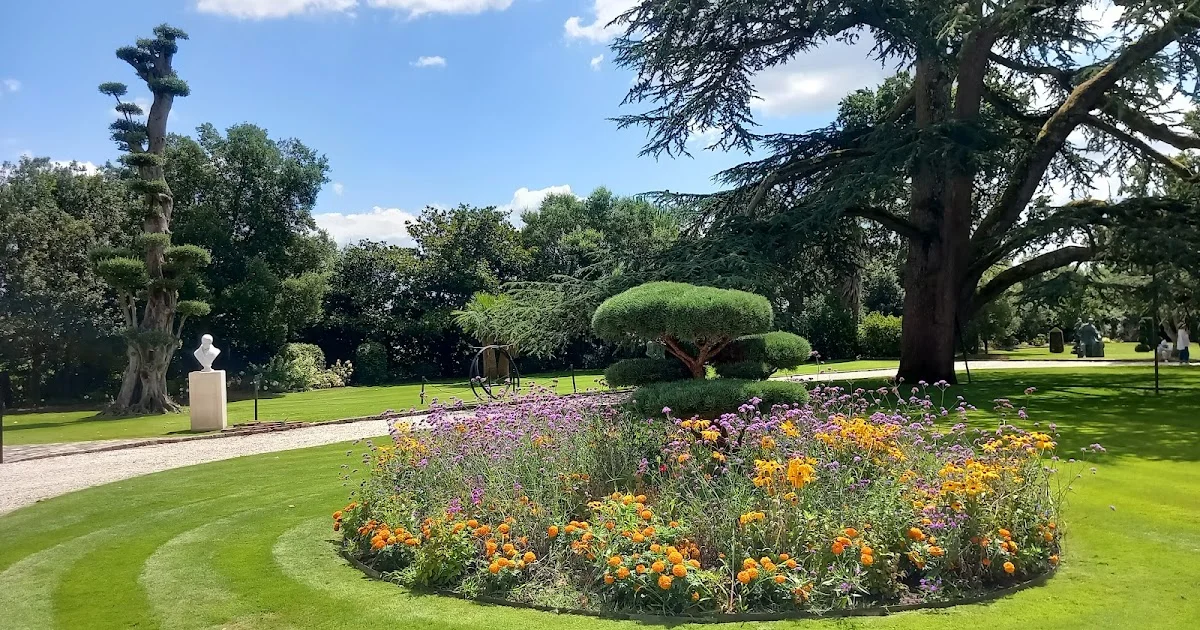
"Ancient" olive trees on the freshly mowed lawn.
In summary, and to avoid prolonging the castle, the winery, warehouses... are largely surrounded by immense vineyards, cultivated with organic farming criteria. You have to pass the parking lot and go through the entire shop to, once in the "back part," enjoy the garden. If you only park your vehicle on the property, you will see nothing more than a glimpse through a wrought-iron door.
It is a large garden, not immense. In the central area, there is a grassy space with large trees like towering cedars and ancient olive trees (according to the information), brought, I believe, mainly from Spain and Italy. A display of economic power.
From this central space, some gravel paths lead us to a more "oriental" path that at first glance seems a bit camouflaged, a vegetable garden with a rose garden, an area of plants from arid zones, or an area in line with the new trends of the "new perennials" or areas with a considerable concentration of topiary.
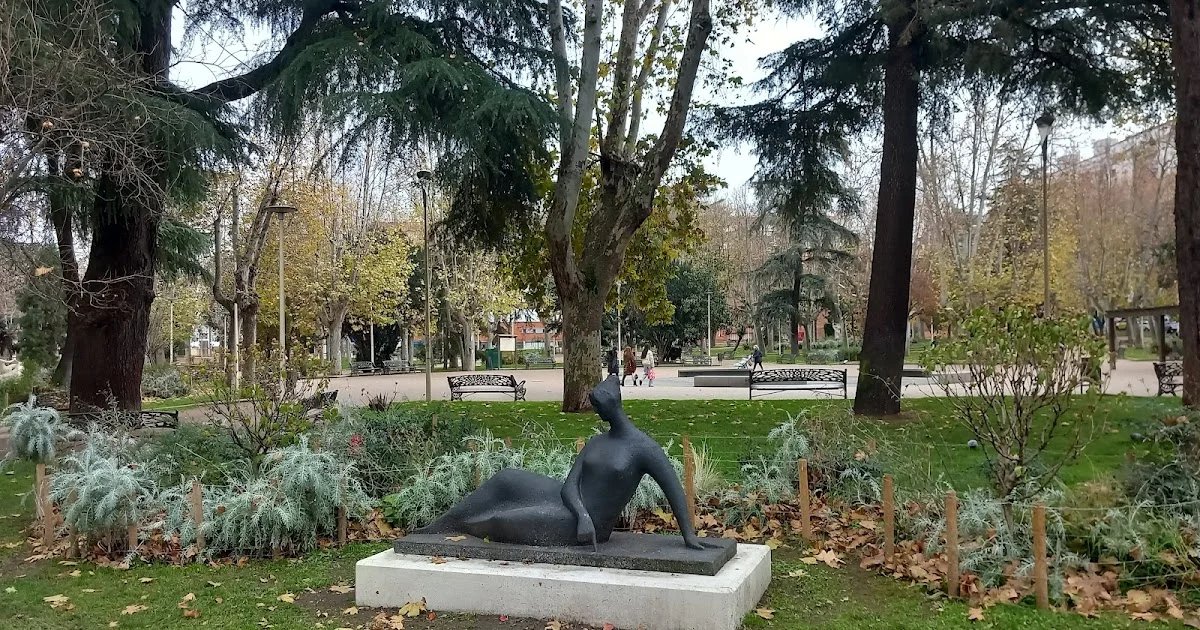
All of this sprinkled with "works of art," and with maintenance that is more than acceptable. I imagine that the constant use of groups, visits, events, etc., takes its toll, although only a small area of the lawn had some "bald spots." During my visit, the gardeners were finishing mowing, as you can see in the images.

The vineyard of the estate completely surrounds the buildings and garden.
While strolling there this summer of 2025, I was overwhelmed by mixed feelings. The garden is pleasant, as I said, well-maintained, with a diversity of environments and species, but on the other hand, it seems that many styles have been included in the same place, partially losing the cohesion of the various environments. Everything appears mixed with art pieces and a period palace in a unique ensemble. Perhaps it is a sought-after effect to create an opulent space. Maybe I expected something different, in a single style, or if it were a garden of gardens, there would be a separation or transition between them. It felt strange to see those enormous olive trees, with twisted trunks on an immaculate, golf-course-like lawn, just a few steps away from a path with hydrangeas and maples, where I saw trees trimmed into oriental shapes, just a few meters from Rudbeckias combined with Verbenas. Or, for example, a car painted in metallic color just a few steps from a greenhouse or a gazebo in a style that could be described as Art Deco in dark blue tones, where one could hear a string quartet playing, enjoying a tasting... Lagerstroemias intertwined forming "vases" in clay pots, olive trees trimmed in an oriental style... And yet, I cannot say that I did not like the place... as I said, I am not quite sure what to think.
I know it is easier to criticize what has been done than to create it from scratch, but... as I said, I am not sure if I expected exactly what I found. What do you think?
On the winery's website, they offer a multitude of leisure options, including a self-guided or guided tour of the "extraordinary gardens."
See you next Tuesday!