
Sweet Potato for the Garden
Today we talk about a plant that many of us associate with gastronomy, but in this case, it will not end up on our plates but in our gardens. Ipomoea is a genus of plants in the Convolvulaceae family that contributes various species to gardening.
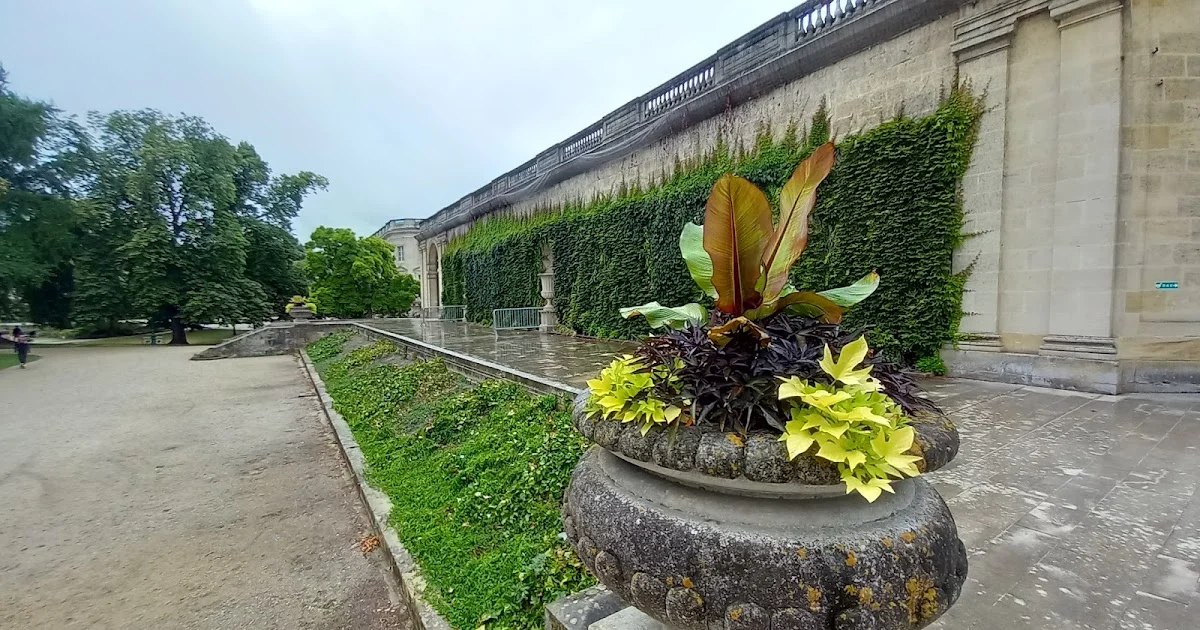

Today we talk about a plant that many of us associate with gastronomy, but... in this case, it will not end up on our plates but in our gardens...
Ipomoea is a genus of plants in the Convolvulaceae family that contributes various species to gardening, and in the case of Ipomoea batatas, also to gastronomy (known as Boniato, Camote, Sweet Potato, or Batata depending on the region).
It is a plant of American origin, known to humans for thousands of years, long before the arrival of Europeans in the New World, and today it is cultivated in many places with tropical or subtropical climates around the world.

The Sweet Potato is a sprawling or climbing plant that can spread over 3 meters in length. It has medium-sized lobed leaves, and in ornamental varieties, we find colors ranging from purples to light green, variegated... making them interesting for our designs. The shape of the leaves can also vary significantly. Generally, we won't see many flowers, but like other species in the same family, they produce bell-shaped flowers in shades of lilac, pink, or white depending on the chosen variety.
This species can behave as a perennial if the climate is mild, becoming deciduous in cooler climates, and surviving thanks to its storage organs. If cultivated in areas with cold winters, it is better to dig up the storage organs (tuberous roots or false tubers). The minimum growth temperature is around 10-12ºC (its optimal range is between 20º-30ºC). It is worth noting that lower temperatures can damage these underground organs.
The planting cycle in this case begins in spring with rising temperatures and ends in autumn, thus considering it an annual crop.

Ipomoea batatas, Sweet Potato

Ipomoea batatas, Sweet Potato with purple leaf variety

Sweet Potato with entire leaf and light green tone
The Sweet Potato thrives well in full sun, in nutrient-rich, moist but well-drained soils (it can even tolerate some degree of drought). We will plant (or if our climate is not harsh) keep some storage organs in the ground, using sprouts from the tuberous roots or by purchasing nursery plants. In some cases, starting the crop in a greenhouse would not be a bad idea to advance the cultivation. It also seems to work well to take cuttings from the stem. Seeds are not usually used for propagation due to their low production, not guaranteeing the characteristics of the variety, and being a somewhat longer process.

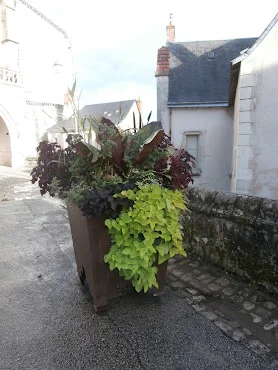
It is worth mentioning that both ornamental and culinary varieties are suitable for consumption, but it is the latter that have a more intense flavor and are specifically selected for human intake.
In gardening, it is used as a ground cover plant, combined with different varieties among themselves, with other more vertical plants, as hanging plants in planters, walls... where its long stems fall or creep along the ground. They fit well into multiple compositions of different garden styles.
They can be sensitive to various pests, but their aesthetic "virtues" more than compensate, and it is widely used in other countries (in Spain, I have seen it less as an ornamental plant or almost not at all).
Did you know about the Sweet Potato as an ornamental plant? See you next week!