Protection of Sunflowers from Diseases
Taking care of sunflower health requires a comprehensive approach: growing resistant hybrids, seed treatment, adhering to crop rotation, destroying plant residues, volunteer plants, and weeds as reservoirs of infection, and protecting the vegetative mass. The main diseases affecting sunflowers include downy mildew, leaf spots, and head rots.
Taking care of sunflower health requires a comprehensive approach: growing resistant hybrids, seed treatment, adhering to crop rotation, destroying plant residues, volunteer plants, and weeds as reservoirs of infection, and protecting the vegetative mass. Based on this, the development of diseases is assessed and predicted, and fungicides are selected. The main diseases affecting sunflowers include downy mildew, leaf spots (septoria, alternaria, phoma, phomopsis), and head rots (sclerotinia, gray and dry rot).
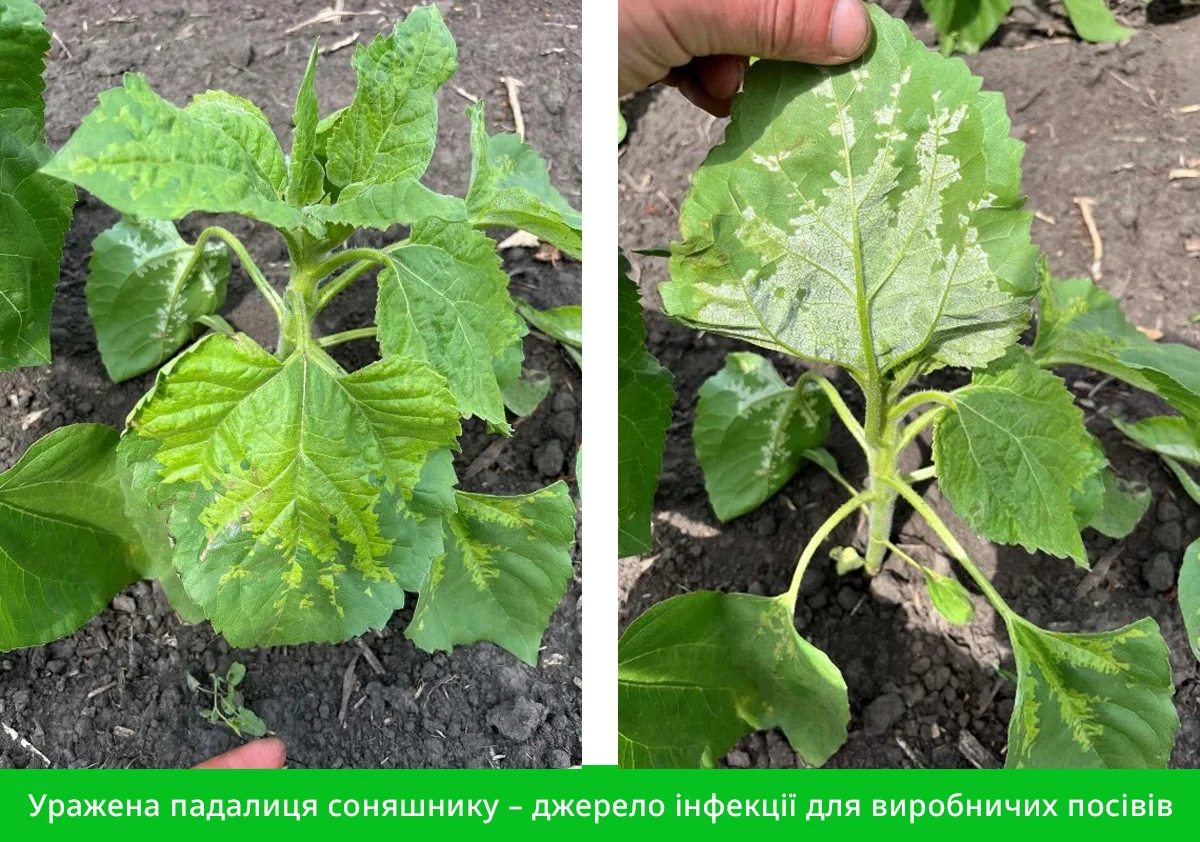
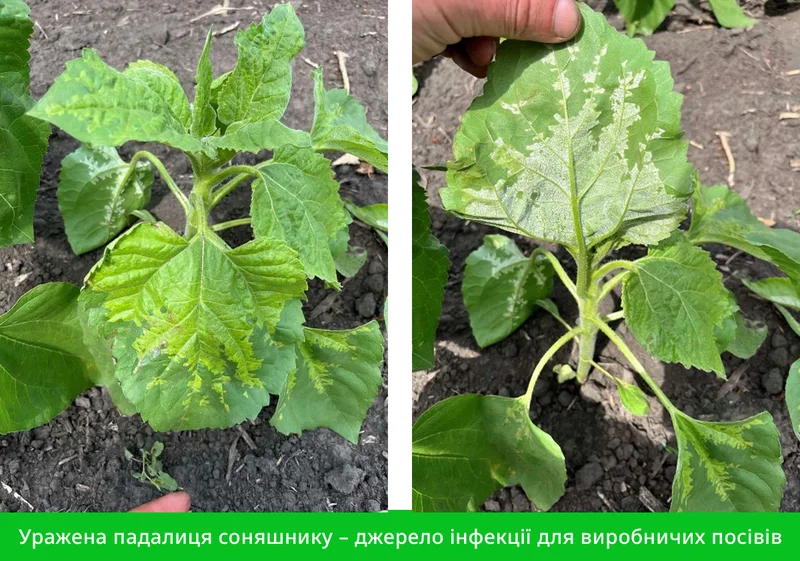
Volunteer sunflowers are not only a weed in subsequent crop plantings but also a significant reservoir of infection, primarily downy mildew. As a result, downy mildew is one of the first diseases to appear in sunflower crops, especially in hybrids with weak resistance to this disease. The spore production from volunteers spreads intensively through the crops until approximately the 8-leaf stage. With a focus on controlling early downy mildew, we recommend using Relevant, SC (cymazine, 225 g/l + thiophanate-methyl, 375 g/l + fermentation product of Streptomyces spp., 5 g/l).
Relevant contains three active substances from different chemical groups. Cymazine is a highly systemic active ingredient against downy mildew fungi. It quickly penetrates the treated plant and blocks the spread of infection. Thiophanate-methyl, due to its moderate lipophilicity and solubility, not only protects the plant from fungal penetration but also exhibits a prolonged therapeutic effect. It has a preventive effect against the pathogens of sclerotinia and most leaf spots. The fermentation product of Streptomyces exhibits pronounced bactericidal properties. This composition helps keep the plant healthy and the leaf surface clean for active photosynthesis and maximum productivity.
In the pathogenic complex of sunflowers, fungal diseases undoubtedly dominate. However, viral and bacterial diseases also require control. While protection against viruses primarily involves controlling their vectors (leafhoppers, thrips, aphids), there are more significant tools for protecting against bacterial diseases – the use of bactericidal agents. Most of these are of natural origin, created from the metabolic products of other microorganisms, particularly actinomycetes.
In humid conditions, infected plants can even exhibit simultaneous development of fungal and bacterial diseases. For example, after the spread of septoria on damaged and dead tissues, bacteria begin to colonize, especially on the lower leaves closer to the soil surface. The soil, along with infected seeds, is the main source of bacterial diseases. The use of typical fungicides against only fungal diseases may enhance the contamination of the plant with bacteria, as they will not experience competition for nutrients from other microorganisms or the effects of their metabolic products. The accumulation of infection on the lower leaves provokes the development of bacterial diseases throughout the plant, spreading them across the field. Infected leaves die prematurely, negatively affecting future yields. Therefore, during the 2–8 leaf stage, we recommend applying the fungicide Relevant to control downy mildew, as well as to prevent leaf spots, sclerotinia, and bacterial diseases. Evidence of the effectiveness of Relevant can be seen in the 190,000 hectares of sunflowers and soybeans that were protected from downy mildew and accompanying infections by this product in 2025. This accounts for 23% of all areas where fungicides against downy mildew were applied.
Leaf Spots. The most common infectious leaf spots on sunflowers are septoria, alternaria, phoma, and phomopsis, which can cause yield losses of 30–40%. In favorable years for infection, even more, especially if the upper canopy leaves are affected by these diseases.
It has been repeatedly proven that neglecting the protection of lower leaves leads to the gradual spread of infection upwards – to the head. This is an extremely dangerous phenomenon, as yield losses will be reflected not only in a smaller number of seeds in the head but also in their underdevelopment (lower weight). The quality of the product deteriorates, and oil content decreases (by 5–12%), with the oil acquiring a bitter taste.
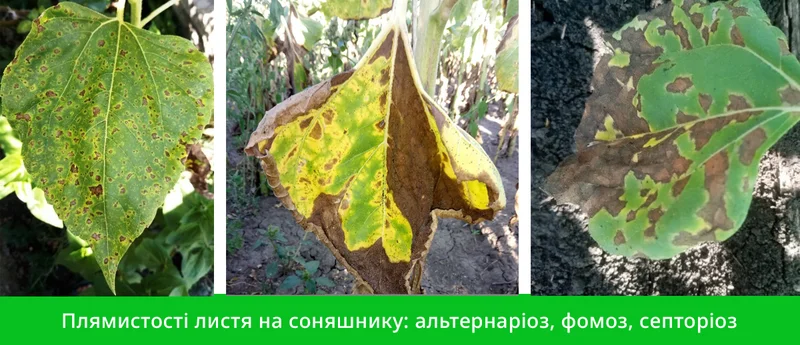
It is known that blocking the germination of fungi on the surface of the plant is crucial for this type of disease, and in the case of infection, preventing their spread in the tissues is essential. In the first case, contact-systemic active substances will have an advantage, and when it comes to treatment, there is currently no equal in effectiveness to triazoles.
To address this complex task, Artis Plus, SC (miclobutanil, 125 g/l + tebuconazole, 125 g/l + thiophanate-methyl, 250 g/l) was created. In the formulation of Artis Plus, scientists combined active substances with different chemical properties (solubility, lipophilicity, etc.), effective against various fungal pathogens. This provides additional advantages for the product:
- Miclobutanil quickly integrates into the sap flow due to its high water solubility and blocks the spread of infection in the tissues, distributing in new growth, protecting even that part of the plant that did not come into contact with the treatment or appeared after the fungicide was applied;
- Tebuconazole moves somewhat slower, providing an extended therapeutic effect in the leaves and stems of sunflowers;
- Thiophanate-methyl creates a reliable protective screen against new infections, slowly penetrating the plant.
Thanks to the synergistic combination of three active substances, an expanded spectrum of therapeutic action has been achieved, providing a longer period of protection for plants against the complex of leaf spots.
Artis Plus has remained the number one fungicide for controlling sunflower leaf spots for several years. For example, last year it protected 395,000 hectares of crops, indicating high trust in the product.
Not resting on its laurels, in 2025, a new fungicide for sunflowers and cereals was presented – Barret, EC (prochloraz, 340 g/l + tebuconazole, 160 g/l + propiconazole, 100 g/l). This new powerful solution in the fight against leaf spots has a key advantage – enhanced therapeutic action against a wide range of infections. The registration rate for Barret for sunflowers is 0.8–1.2 l/ha. Thus, even at an average rate of 1 l/ha, 340 g/ha of prochloraz and 260 g/ha of triazoles will be applied per hectare. This is more than sufficient for reliable disease control at an average level of their spread.
In the first year of application, we have received positive feedback from clients regarding Barret's control of phoma, phomopsis, septoria, and alternaria. Therefore, for the protection of hybrids with low resistance to these diseases, we recommend Barret as the primary fungicide. The therapeutic action of the two triazoles, enhanced by prochloraz, provides protection for up to 3–4 weeks.
Head Protection. The final and decisive stage in controlling diseases in sunflowers is head protection. The head is a fairly massive organ of the plant, sufficiently saturated with moisture. Pollen and petals of the inflorescence provide a good nutrient medium for microorganisms, including pathogens. It is also important to avoid damage: mechanical or caused by pests.
For many farms, sclerotinia is an annual problem due to a significant reservoir of infection in the soil (the viability of the pathogen can persist for 4–6 years). Soybeans, rapeseed, and most vegetables are also affected by sclerotinia. Crop rotation can somewhat improve soil health by sowing cereal grains and corn in such fields. In the absence of immune or highly resistant hybrids, the only hope is fungicides.
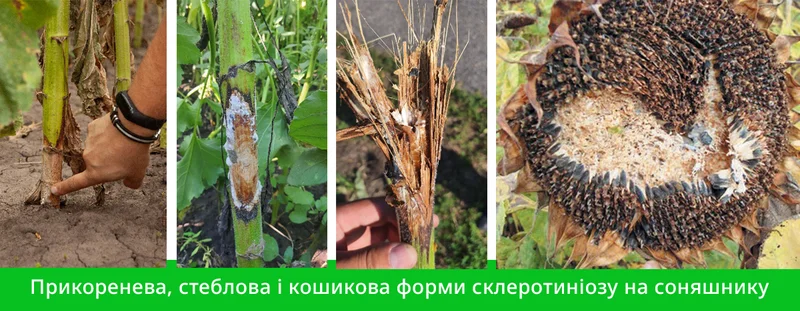
If the risk of rot development on the head is low (the cultivation and protection technology corresponds to the characteristics of the hybrid, and the weather conditions are without excessive moisture), then the optimal protection solution will be the fungicide Amikon, EC (pyraclostrobin, 125 g/l + miclobutanil, 125 g/l). Miclobutanil is a systemic active substance with a high solubility index (132 mg/l), which penetrates the plant through assimilating parts and is evenly distributed through the xylem within 1–2 hours after application. This ensures rapid localization of existing infection and reliable protection of new growth. The high activity of miclobutanil in the gas phase also helps to further protect the surface of the plant that did not come into contact with the working solution.
In contrast, pyraclostrobin in Amikon has low water solubility (2 mg/l) but one of the highest lipophilicity coefficients among strobilurins (4). Therefore, it reliably binds to the waxy coating of the head and leaves, creating a stable reserve of active substance on the plant surface, resistant to washout by precipitation. Continuous release and redistribution of pyraclostrobin during diffusion provides prolonged protection of plants from leaf spots and rots.
The formulation of the fungicide – an oil-in-water emulsion – promotes better coverage and faster penetration of active components into the plant. This is extremely important under critical summer application conditions, as even after the working solution dries, the oily film on the plant surface allows additional time for maximum penetration of the product into the plant.
Importantly, the fungicide Amikon contributes to improving both the qualitative and quantitative indicators of yield not only by protecting the plant from infections but also as a result of the pronounced healthy cell effect (health effect). This ensures full vegetation of the crop and its effective use of solar insolation.
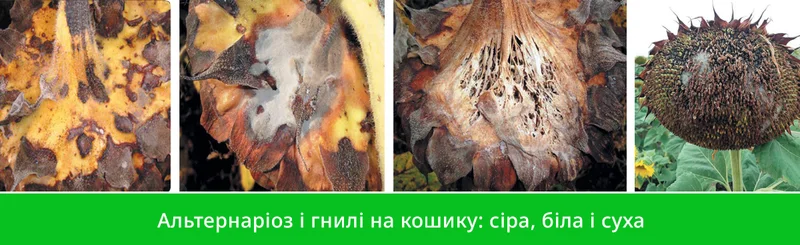
However, if enhanced protection of the head and upper leaf canopy is needed, we recommend using Telamus, EC (boscalid, 133 g/l + pyraclostrobin, 167 g/l + propiconazole, 200 g/l). This is a premium segment product with therapeutic action and, importantly, a long protective period against infection.
Boscalid is highly praised by agronomists in Ukraine. It is often indispensable in controlling sclerotinia, gray mold, powdery mildew, and leaf spots on sunflowers, rapeseed, vegetable crops, and in orchards. Its advantages include compatibility with the plant's waxy layer and high resistance to sunlight, rapid penetration and even redistribution in tissues, resistance to washout by precipitation, and long persistence.
After application to the plant, part of boscalid is fixed in the waxy layer and cuticle, blocking the germination of fungi, their formation of infectious hyphae, and plant invasion. The remaining active substance penetrates the tissues of treated leaves and moves translaminarily. Boscalid also accumulates in the intercellular spaces of the cuticle and mesophyll of the leaf, gradually dissolving and moving locally within the plant. This characteristic provides prolonged protective and moderate therapeutic action against the pathogens of many diseases.
Pyraclostrobin similarly redistributes in the treated plant. It reliably binds to the waxy layer with gradual movement to the underside of the leaf. Pyraclostrobin protects against damage from rot pathogens, septoria, phoma, and phomopsis.
Propiconazole has high solubility and pronounced therapeutic action, so it is quickly absorbed by the plant, moves in the xylem tissues to the site of infection, and blocks further development of the pathogen even at the first visible signs of infection. It is effective against leaf spots, rust species, and powdery mildew.
The synergy of boscalid and pyraclostrobin provides prolonged protective (preventive) action against sclerotinia, gray and white rots, and leaf spots, while the combination of boscalid and propiconazole ensures rapid and enhanced therapeutic effect. Depending on the condition of the plants at the time of treatment, the resistance of the hybrid, and weather conditions, the protective period lasts up to 21–28 days.
This achieves excellent control of a wide range of phytopathogens from various genera, including rots, leaf spots, and rusts on the head and upper leaves. The recommended application phase for Telamus is BBCH 55–65 (mid-budding to flowering), depending on the technology and FAO of the hybrid. Late-maturing hybrids are recommended to be treated closer to the BBCH 65 phase.
Thus, the sunflower protection system must be comprehensive: resistant hybrids, seed protection, destruction of plant residues, volunteers, and weeds (especially from the aster family: common ragweed, common groundsel, wormwood, and marsh plant), and protection of the vegetative mass. Preventive treatment of crops against dominant diseases is important, taking into account the resistance level of the hybrid, crop rotation, infection reservoir, and weather conditions. Most diseases have a long incubation period (for example, phomopsis – up to 55 days), and after symptoms appear, they spread rapidly, producing infection for reinfection of crops. Therefore, achieving fungicidal protection efficiency at 90% or higher is ensured by timely application.
Five specialized fungicides – Relevant, Artis Plus, Barret, Amikon, and Telamus – help agronomists effectively protect sunflowers from specific diseases (downy mildew), mixed infections (leaf spots), and head rots.
Alfa smart agro – care that bears fruit.