
Bridging Indoor and Outdoor Spaces: 7 Ideas to Enhance Your Garden Aesthetic
Explore seven practical ideas to create a seamless connection between your indoor and outdoor spaces, enhancing your garden aesthetic without structural changes.
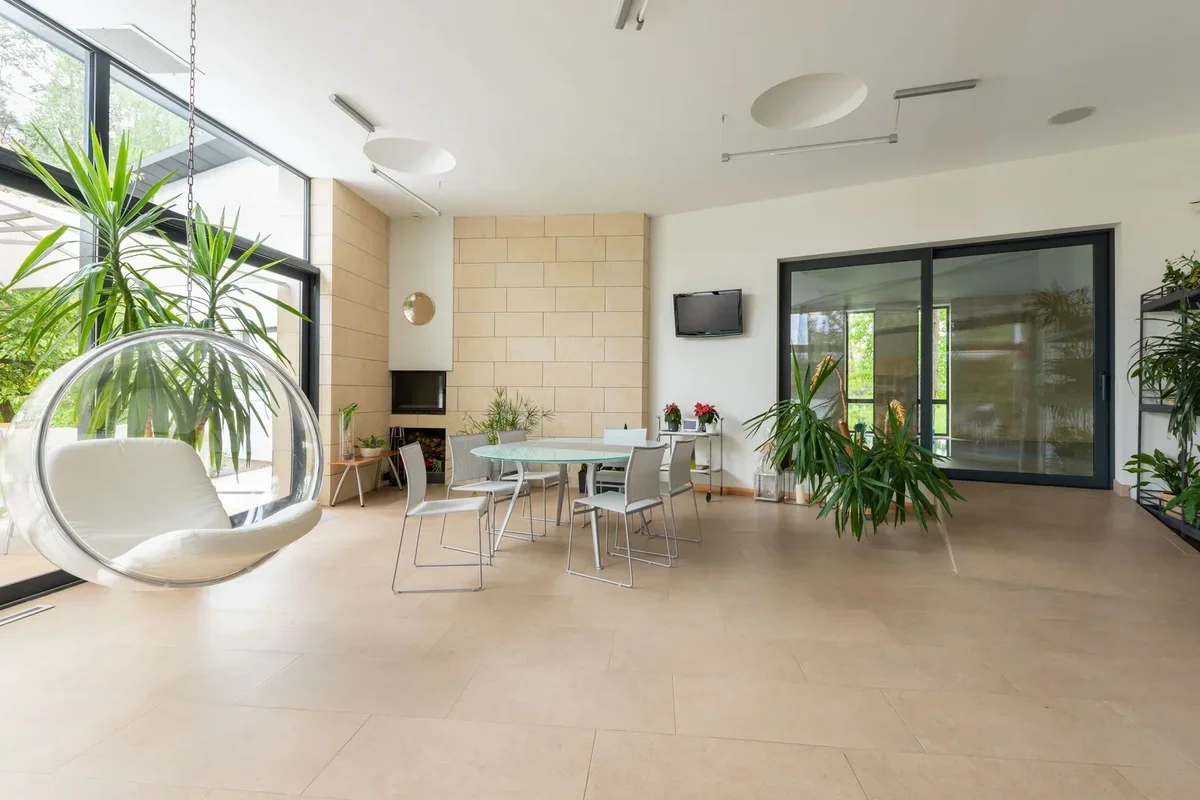
Creating a seamless connection between your indoor and outdoor spaces can transform your home into a harmonious oasis. When the flooring of your living room extends uninterrupted to the terrace, the view transcends the window, making the garden feel like an additional room without the need for walls. However, achieving a true indoor-outdoor continuity goes beyond simply placing a couple of rattan chairs near a window. Thoughtful decisions regarding flooring, lighting, and plant selection can differentiate a genuine integration from mere juxtaposition. Here are seven practical ideas, along with potential pitfalls and realistic budgets to consider.
The Flooring That Disappears the Terrace Threshold
Nothing establishes a stronger visual continuity than a single flooring material spanning both the interior and exterior. Ceramic stoneware is a practical choice, offering a consistent look of stone, wood, or concrete that can be installed indoors in a smooth finish and outdoors in a slip-resistant version. Expect to pay between 35 to 45 € per square meter for a decent quality, and ensure you select a rating of R11 for outdoor use to avoid a slippery surface after rain. For installations on pedestals, opt for 20 mm thick tiles, which are considerably more durable than the 9 mm thickness suitable for indoor use. A common mistake is to extend non-freezing indoor tiles outdoors, as they can crack during winter. To visualize how different finishes will look in each space, consider using decor selections from sources like Chouette Déco. Compared to natural stone, which is pricier and more porous, or composite wood that can gray over time, ceramic stoneware remains the most stable option.
A Large Glass Opening Changes Everything, But Not at Any Cost
A sliding glass door effectively removes the physical barrier between the living room and the garden. However, thermal performance is crucial. High-end models can achieve a Uw coefficient below 1.4 W/m².K, qualifying for financial aids like MaPrimeRénov’ under the RE 2020 regulations. Aluminum frames allow for very slim profiles and a modern aesthetic, but without thermal bridge break, they provide poor insulation—this is a key point to verify in your quotes. Wood offers the best insulation, while PVC provides the best price-performance ratio. For a true sense of unity, pocket doors that slide into the wall outperform traditional sliding doors. Without adequate opening space, no decorative trick will recreate the desired fluidity.
Plants: The Green Thread Connecting Two Worlds
Positioning large plants near the window creates a gentle transition between your indoor space and garden. Specimens like monstera, kentia palms, or fiddle leaf figs serve as effective visual connectors. However, be wary of the common pitfall: light diminishes rapidly as you move away from the window. At two meters, a plant receives four times less light than it would at 50 cm, and nine times less at three meters. Therefore, avoid placing any plants more than 1.5 meters from a glass door. Additionally, direct sunlight through a south-facing window can scorch leaves; choose resilient species like ficus, sansevieria, yucca, and pothos, steering clear of delicate varieties like calatheas, orchids, and carnivorous plants. If you plan to move your plants outside in the summer, acclimate them to shade for a few days before exposing them to full sun to prevent leaf burn.
A Common Color Palette to Deceive the Eye
The brain perceives two spaces as one when the colors complement each other. Neutral tones like sand, beige, olive green, or terracotta blend with the greenery while maintaining a polished look indoors. A practical rule is to limit yourself to three dominant colors shared between the living room and terrace. The real challenge arises from style clashes; a contemporary interior juxtaposed with a rustic garden can disrupt harmony. It's better to adapt the codes of a single style: light tones and blonde woods for a Scandinavian feel, or white, terracotta, and olive trees for a Mediterranean ambiance. A cohesive indoor-outdoor decor relies more on restraint than on accumulating objects.
Furniture That Thrives Indoors and Outdoors
Mixed-use furniture blurs the lines between spaces more effectively than any accessory. A folding table, a low black metal sofa, or rattan seating can transition between indoor and outdoor settings depending on the season. However, be aware that rattan is not the most comfortable material; always have cushions and throws on hand—linen for summer and thicker knits for winter. In terms of durability, teak withstands the elements for years, while indoor rattan left outside deteriorates within a season. For exposed textiles, opt for treated linen or waterproof fabrics that look great on both a sofa and a terrace chair. Repeating the same chairs on both sides of the glass remains the most efficient trick to create an intermediary space.
Lighting: A Common Mistake
Mixing warm lighting indoors with cool lighting outdoors can shatter coherence. The winning strategy is to maintain the same color temperature throughout, around 2700 K for a warm and soothing light. Outdoor string lights can extend the soft illumination of the living room, creating a visual continuum at dusk. Solar lanterns and candle holders add light points without the need for wiring. Indirect lighting at ground level, along a pathway or around pots, highlights contours better than harsh frontal spots. For a 15 m² terrace, three to four distinct light sources are sufficient to avoid the cold “spotlight” effect of overly powerful single fixtures.
A Buffer Zone for Gaining an Extra Room
A bioclimatic pergola can convert a terrace into a usable living space nearly year-round with its adjustable slats. The average budget in 2026 is around 11,500 € installed for 12 to 15 m², with prices ranging from 280 € for a basic kit to 1,400 € for a fully equipped model. Installation costs typically account for 20 to 30% of the total bill. An aluminum structure can last 25 to 30 years without heavy maintenance. Be cautious of low-cost imported models; a 100 mm post may wobble in the wind, while a 150 mm post remains stable, and some roofs may leak by autumn. A simpler and more budget-friendly alternative is a veranda or a covered nook decorated in the same tones as the living room, serving as a buffer between the two worlds.
Going Further
Achieving continuity is not an overnight project nor a one-time purchase. Start with the most cost-effective action: harmonizing the colors and light temperature on both sides of the glass before investing in flooring or openings. One last tip: test each plant in its future location for a few days before committing it to a permanent spot. Misjudging exposure near a south-facing window can ruin an otherwise perfect setup in just a week.