La Alamedilla, the Shrinking Park
Since nearly its inception, La Alamedilla has been losing ground, a common fate shared with other landscaped spaces in many parts of the world. Discover the history and current state of this historic park in Salamanca.

Since nearly its inception, it has been losing ground, a common fate shared with other landscaped spaces in many parts of the world... I take you back to Salamanca, specifically to one of its historic parks, the park of La Alamedilla.
Back in 1898, the city council took charge of a space where a garden was planned to provide the city with landscaped areas (novel and very fashionable in the urban planning of the time).
The first problem arose... the area was a huge pit, and the cost of accumulating soil for filling became difficult... it was solved by covering part of the hole with rubble, over which soil was spread and plantings were made, and a pond was added to the park...
It seems that among others, Elms were planted, which survived until the arrival of the dreaded Dutch Elm disease Ophiostoma novo-ulmi in the 20th century.

In this park, it seems that the people of Salamanca have praised and protested in equal measure, both for its service to the recreation of the neighbors and for the lack of care at certain times... The city council has made efforts for citizen acceptance, even holding events and celebrations in this place with varying degrees of success, all with the intention of fostering greater appreciation of La Alamedilla by the people of Salamanca.
Be that as it may, urban growth and the demand for services from residents have gradually reduced the park's area to the size it maintains today. It is almost impossible to enumerate in a few lines the number of changes, modifications, or renovations, moments of splendor and shadow... that this place has accumulated. For example, the modifications of the park that once had rose gardens, a mini-zoo, a birdhouse, and a pond... It was equipped with a children's traffic education circuit, a swimming pool, a large play area... or the music pavilion that, like the Guadiana River, appears or disappears depending on the date when information about the park is sought.

This is not an exclusive issue of this park; there are many examples, some of which I have already mentioned in the blog... that suffer from "cuts" etc., etc., to make way for streets, public buildings... at the expense of greenery... Unfortunately, we cannot say that this has remained in the past, despite the recommendations from experts to re-vegetate cities with the many benefits it brings to the city and its citizens. There are many "area managers" who believe that trees should be cut down, paved over, and covered with awnings... to recover the shade that the trees provided... anyway, better to leave it there before I get fired up. This would be or will be the subject of a new blog entry...
Returning to the topic at hand, currently, the park is organized from a central roundabout or gazebo from which various straight paths emerge in axial symmetry, leaving a grid of flower beds.
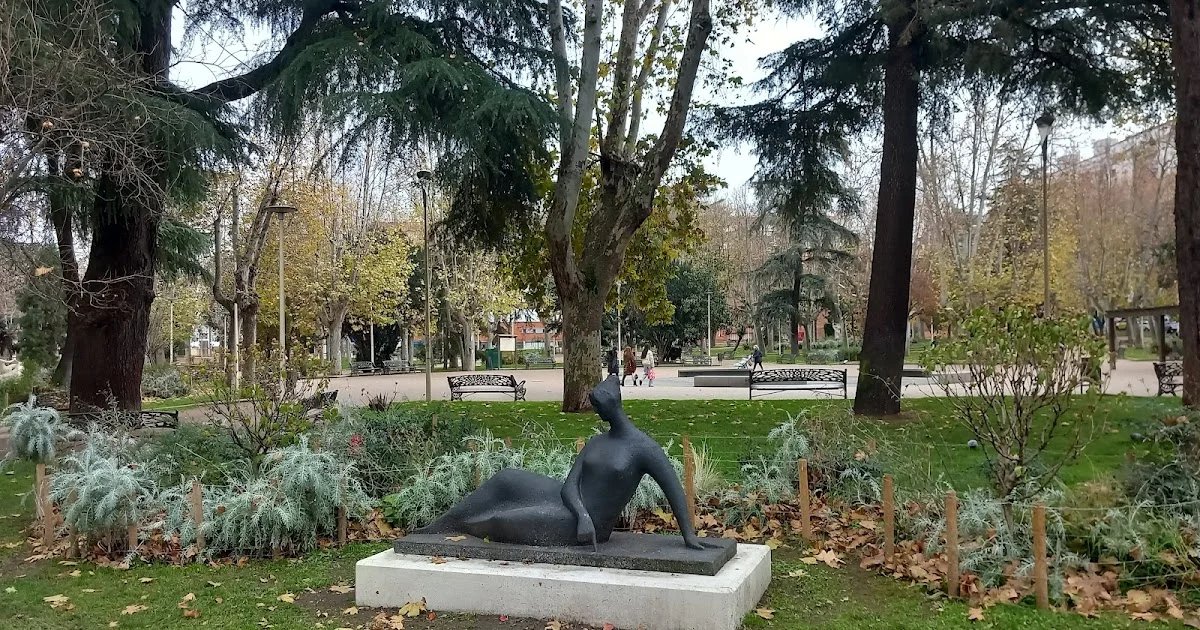
A centennial Cedar stands out, along with the huge Plane Trees Platanus x hispanica, which occasionally suffer from the adverse effects of storms.


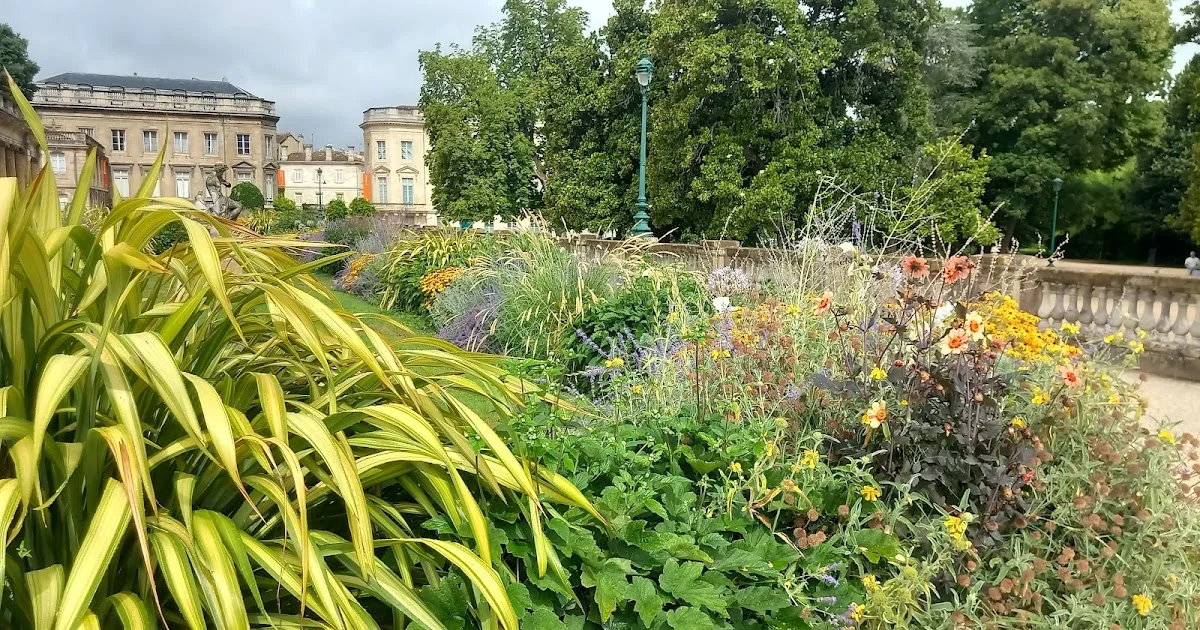
The park during my last visit (December 2025) looked well-maintained without excess, with the pond dry (like the Jesuit park), and the flower beds displayed compositions with a timid "modern" touch in line with trends in the use of grasses and perennials.
The sculptures of an artist closely linked to the city stand out throughout the park.
I have lost some of the photographs, but I still show you a few.