From Monastic Garden to Public Park
Today, I take you on a visit to a garden that has been around for 43 years and is the largest in its city. The Jesuit Park of Salamanca, located a fifteen-minute walk from its well-known main square.

Today, I take you on a visit to a garden that has been around for 43 years and is the largest in its city.
The Jesuit Park of Salamanca, located a fifteen-minute walk from its well-known main square.
It spans 10 hectares (100,000 m²) of parkland that was once part of a convent owned by the Society of Jesus on the outskirts of the capital of Tormes.


The repetition of elements, a design resource
It seems that the acquisition of the land by the city council was complex, encountering obstacles from citizens and some members of the order who disagreed with the transfer due to, it seems, political reasons. In the end, as a gesture of goodwill, a sale was made at a price lower than market value so that it would pass into the hands of the city, always with the condition that its use would remain as a park for the public.
Finally, it could be opened to the public, which at that time was a dairy, a garden, and fruit plantations from the convent. The opening was a significant event, with a great reception from the residents of Salamanca who attended in large numbers.

Jesuit Park of Salamanca, empty ponds

Informal style area of Jesuit Park, Salamanca.
From what I have read about it, a consultation phase was conducted with citizens to gather ideas on what should be added to the space to meet their needs.
It wasn't until 1982 that the project was drafted and construction began.
The cross layout of the space served as the basis for the project, with two parallel axes added in a formal layout (in line with Baroque or French gardens), crossed by some diagonal paths with a less classical air. Spaces for children's play, fountains, pergolas, ponds were defined... the variety of plant species was increased, attempting to respect the pre-existing fruit trees.

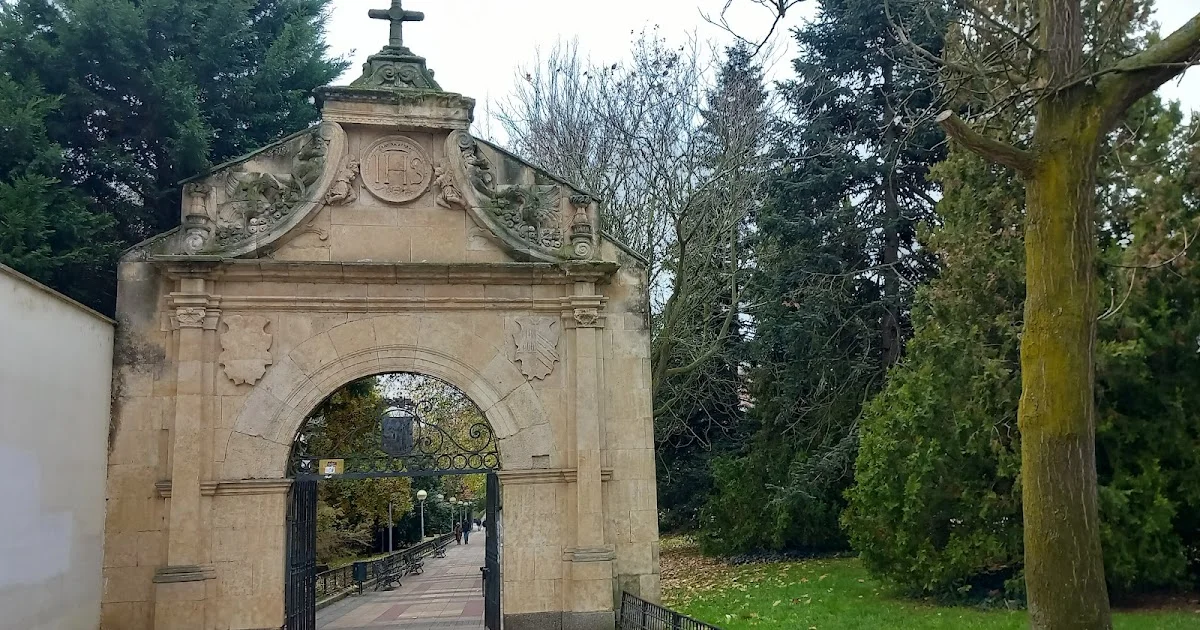
It was remodeled a few years later, around the late 90s, converting the old cemetery into a romantic-style area, creating a rock garden, etc., and acquiring the entrance of a convent to serve as a grand access door. This reminds me to mention that the park has opening and closing hours. Subsequently, in 2016, new works were carried out to give it a "facelift."

Square acting as a "distributor" right upon entering the park
As you can see, they play with the repetitions and successions of elements, such as the fountains that align in the central promenade, generating harmony. This leads our gaze to the background, creating a greater sense of depth. The space features various sports facilities, children's areas, a bar, and is a good place for birdwatching enthusiasts.
Botanically, there is diversity in species and number of specimens, which they boast about on both official and unofficial websites, as the inventory results in 2,700 specimens. Of these, at least 500 are fruit trees (almost all apple and pear trees), and the rest are trees as diverse as Zelkova carpinifolia, Cercis siliquastrum, Koelreuteria paniculata, magnolias, olive trees, sequoias, ginkgos, cypresses, pines... and a long etcetera.
Mentioning the building and exhibition area called the Artist's House (where the previously mentioned vaguería was located). There is also an area designated for municipal vehicles where the warehouse that housed the agricultural tools of the Jesuits was located. Informational panels of a botanical, mythological nature... dot the park. In accordance with current uses and customs, a space for dogs has even been set up, complete with an agility circuit.


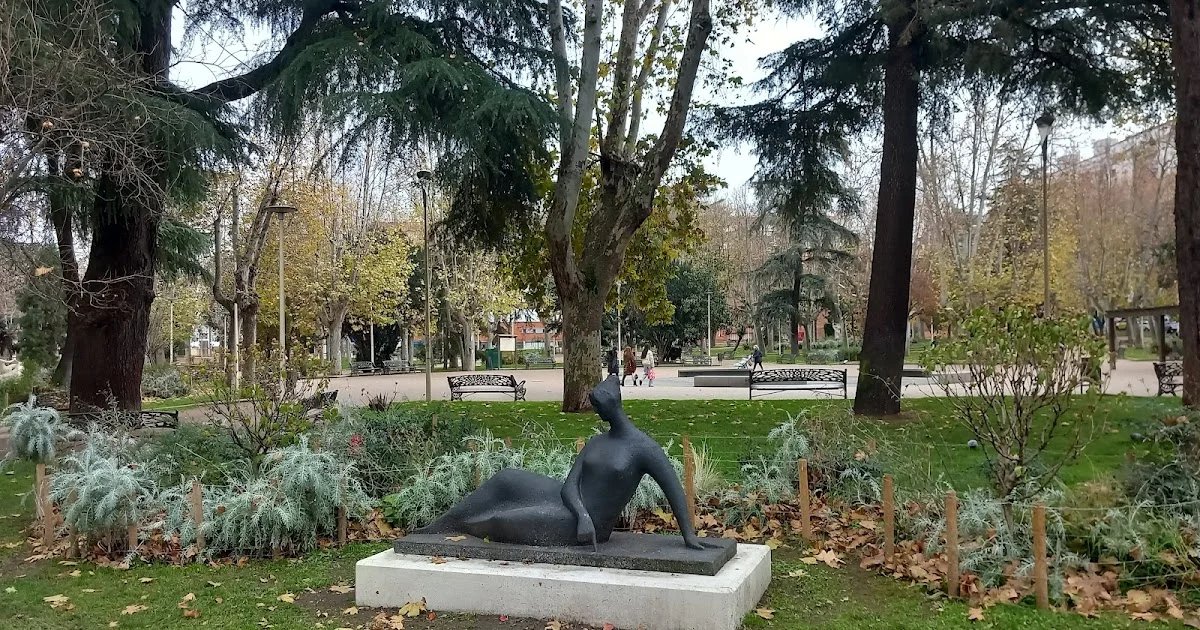
I visited this park about 19-18 years ago, I believe at the end of spring. I remember the lush vegetation, the ponds filled with dragonflies hovering over the water surfaces... but with a somewhat abandoned appearance. In December 2025, coinciding with a weekend trip to Salamanca, I took the opportunity to stop by to show you images on the blog. With autumn/winter not too cold, many deciduous trees still displayed their autumnal appearance with yellows and ochres giving a different look to the place. I noticed in this and another of the city's historic parks (La Alamedilla) that the ponds had no water; I don't know if it was a remodeling or if they were taking the opportunity to clean them... with the detriment (or elimination) of the dragonfly nymphs that in spring and summer would soar through the skies of this beautiful city like miniature helicopters. Let's hope their absence is only temporary...
See you next week!
P.S. I leave you a link to the Salamanca city council website, where they talk about the park; at the end of their publication, you will find a more detailed research work about this landscaped space Click here.