Planting Yew in Containers: Varieties, Care, and Artistic Pruning
Learn about yew (_Taxus baccata_), a slow-growing plant that thrives in containers. Discover suitable varieties, care tips, and techniques for artistic pruning.
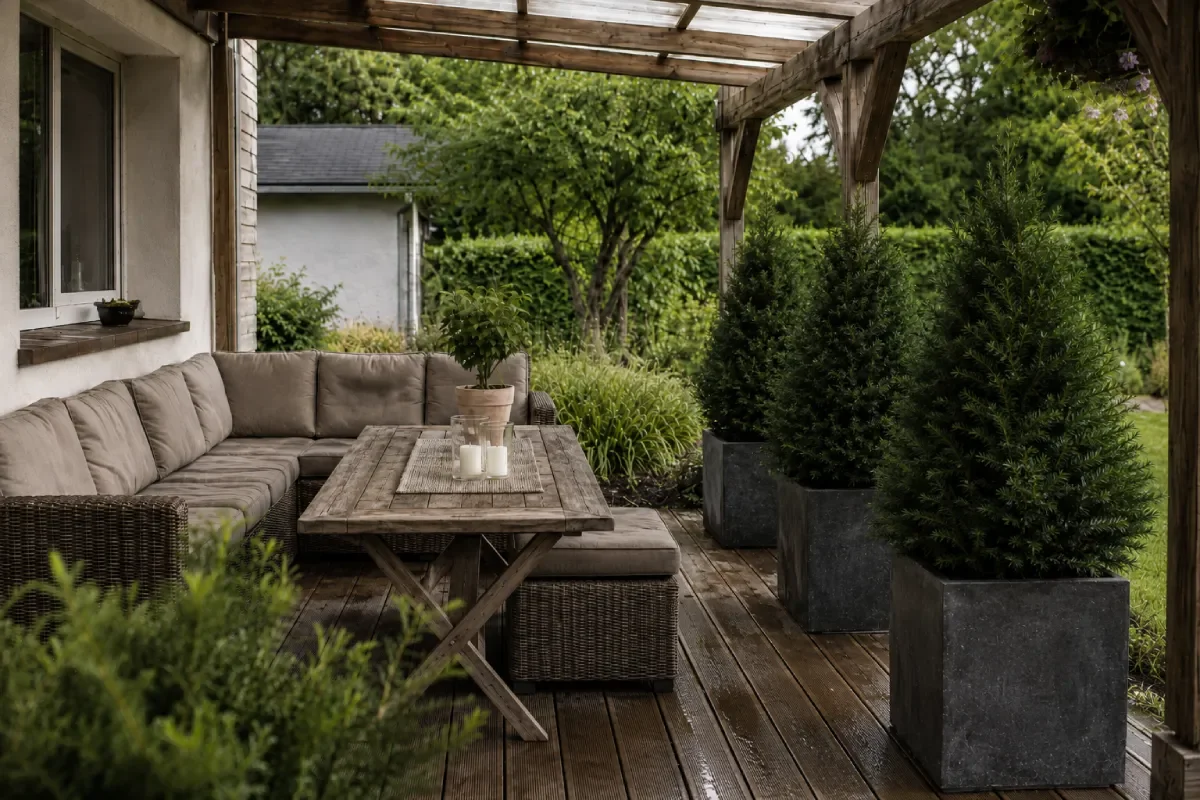
Taxus baccata, commonly known as yew, is a slow-growing plant that can withstand nearly any pruning and can even sprout from old wood. This article explores suitable yew varieties for container planting, essential care tips, and techniques for artistic pruning or Niwaki.
While summer blooms have long faded and deciduous shrubs stand bare in their pots, the yew (Taxus baccata) remains vibrantly green. Growing at a modest rate of about 10 to 20 centimeters per year, it is perfectly suited for long-term container cultivation and can be shaped into almost any form. Whether as a ball, cone, or even through bold cutting mistakes, the yew forgives these errors by sprouting anew from old wood. It does not produce cones and sheds no needles, keeping balconies and terraces tidy even in winter.
Suitable Varieties for Containers
Many yew varieties thrive in containers, provided that the pot size and pruning align with their growth habits. The original species, Taxus baccata, requires a larger pot as it matures, offering dense, year-round privacy. Columnar yews are ideal for narrower spaces, while compact dwarf varieties are perfect for small balconies.
European Yew as a Ball or Cone
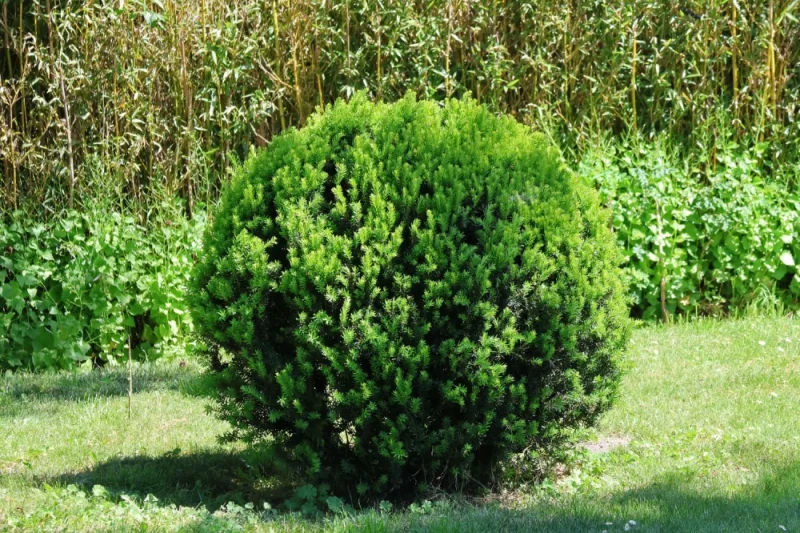
The European yew (Taxus baccata) is often available in the form of balls or cones for gardens and containers alike. Its high tolerance for pruning allows this shape to be maintained for many years. It grows slowly and adapts well to sunny, semi-shaded, and shaded locations, making it suitable for balconies and terraces that receive limited direct sunlight.
Yellow Columnar Yew ‘Fastigiata Aureomarginata’
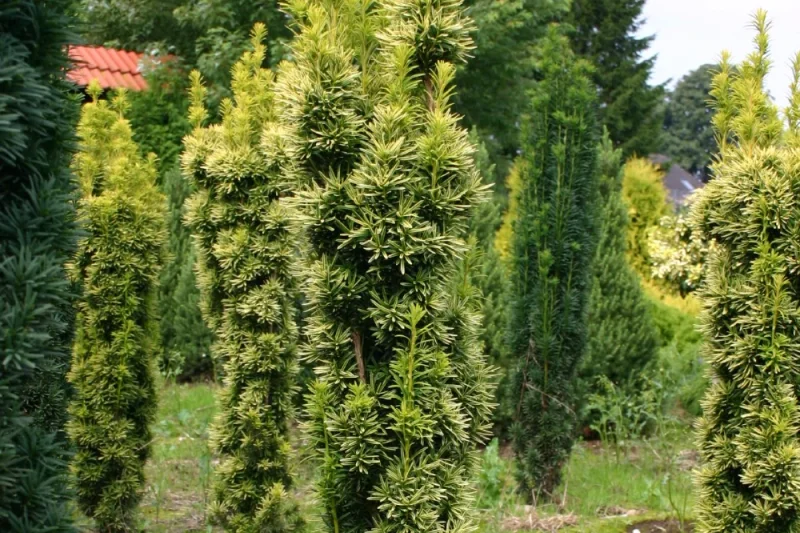
The yellow columnar yew (Taxus baccata ‘Fastigiata Aureomarginata’) grows upright and narrow, requiring less space in containers compared to broader plants. Over time, it reaches a considerable height, and its light green needles feature a yellow margin that stands out most in sunny to semi-shaded areas. This variety needs ample root and crown space in the pot and requires annual pruning.
Yew ‘Lescow’
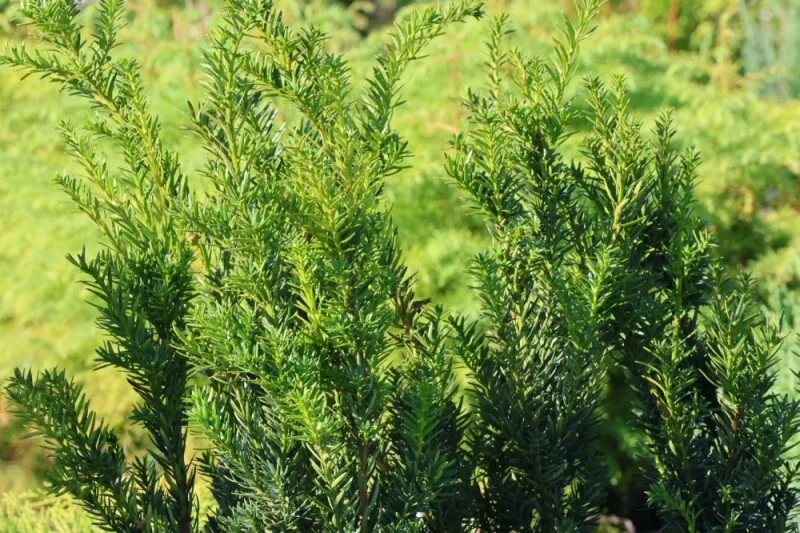
Yew ‘Lescow’ (Taxus cuspidata ‘Lescow’) is a dwarf variety, remaining at a height of about 60 to 80 centimeters. Its upright, densely branching growth makes it suitable for smaller containers. The dark green needles and fresh green shoots provide a lush appearance year-round. This small yew is flexible regarding location and can thrive in sun, partial shade, or shade.
💡 Tip: Almost all parts of the yew are toxic. Care must be taken around children and pets such as dogs, cats, and horses. Fallen leaves or cuttings should be promptly disposed of in organic waste, and gloves should be worn during pruning. With this knowledge, one can responsibly cultivate yews on balconies or terraces.
Planting Time
Container-grown yews can be planted in pots year-round as long as the ground is not frozen. The easiest time is in spring, between April and May, allowing the plant the entire growing season to establish roots before the first frost. A fall planting in September or October is also possible but requires that the container is well-rooted before winter.
💡 Tip: Avoid planting yews in pots during the peak of summer. Heat and direct sunlight can quickly dry out the substrate before the roots have established, leading to stress for the plant.
Location
Yews adapt to various light conditions, with a preference for partial shade to shade. While they can tolerate some sun, it tends to dry out the soil in the pot more quickly and can excessively heat the soil.
💡 Tip: Cold east winds and winter sun can accelerate frost desiccation. Needles continue to lose moisture while the roots cannot draw water from frozen ground. Positioning the yew near a wall or building can offer protection.
Planting Vessel
Although yews grow slowly, they require ample soil volume in containers for water and nutrient retention. The pot should be at least 10 centimeters wider than the root ball on all sides. For stability, the pot should be about one-third to half the height of the plant. A yew that is 60 to 80 centimeters tall needs a pot with a minimum diameter and depth of 40 centimeters. Drainage holes in the bottom are essential to prevent water accumulation. Pots with wheels make it easier to move the yew closer to a wall or under a roof during extreme frost.
Substrate
Yews prefer a slightly calcareous to neutral soil with a pH between 6.5 and 7.5. Regular potting soil typically falls within this range. However, standard potting soil can be too dense and may need to be loosened with one-third sand, lava granules, or expanded clay.
Step-by-Step Planting Instructions
- Create a drainage layer of expanded clay, gravel, or coarse pottery shards about 5 centimeters high at the bottom of the pot.
- Add substrate. A mixture of two parts potting soil to one part sand, lava granules, or clay granules works well.
- Carefully remove the yew from its growing container and loosen the root ball. Gently separate any curled or overgrown roots.
- Plant at the same depth as it was in the original container. Planting too deeply can lead to trunk rot.
- Fill in soil and gently press down to eliminate air pockets. Water thoroughly until water drains from the bottom.
Caring for Yew in Containers
Watering
The soil in the container should remain evenly moist, never completely dry, and never persistently soggy. To check moisture, insert your finger three to four centimeters into the soil. If it's still damp there, the yew does not need water. In summer, especially during heat and direct sunlight on the pot, this may become a daily task.
Fertilizing
In the first two years after planting, the nutrients in the fresh substrate are usually sufficient. From the third year onwards, the yew should receive an organic slow-release fertilizer or a liquid fertilizer for conifers every four to six weeks from April until the end of July. Fertilization should be halted in August to allow the shoots to mature before the first frost.
💡 Tip: How to recognize nutrient deficiency in yews? If the needles turn lighter, growth remains weak, or the shoots appear thin, a moderate fertilization can help.
Pruning
Since yews can reach significant sizes in gardens, annual pruning is essential to maintain a compact size. The pruning can be quite vigorous, as this native conifer can sprout from old wood. Here’s a detailed step-by-step guide to pruning.
💡 Tip: According to the Federal Nature Conservation Act, radical cuts and “cutting back to the stump” are strictly prohibited from March 1 to September 30 to protect nesting birds. Therefore, yews should be heavily pruned in late winter (February) on a frost-free, overcast day or completely reshaped. In summer, only gentle maintenance pruning is legally allowed.
Wintering
Taxus baccata is frost-hardy and can withstand severe cold. However, roots in containers are less protected than those planted in the ground. The root ball can freeze more quickly during prolonged frost, while the yew continues to lose water through its needles. If the ground is frozen, the roots cannot absorb new water, leading to brown needles after winter.
Covering the root ball with fleece, jute, or coconut matting can protect it from severe cold. A Styrofoam board or wooden board under the pot helps keep the ground cold at bay. Additionally, positioning the yew near a wall offers protection from cold winds and harsh winter sun. On frost-free days, the yew should be watered lightly.
Repotting
A yew in a container should be repotted every 3 to 4 years. The best time for this is early spring in March or April, before new growth begins. A pot that is about 10 centimeters wider in diameter is sufficient. A significantly larger pot can retain moisture for too long, which is detrimental to the yew. When repotting, the substrate should be completely renewed in the first few years; thereafter, one-third new potting soil is adequate.
Yew in Containers: Artistic Pruning
A yew in a container is not restricted to its natural growth form, just like those in gardens. Its excellent pruning tolerance, slow growth, and reliable sprouting from old wood make it the only native container plant that can be developed into a true sculptural form over many years.
💡 Tip: Significant shaping cuts should be made outside of legal pruning times, with June 24, the Feast of St. John, being suitable for light maintenance cuts to sharpen contours.
Shaping Cuts
The yew can be shaped into any geometric form, such as spirals, balls, cones, cubes, or columns. Regular annual pruning is necessary to gradually refine the desired silhouette. Once a clear shape is achieved, it only needs to be maintained without starting over each year. When cutting, some old wood can be removed, but depending on the size of the yew, 15 to 30 centimeters of lateral shoots should remain at the trunk base. Templates made from cardboard or wood can assist in creating uniform outer contours.
Video: How to Shape a Yew into a Spiral
You are currently viewing placeholder content from YouTube. To access the actual content, click the button below. Please note that this may involve sharing data with third-party providers.
Niwaki
In Japanese gardening, Niwaki refers to the art of shaping trees into living sculptures that follow a stylized, natural form. Unlike geometric shaping, Niwaki creates tiered, horizontal cloud-like layers of dense needlework, interspersed with visibly pruned branches. The result resembles ancient pines shaped by coastal winds.
You are currently viewing placeholder content from YouTube. To access the actual content, click the button below. Please note that this may involve sharing data with third-party providers.
In Niwaki, the approach is to work with individual branches rather than using hedge trimmers over the entire surface. Lateral branches are removed, leading branches are guided horizontally, and needle clusters at their tips are regularly shortened. This is done not in one go but spread over multiple interventions throughout the year.
💡 Tip: A well-shaped specimen on the terrace in a container becomes a centerpiece that requires no additional decoration.
Bonsai
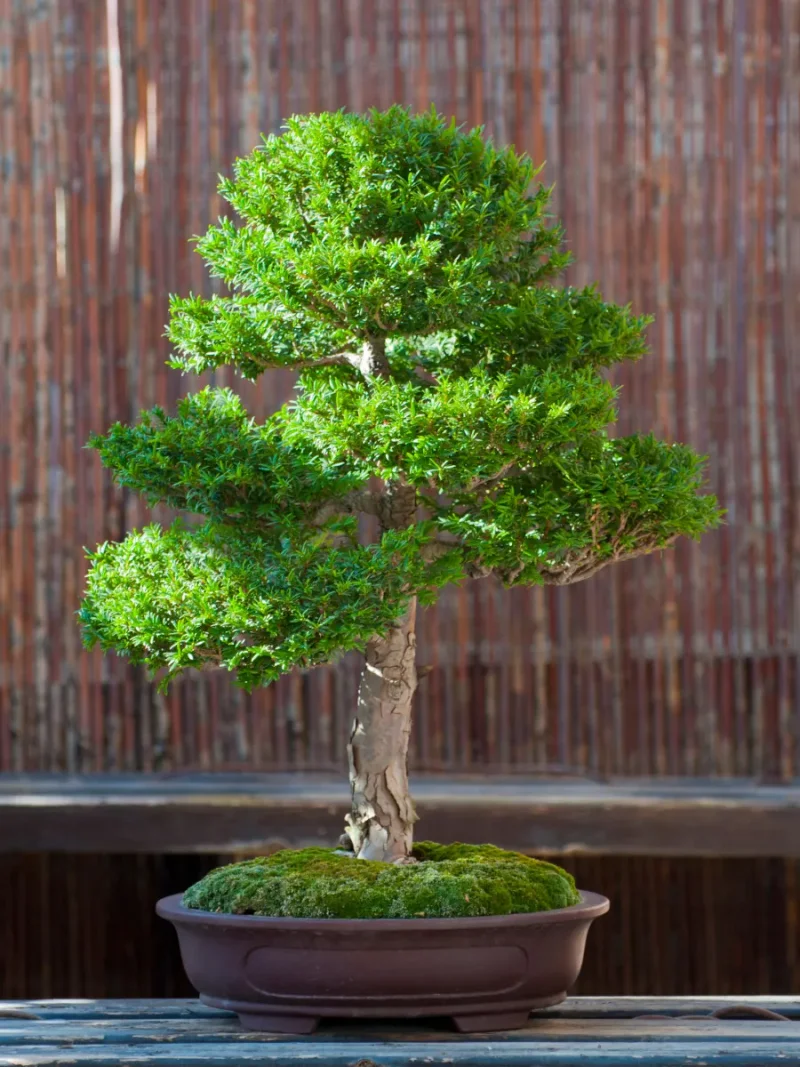
Taxus baccata is one of the few native conifers suitable for bonsai cultivation. It responds well to pruning, tolerates tight root conditions for many years, and develops a natural-looking, complex branch structure over time. For beginners, this form of care can be challenging, as watering requires more precision than with other plants.
The yew's adaptability and aesthetic potential make it a versatile choice for container gardening, offering year-round beauty and the opportunity for artistic expression through careful pruning.