Bonsai Podocarpus: Care Guide for the Buddhist Pine
Explore the care guide for the Bonsai Podocarpus, also known as the Buddhist Pine. Learn about its ideal conditions, watering, repotting, and more.
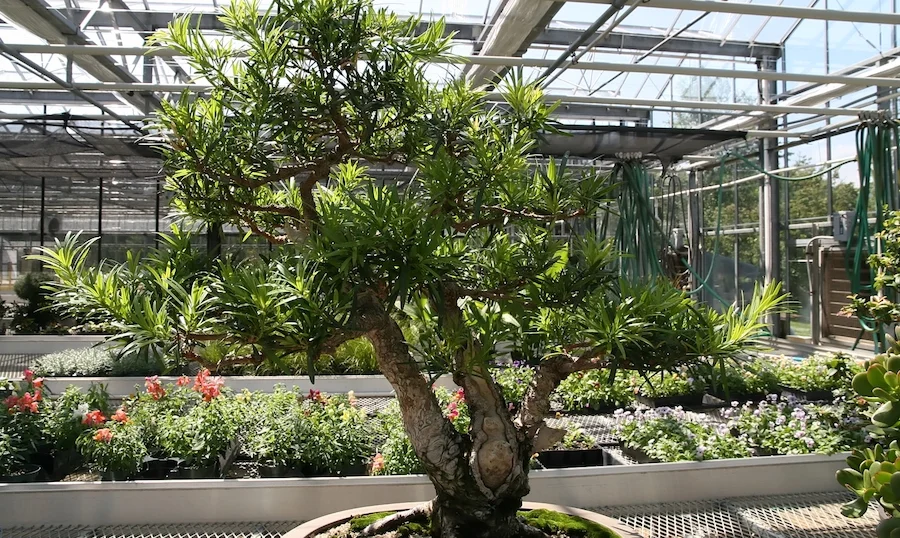
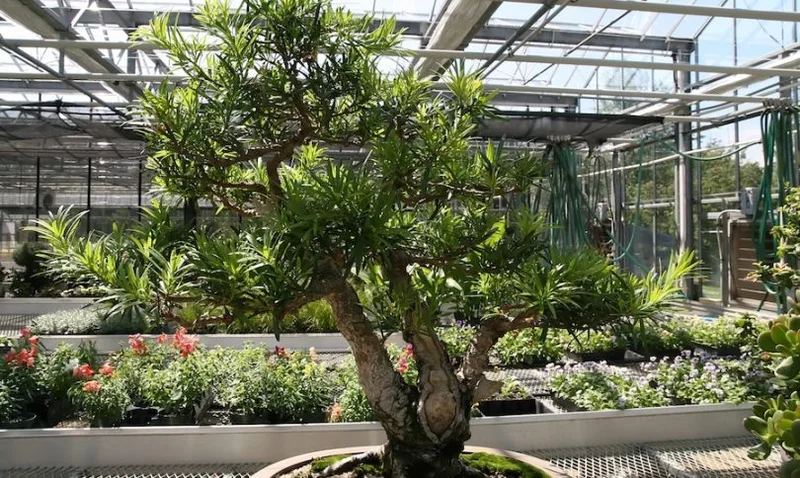
The Podocarpus, commonly known as the Buddhist Pine, is a conifer with evergreen foliage that bears a resemblance to yew. Among the various types, the Macrophyllus variety stands out as one of the most popular choices for bonsai cultivation.
Overview of Podocarpus
- Family: Podocarpaceae
- Genus: Podocarpus
- Common Name: Buddhist Pine
- Origin: Asia (China, Japan), Africa, and temperate regions of Oceania.
- Type of Bonsai: Conifer
- Growth Rate: Relatively slow
- Foliage: Evergreen and green
- Placement: Indoor and outdoor
- Exposure: Full sun to partial shade
- Propagation: Seed or cutting using rooting hormone
- Lifespan: Perennial
When selecting a pot, it is advisable to choose one that is moderately deep. A glazed blue pot often enhances the visual appeal of this bonsai.
Location for the Bonsai
The Podocarpus thrives in a humid environment and enjoys bright light, making it suitable for both indoor and outdoor settings.
Sunlight
This bonsai can be cultivated indoors or outdoors, but it thrives in bright light and sunshine. Insufficient light typically results in larger needles. In Mediterranean climates, it can be kept outside year-round. In colder regions, it is essential to protect it from frost by moving it indoors to a conservatory or heated greenhouse.
During heatwaves, providing shade with a protective cloth is recommended.
Temperature
The Podocarpus tolerates temperatures ranging from 13°C to 30°C. Care should be taken to avoid drafts, especially in winter when grown indoors.
Watering
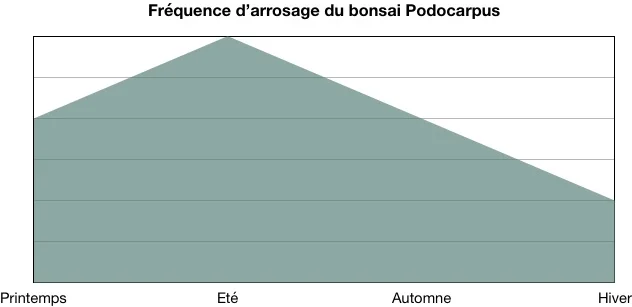
Like many conifer species, the Podocarpus requires regular but moderate watering. The soil should be allowed to dry out between waterings, ensuring it remains slightly moist on the surface without becoming completely dry. This species is sensitive to both overwatering and underwatering. Generally, watering should be moderate in winter and more abundant in the summer, particularly during hot spells.
Repotting and Substrate
Repotting
Repotting should be done every 2 to 3 years at the end of spring, using a neutral, slightly acidic soil. Due to its relatively slow-growing root system, care should be taken not to excessively prune the roots. Depending on the bonsai's age and training stage, consider using a larger pot.
Substrate
The Podocarpus bonsai requires a well-draining, slightly acidic substrate. A mix of 100% Akadama or a blend with approximately 20% volcanic gravel like Pumice is ideal.
Fertilization
Fertilization should occur in spring and autumn with a slow-release organic fertilizer such as biogold.
Pruning and Shaping
Pruning
Pruning can be performed throughout the year to trim back excessively long branches or to remove disproportionate needles.
Pinching
Pinch new shoots with your thumb and index finger during the growth period in spring.
Wiring
The Podocarpus can be wired any time of the year. Wires can remain on for 8 to 10 weeks, depending on the growth of the bonsai. Care should be taken not to pinch the needles, and for young shoots, it is best to wait until they have hardened.
Diseases and Pests
When cultivated under proper conditions, the Podocarpus typically does not suffer from diseases or pests. Most issues arise from underwatering or overwatering, or insufficient light. It is normal for the Podocarpus to shed a few needles as it renews its foliage.