The Comprehensive Guide to Fruit Trees – Your Questions Answered
Understanding the care and maintenance of high-stem fruit trees is crucial for successful gardening. This guide addresses common questions about pruning, pollination, and fruit development.
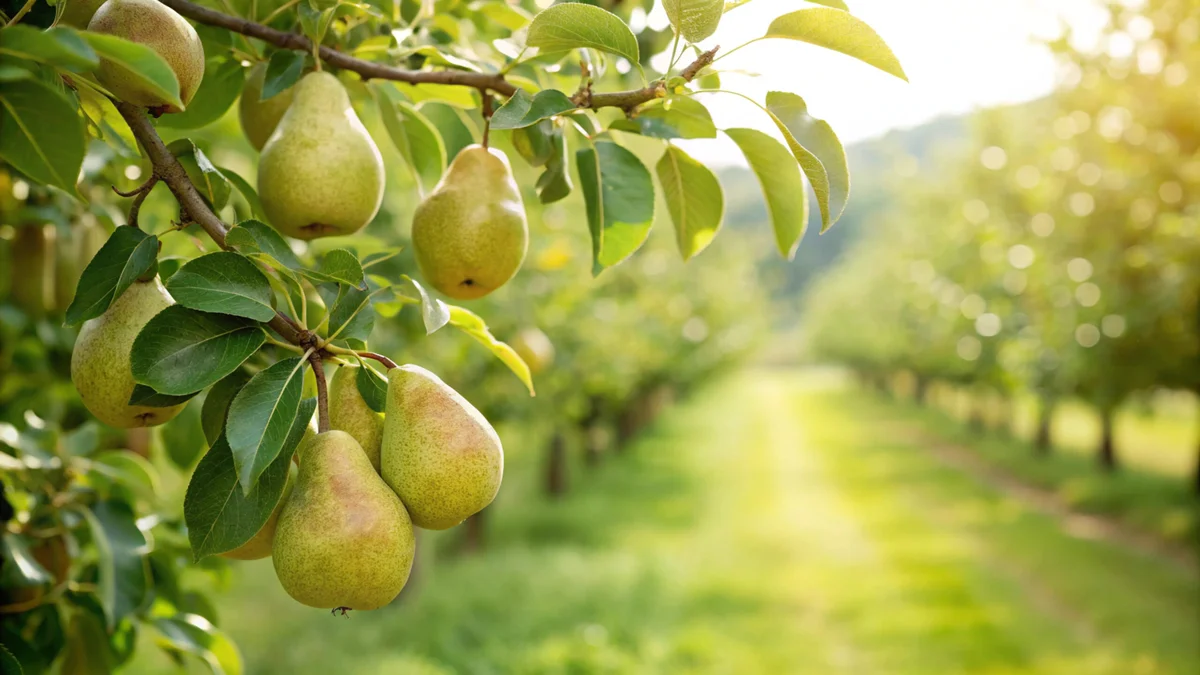
Planting a high-stem fruit tree is a significant commitment, as these are not small saplings that can easily fit into a corner of your garden. Depending on the type of fruit, variety, and rootstock, the crown of such a tree can reach a diameter of six to ten meters, and sometimes even more. Therefore, squeezing one into a tight space is not advisable. It is often sensible to allow a distance of ten to twelve meters between two high-stem trees, necessitating ample space for planting.
With the introduction of a fruit tree, questions are bound to arise. Why does the crown suddenly sprout numerous vertical shoots? Why does the tree bloom beautifully but yield few fruits? Are lichens harmful? What can be done about maggots in apples or plums? This article addresses some of the most common inquiries regarding fruit trees in the garden.
My fruit tree produces numerous water shoots every year – what should I prune?
Water shoots can be identified by their vigorous growth; these strong shoots typically grow straight up and can emerge from older branches. They often appear after a significant pruning, as the tree attempts to compensate for the loss. A nitrogen-rich fertilization or an overall vigorous growth can also promote their formation.
Young water shoots do not bear fruit initially. They thicken the crown, deprive other branches of light, and consume the tree's energy. However, they are not entirely useless; well-positioned shoots can sometimes be trained, lowered, or later incorporated into the crown structure.
The best time to remove young water shoots is in June and July. While the shoots are still soft, you can gently pull them out, which will also remove the dormant buds at the base, reducing the chance of new shoots forming in that spot. If the water shoots have already hardened, you should cut them cleanly at the base without leaving any stubs.
If the crown is full of water shoots, avoid removing them all at once, as this may trigger the tree to produce even more new shoots. Start by removing the strongest, inward-growing, and competing shoots.
When can I expect to harvest from a newly planted high-stem tree?
High-stem trees are grafted onto vigorous rootstocks, allowing them to become quite old and robust. However, they take their time to bear fruit. The timing of the first harvest depends on the type of fruit, variety, rootstock, location, and care. The following are rough guidelines:
- Apple tree: first fruits after six to eight years, full yield after 10 to 15 years
- Pear tree: first fruits after seven to nine years, full yield after 12 to 18 years
- Sour cherry tree: first fruits after four to five years, full yield after 8 to 12 years
- Sweet cherry tree: first fruits after five to seven years, full yield after 10 to 15 years
- Plum tree: first fruits after four to six years, full yield after 8 to 12 years
While a few individual fruits might appear earlier, patience is required before a young high-stem tree becomes a reliable source of fruit.
Does my fruit tree need a suitable pollinator variety?
For many fruit varieties, the pollen from their own flowers is insufficient. They require a second compatible variety nearby that blooms at the same time. This second tree does not necessarily need to be in your garden; sometimes, a suitable fruit tree on a neighboring property will suffice.
Even self-fertile varieties tend to produce better yields when another variety is present as a pollen donor.
- Apple tree: Almost all varieties depend on a suitable second variety.
- Pear tree: Most varieties need a pollination partner.
- Sour cherry tree: Many varieties are self-fertile, including Schattenmorelle and Morellenfeuer.
- Sweet cherry tree: Many older varieties require cross-pollination, although several self-fertile cultivars have been developed.
- Plum tree: There are both self-fertile and cross-fertilizing varieties; the Hauszwetschge is typically self-fertile.
It is crucial not only to have a second tree nearby but also to ensure that the varieties are compatible and that their blooming times overlap.
My fruit tree drops its fruits too early – what causes this?
If you find unripe fruits on the ground, it does not necessarily mean the tree is unhealthy. During a phenomenon known as June drop, the tree sheds fruits it cannot sustain adequately. As long as enough fruits remain, this process is entirely normal. However, if many fruits fall or if the fruit drop occurs shortly before harvest, other factors may be at play:
- Natural fruit drop: Especially apple and pear trees often shed some of their fruits in early summer. Cherries and plums can also regulate their load this way.
- Drought and heat: When water is scarce, the tree prioritizes leaves and shoots, leading to some fruit being dropped.
- Waterlogging: Excess water can damage the roots and also lead to fruit drop.
- Late frost: If blossoms or young fruit sets are damaged, the small fruits may drop later.
- Nutrient issues: A deficiency or significant imbalance can disrupt fruit development. Simply adding fertilizer on a whim is not advisable.
- Diseases and pests: Pests like the apple borer, plum borer, Monilia, and scab can cause premature fruit drop.
- Poor pollination: If the flowers were only partially fertilized, weak fruits may develop, which the tree later discards.
- Overbearing: If too many fruits hang on the tree, it cannot supply them all adequately.
Examine fallen fruits carefully; holes, maggots, rot, deformities, or noticeable spots often provide crucial clues.
Do high-stem trees need additional watering and fertilizing?
Young fruit trees require regular watering during their first three to five years. Their roots are not yet deep enough to endure prolonged dry periods. It is better to water infrequently but thoroughly than to give a few liters every day. In dry conditions, young high-stems may need 40 to 80 liters per watering session, depending on their size and soil. Newly planted trees may need watering one to two times a week during hot weeks. Sandy soils dry out more quickly than heavy clay soils.
Older high-stem trees typically do not require additional watering. However, during prolonged dry spells, very permeable soil, or heavy fruit loads, they may also need support, requiring 50 to 100 liters at once, depending on the tree's size.
When it comes to fertilization, less is often more. In the initial years, you can spread some mature compost or an organic fruit tree fertilizer on the tree's base in the spring. Only work the compost into the surface to avoid damaging roots.
Well-established older high-stems usually do not need extra fertilizer. Excess nitrogen can promote leaf growth and long shoots, leading to poor fruiting.
My fruit tree blooms, but there are no fruits – what could be the reason?
In spring, the crown is full of blossoms, and you anticipate baskets of fruit. A few weeks later, however, there seems to be little left of the expected harvest. Several factors may contribute to this:
- Lack of pollinator variety: The tree blooms but does not receive the right pollen.
- Unfavorable blooming weather: Cold, strong winds, and continuous rain can keep bees and other pollinators away from the flowers.
- Late frost: Just a few degrees below zero can damage open blossoms and young fruit sets.
- Excess nitrogen: The tree invests its energy in shoots and leaves instead of fruits.
- Nutrient deficiency: Poor supply of potassium or boron can impair fruit set.
- Young tree age: A high-stem tree requires several years to bear fruit regularly.
- Diseases and pests: Blossom Monilia, aphids, or apple blossom weevils can damage blossoms and fruit sets.
- Alternation: Some varieties produce an extremely high number of fruits in one year and then take a recovery year with a significantly smaller harvest.
- Too severe pruning: A radical cut encourages long new shoots but little fruit wood.
Whenever possible, ensure a suitable pollinator variety and create a pollinator-friendly garden. Fertilize sparingly and prune the tree regularly but not drastically. If it is particularly loaded one year, you can thin out some of the small fruits early on to improve the remaining ones and potentially reduce alternation.
How often should fruit trees be pruned?
There is no strict pruning schedule that applies to all fruit trees. The frequency of pruning depends on the type of fruit, age, growth strength, and condition of the crown. Young fruit trees require regular formative pruning. In the early years, this builds a stable crown with an extended trunk and well-distributed leader branches. Later, maintenance pruning follows, where old fruit wood, inward-growing branches, and crossing or rubbing shoots are removed.
- Apple and pear: Depending on growth strength, thin out annually or every one to two years. A light, regular pruning is better than a drastic cut every ten years.
- Plum: Usually, a light pruning every two to three years is sufficient. Major interventions should ideally occur after harvest.
- Sour cherry: Particularly heavily laden varieties like Schattenmorelle should be thinned out annually after harvest, as they primarily bear fruit on young shoots.
- Sweet cherry: Requires less pruning. A thinning every two to four years is often enough and is best done after harvest.
A winter pruning during frost-free weather promotes vigorous new growth. This is especially suitable for young trees and weak-growing specimens. Summer pruning between June and August slows down growth and is beneficial for very vigorous trees as well as for removing water shoots.
Stone fruits like cherries and plums are best pruned during or after harvest, as the wounds heal more quickly at that time.
Can I heavily prune an old fruit tree?
An old fruit tree can often still be rejuvenated. However, making drastic cuts is risky rather than rejuvenating. A radical pruning usually leads to numerous water shoots. Large cut surfaces increase the risk of rot, wood diseases, and unstable new growth. In the worst case, entire parts of the crown may die. Here’s how to approach rejuvenation pruning:
- Prune gradually: Spread larger interventions over two to four years.
- Remove dead wood: Start with dead, sick, damaged, and rubbing branches.
- Open the crown: Remove inward-growing and heavily shading branches without completely emptying the crown.
- Train branches: Shorten strong branches as much as possible to a suitable younger side branch. If branches need to be entirely removed, cut cleanly at the collar.
- Choose the right time for pruning: Major work can be done in late winter during frost-free weather or in summer. A summer pruning usually triggers a weaker new growth.
- Keep wounds clean: Smooth cuts heal better.