Understanding Seed Germination: Key Factors for Success
Explore the essential conditions for seed germination and learn how to improve your sowing techniques for better results in your garden.
Understanding the Seed Germination Process
Germination is a critical phase in gardening that requires specific conditions to be successful. For seeds to sprout effectively, they need:
- Warm soil
- Consistent moisture
- A fine surface structure
- Proper contact with the earth
If any of these elements are lacking, the germination process can become inconsistent, even in a healthy soil environment. At this stage, plants are not yet self-sufficient; they rely entirely on their immediate surroundings. This understanding is crucial for any gardener.
While a living soil provides a strong foundation for a garden, it may not always be sufficient during the germination phase. For instance, soil that is well-covered during winter tends to warm up more slowly in spring, which can delay or hinder germination. Similarly, soil rich in organic matter may support significant biological activity, but it might not create ideal surface conditions for uniform sprouting.
In essence, it is possible for soil to be healthy yet not optimally suited for seeding at a given moment.
Why Some Seeds Germinate While Others Fail
When sowing seeds, gardeners often take great care to space them correctly, adhere to the recommended depth, and ensure proper watering. Despite these efforts, germination can still be uneven: some seeds sprout effortlessly while others fail to emerge or do so only partially.
In these cases, it is easy to attribute the issue to faulty seeds or mistakes made during the sowing process. However, the real cause often lies in subtle, almost imperceptible differences within the soil.
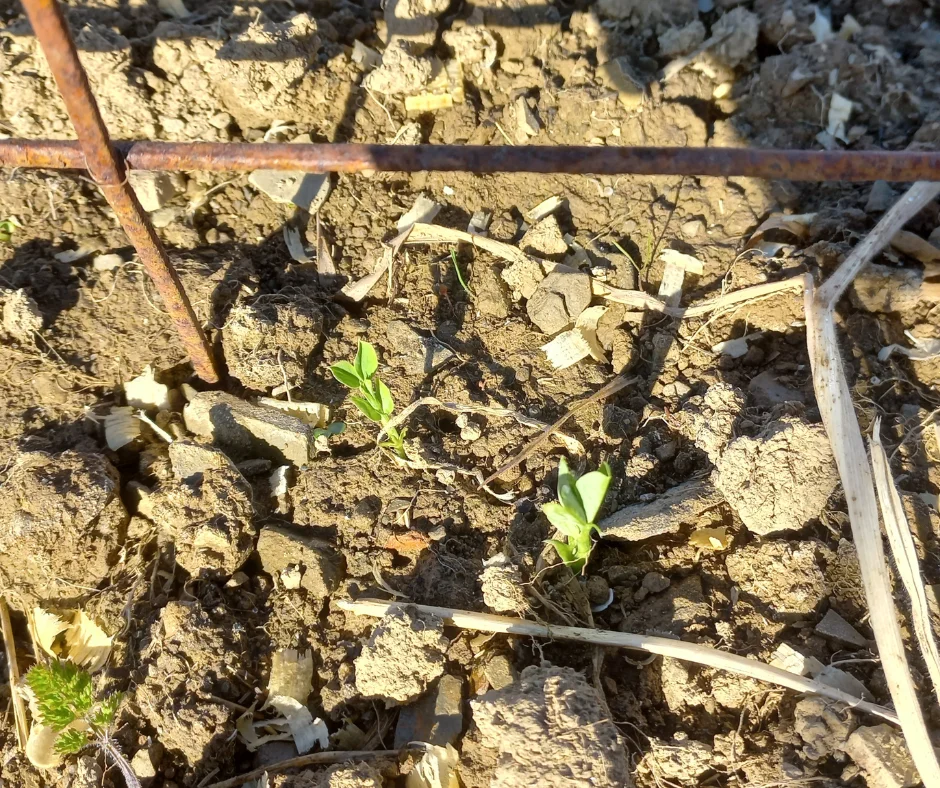
At the scale of a seed, just a few centimeters can significantly alter the conditions. A slightly drier area may slow down or prevent germination, while a compacted spot could hinder seedling emergence. Conversely, a part of the soil that warms up faster can promote quicker sprouting. These variations may stem from soil texture, exposure, moisture levels, or even the manner in which the surface was prepared.
For gardeners, these differences can be challenging to detect, but they are critical for seeds. This is why sowing requires careful attention. Unlike established plants, seeds cannot compensate for unfavorable conditions; they depend entirely on their immediate environment.
To enhance germination success, gardeners should focus on refining their techniques rather than overhauling their entire approach. For example, the preparation of the soil surface is vital. A coarse, clumpy soil creates uneven contact zones between the seed and the ground. In contrast, a slightly smoothed surface, without deep tilling, allows for better moisture distribution and promotes more uniform sprouting.
Moisture management is another key aspect. Soil that dries out on the surface between watering can interrupt germination, even if moisture is present deeper down. Gentle, regular watering without over-saturating helps maintain stable conditions during those critical early days.
Temperature also plays a significant role, particularly at the beginning of the growing season. Cold soil can considerably slow down germination. Waiting a few extra days or slightly adjusting the sowing time can lead to much better results.
Lastly, it is essential to accept that not all sowing will be perfectly uniform. Even when conditions are ideal, nature has inherent variability. Striving for absolute consistency can lead to excessive intervention, which might disturb the soil even further.
Through time and observation, gardeners can refine their methods, gain a better understanding of their soil, and achieve more consistent results without complicating their gardening practices.