Why Your Tomatoes Aren't Ripening: Understanding the Causes
Discover why your tomatoes might not be ripening during heatwaves and learn how to support their growth effectively.
Introduction🌱
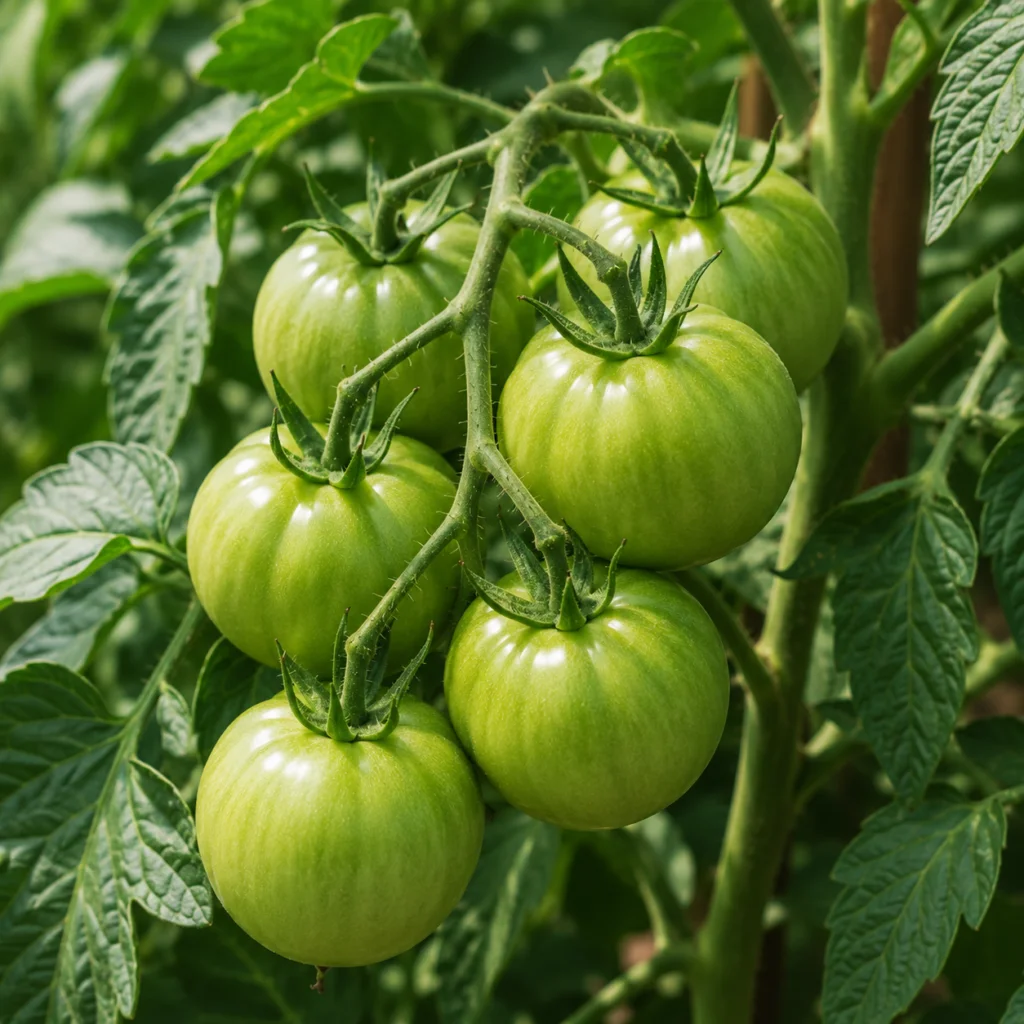
The anticipation for the first tomatoes of the season is palpable among gardeners. As the fruits grow and clusters fill out, a sudden halt can be disheartening when the tomatoes remain stubbornly green for days or even weeks.
This situation prompts many questions: Is there a lack of water? Are there nutrient deficiencies? Is there too much nitrogen? Or are they just a late variety? Should one apply fertilizer to encourage ripening?
Often, especially during heatwaves, the answer is simpler than it seems: the heat temporarily halts the ripening process.
Fortunately, your tomatoes are generally not lost; they are merely waiting for more favorable conditions.
Tomatoes Don't Ripen Just Because Time Passes
It's easy to assume that tomatoes will turn red as time goes by, as if maturation is a natural byproduct of growth.
In reality, ripening involves significant physiological changes. Once the fruit reaches its full size, the plant begins to alter its composition. Chlorophyll, which gives tomatoes their green color, starts to diminish, while other pigments take over.
The most recognized of these is lycopene, responsible for the red hue of tomatoes. Other pigments, such as carotenoids, account for yellow, orange, or golden varieties.
This transformation requires energy and favorable climatic conditions.
High Temperatures Can Pause Ripening
Contrary to common belief, excessive heat does not always speed up the ripening of tomatoes. When temperatures exceed 30 to 32 °C, the production of lycopene significantly slows down. If nights remain warm, above 20 to 22 °C, the plant struggles to resume activity during cooler hours.
As a result, tomatoes may continue to grow in size but show little change in color. This phenomenon is particularly common during prolonged heatwaves, where clusters appear stagnant, and fruits may only develop a slight orange tint without ever turning fully red.
This is not a disease or a cultivation error; rather, it is a normal plant response to extreme weather conditions.
Watering Isn't Always the Solution
When tomatoes are slow to ripen, the instinctive reaction is often to increase watering. However, if the soil is already sufficiently moist, this will not resolve the issue.
Certainly, a plant lacking water will suffer more in the heat. Regular watering is essential to mitigate water stress, but it will not lower fruit temperatures or stimulate pigment production on its own.
This is a crucial distinction. Tomatoes need water to survive and produce, but water cannot counteract excessively high temperatures.
Avoid Over-Fertilizing
In response to green tomatoes, some gardeners might feel compelled to add more fertilizers or composts. However, this typically does not address the underlying problem.
During extreme temperatures, the plant naturally slows down certain functions. Its priority shifts from quickly producing new fruits to surviving the harsh conditions.
Adding more nutrients will not bypass this mechanism. It is wiser to wait for milder temperatures rather than to increase interventions.
Be Cautious About Leaf Removal
There is a common belief that removing leaves around clusters allows tomatoes to benefit more from sunlight. While this may be advantageous later in the season when temperatures drop, during a heatwave, it can have the opposite effect.
Leaves provide essential protection. They create light shade that helps prevent fruit overheating. A tomato exposed directly to sunlight can reach temperatures significantly higher than the surrounding air.
In some cases, it can even develop sunburn, resulting in white or yellowish patches that become dry and tough.
Maintaining healthy foliage often helps protect fruits during extreme heat episodes.
What Can Be Done in the Meantime?
While we cannot control the weather, certain actions can help tomatoes endure the heat better. Regular watering, tailored to soil type, can mitigate water stress without saturating the ground.
A thick layer of mulch helps maintain stable moisture levels around the roots and reduces temperature fluctuations in the soil.
Avoid heavy pruning during a heatwave, as leaves are crucial for shielding against solar radiation and support the plant's overall function.
Lastly, patience is key. As days become less scorching and nights cool down, tomatoes often resume their ripening process. It is not uncommon for several clusters to turn red almost simultaneously after a few days of milder temperatures.
Conclusion
Seeing tomatoes remain green for an extended period can be concerning. However, during the summer months, this phenomenon is often a direct result of high temperatures rather than a cultivation issue.
The plant adjusts its functions to cope with thermal stress, slowing the production of the pigments responsible for fruit coloration and potentially disrupting pollination.
Under these circumstances, it is unnecessary to increase watering or fertilizing in hopes of hastening the process. The most effective approach is to support the plant: keep the soil adequately moist, protect its foliage, limit additional stressors, and wait for the weather to allow it to resume its natural cycle.
As is often the case in gardening, understanding the situation is the best way to avoid unnecessary interventions and let nature take its course.