Understanding Seed Germination: Biological Mechanisms and Expert Tips
Germination is a foundational step in the plant life cycle, influencing sowing success and plant vitality. This article explores the biological mechanisms, requirements, and expert tips for successful germination.
Germination is a critical phase in the life cycle of plants 🌱, playing a significant role in the success of sowing, the vitality of seedlings, and ultimately, the quality of landscaping or plant production 🌿. Despite its importance, this biological phenomenon is often misunderstood or underestimated.
For professional gardeners, mastering germination processes is not just theoretical knowledge; it is a practical skill honed through observation, experience, and continuous adaptation to climatic conditions and soil types. Understanding how, when, and why a seed germinates can optimize practices, reduce losses, and promote sustainable interventions.
What is Germination?
Germination marks the transition from seed to young plant, known as a seedling. This fundamental biological process signifies the true beginning of a plant's vegetative life. Until germination occurs, the seed remains in a dormant state, capable of surviving for years without development.
The process begins when the seed exits its dormant state and external conditions become favorable for growth. This dormancy is a natural protective mechanism, preventing seeds from germinating at inappropriate times, such as during winter or prolonged drought.
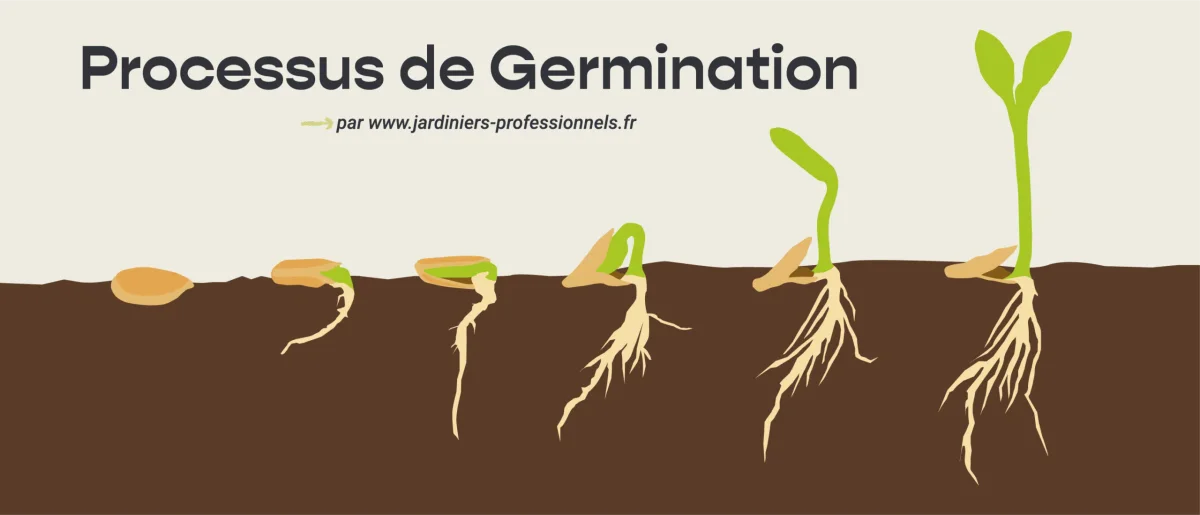
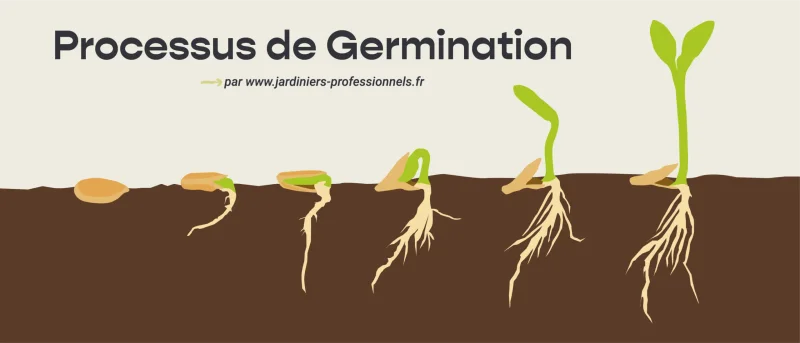
Biologically, germination consists of several successive and inseparable stages, which unfold in a specific order:
- Water Absorption by the Seed (Imbibition Phase) The seed absorbs moisture from the soil, leading to swelling of tissues and softening of protective coats. This hydration triggers the entire process.
- Metabolic Activation With the influence of water and temperature, previously inactive enzymes begin to function. The seed gradually emerges from its physiological resting state.
- Mobilization of Nutritional Reserves Nutritional reserves within the seed (starch, sugars, lipids, or proteins depending on the species) are converted into energy, fueling the growth of the young seedling until it can produce its own energy through photosynthesis.
- Radicle Emergence The radicle is the first visible structure, forming the future root that anchors the plant into the soil and allows it to start absorbing water and essential minerals for growth.
- Stem and Leaf Development Once the root system is established, the stem grows towards the surface, and the first leaves emerge, enabling the seedling to become increasingly independent through photosynthesis.
Each plant species has its specific germination requirements. Some seeds germinate quickly, in just a few days, while others may take weeks or even months. This variability depends on numerous factors: seed type, climatic conditions, soil temperature, moisture, light exposure, and substrate type.
This diversity highlights the necessity for tailored sowing practices. Successful sowing relies on a strong understanding of each plant's specific needs and the professional gardener's ability to adapt methods according to the context, soil, and season.
Seed Structure and Function
The seed acts as a survival capsule. Behind its often tiny size lies a remarkably precise biological organization designed to ensure the continuity of the plant species. Understanding its structure can optimize germination conditions and prevent common mistakes in horticultural or landscaping production.
The Embryo: The Future Plant
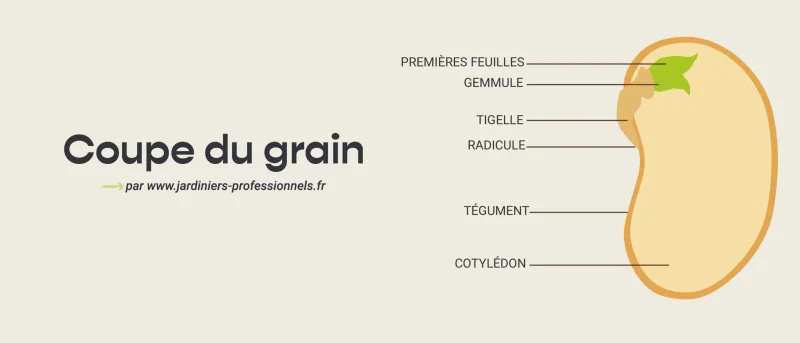
At the core of the seed is the embryo, a miniature plant already formed, consisting of a radicle (future root), a shoot (future stem), and one or more cotyledons, depending on whether it is a monocot or dicot.
This embryo is in a dormant state, with its metabolism severely slowed, allowing it to survive for years until favorable conditions arise. When humidity, temperature, and oxygen levels are appropriate, enzymatic activity resumes, triggering the germination process.
Nutritional Reserves: Strategic Energy
The reserves within the seed are crucial during the initial days of the seedling's life. These reserves may consist of:
- starch (in cereal seeds)
- lipids (in many oilseed species)
- proteins
These energy resources support initial growth until the young plant can generate its own energy through photosynthesis. The critical phase occurs between the emergence of the radicle and the unfolding of the first functional leaves. If germination conditions are inadequate (such as overly compact substrate, excess water, or unstable temperatures), the consumption of reserves may outpace the seedling's growth capacity.
The result is energy depletion and failure to sprout.
🌱 For landscaping professionals, this understanding allows for precise adjustments in sowing depth, substrate moisture levels, and the quality of potting soil used.
Protective Coats
The protective layers, known as seed coats, provide mechanical and physiological protection for the embryo. They also regulate exchanges with the external environment. Depending on the species, these coats can vary in permeability. Some seeds require scarification (mechanical or thermal) to break dormancy and enable water imbibition. In a professional context, particularly for nursery sowing or horticultural production, knowledge of specific species' dormancy is a strategic lever to secure germination rates.
A Delicate Balance at the Start
Germination is thus a highly sensitive phase. The embryo relies exclusively on its internal reserves until photosynthesis is fully activated. Any mistake in watering, temperature, or aeration can jeopardize the entire process. This is why a rigorous technical approach to sowing—choosing the right substrate, controlling moisture, and managing temperature—is a key success factor for professional gardeners.
Essential Factors for Germination
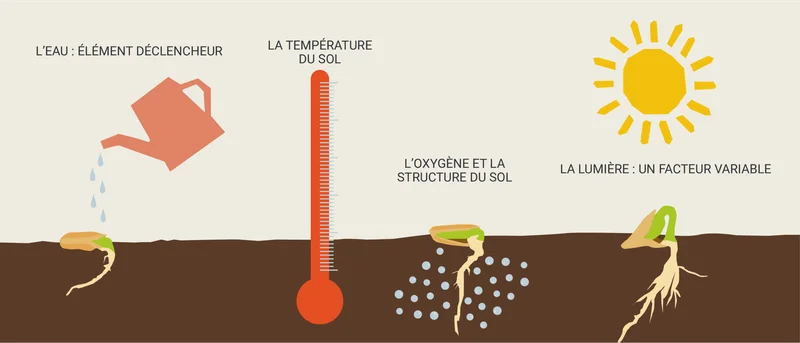
Water: The Trigger Element
Water is the primary factor in germination. As the seed hydrates, it swells and activates internal enzymatic activity. Insufficient moisture prevents this awakening, while excess water can lead to:
- seed asphyxiation,
- disease development,
- premature tissue degradation.
Professional gardeners strive to maintain a delicate balance, adjusting watering practices to soil type and climatic conditions.
Soil Temperature
Each species has an optimal temperature range for germination. Below this threshold, germination is slowed or halted; above it, the seed may sustain damage.
For instance:
- warm-season vegetables require warmed soils,
- certain perennials or forest species need a cold period to break dormancy.
Controlling temperature is therefore a major lever for successful sowing, especially at the beginning or end of the season.
Oxygen and Soil Structure
Germination is a respiratory process. The seed needs oxygen to activate its metabolism. Compacted or poorly drained soil limits gas exchanges and compromises sprouting.
Thus, professional gardeners place great importance on:
- soil preparation,
- aeration,
- substrate quality.
Light: A Variable Factor
Contrary to popular belief, not all seeds require light to germinate. Some are even sensitive to light and need surface sowing, while others prefer darkness.
Respecting sowing depth is therefore crucial. A seed buried too deeply may never emerge due to insufficient energy.
Seed Dormancy: A Natural Mechanism
Dormancy is a physiological resting state that prevents immediate germination. It allows seeds to survive unfavorable conditions and germinate only at the right moment.
There are several types of dormancy:
- cold-related dormancy,
- mechanical dormancy (hard coat),
- physiological dormancy.
Professional gardeners employ various techniques to break this dormancy:
- cold stratification,
- scarification,
- sowing at specific times.
These practices are essential for certain ornamental, shrub, or forest species.
Germination and Seasons: A Fine Reading of Natural Calendars
Germination is closely tied to seasonal cycles. Sowing too early or too late exposes seeds to unsuitable conditions: frost, drought, or excess moisture.
Landscape professionals know how to adjust their interventions:
- according to soil temperatures,
- weather forecasts,
- the types of plants being sown.
This thoughtful approach minimizes losses and promotes uniform sprouting.
Common Mistakes to Avoid
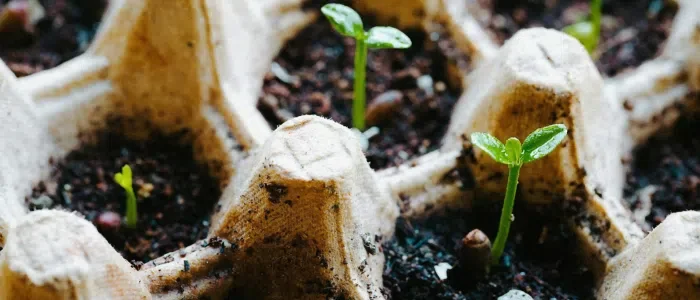
Even with quality seeds, certain errors can jeopardize germination:
- sowing too deeply,
- excessive or irregular watering,
- poorly prepared soil,
- inappropriate sowing timing.
The experience of professional gardeners allows them to anticipate these pitfalls and adapt practices to the real conditions of the field.
Conclusion: The Professional Gardener's Perspective
Germination is not merely a technical operation; it is part of a broader understanding of living systems. Professional gardeners observe, test, adjust, and share their knowledge.
Within the Cooperative of Professional Gardeners, these skills are shared to support members in sustainable practices that respect soils, plants, and ecosystems.
Understanding germination processes lays the groundwork for a successful, enduring, and coherent garden or landscaping project.