The Hidden Issues of Synthetic Lawns
Exploring the hidden issues with synthetic lawns and the importance of genuine gardens filled with life and nature.
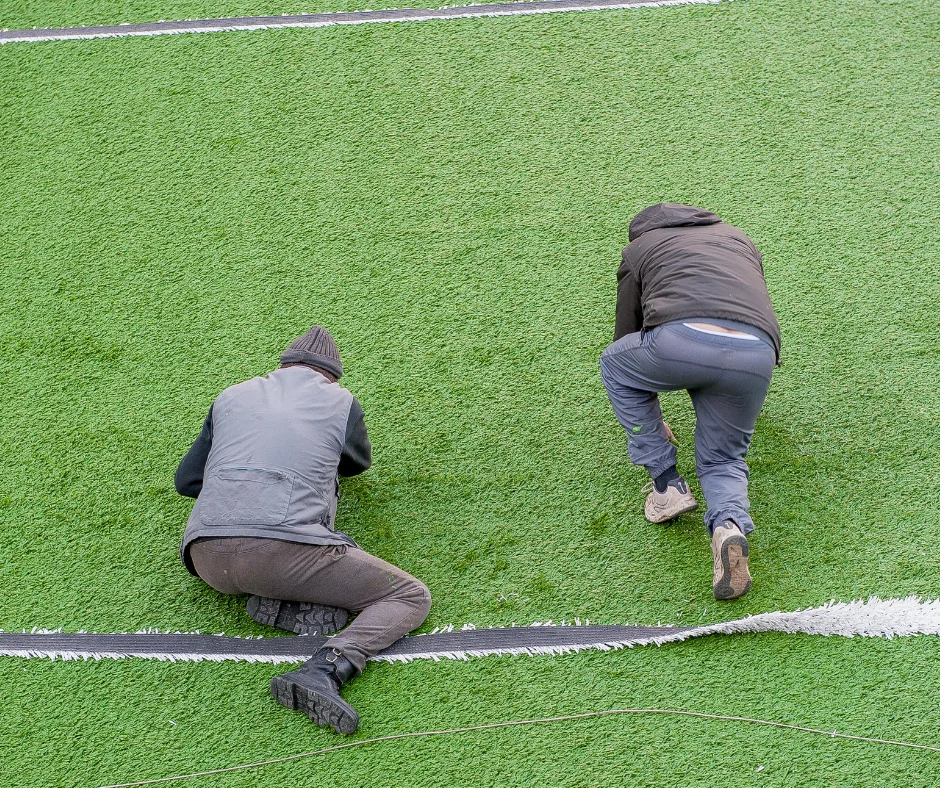
Once upon a time, gardens were vibrant pieces of earth, filled with real grass, insects, and the genuine scents of nature. However, a shift has occurred, leading us to a modern era where laying down plastic and calling it a "lawn" is touted as a mark of civilization, comfort, and even progress.
A recent experience highlighted the absurdity of this trend. After commenting on a TikTok video from a synthetic grass company, the owner responded with a proud video of his own, suggesting I needed to update my views. The irony was palpable: I am expected to modernize my belief that gardens should be alive, while he, selling plastic disguised as nature, is considered progressive.
Synthetic Lawns: The Modern Dream Synthetic grass is often marketed with the same glowing narrative: beautiful, clean, practical, maintenance-free, and economical. It appears to be the holy grail for weary homeowners seeking greenery without the hassle of caring for living plants. However, like many commercial tales, the reality is less glamorous.
The claim of “zero hassle” is misleading. Synthetic lawns require upkeep; they do not magically transform into a paradise. Accumulated leaves, dirt, or waste can lead to unpleasant odors, turning your artificial grass into an outdoor carpet that can smell quite bad. Additionally, weeds can still emerge, reminding us that nature finds a way to assert itself, even when we cover the ground with artificial materials.
In the summer, synthetic grass can become excessively hot, contradicting the promise of a cool, perfect lawn. In many cases, it needs to be watered to lower the temperature. Yes, you read that right: you're irrigating a plastic carpet to make it more bearable. This alone should raise serious questions about the so-called benefits of synthetic lawns.
The Work of Synthetic Lawns Moreover, the maintenance of synthetic grass is seldom mentioned in promotional materials. It requires grooming, sanding, and regular cleaning, replacing the natural care of a living lawn with artificial upkeep. You are no longer nurturing a living organism but managing a product, akin to polishing a car rather than tending to a garden.
This reflects a deeper issue: the rise of synthetic lawns often stems from a discomfort with the natural, variable, and imperfect aspects of life. We seem to desire a green surface that remains static, devoid of the need for observation or adaptation to the environment.
The Cost of Artificiality One of the more amusing aspects of this narrative is the portrayal of synthetic grass as an economical choice. In one promotional video, the owner offered a special price of 39 euros per square meter for fake grass made from petroleum. This raises an obvious question: economical compared to what? A natural lawn, when viewed through a less commercial lens, can largely take care of itself. Sure, it may not resemble a pristine golf course, but it can host clover, daisies, and other spontaneous plants, changing with the seasons.
So, what’s the problem? Have we really reached a point where we view the dynamic, living aspects of nature as flaws? A spontaneous lawn is less expensive, requires fewer resources, does not heat up like a hot plate, and avoids the eventual disposal issues associated with synthetic grass. Yes, synthetic lawns do wear out, fade, and age, and when they reach the end of their life, disposal can incur significant costs and environmental impacts that are rarely highlighted in marketing materials.
The Misconception of Authenticity The core misunderstanding lies in our confusion between the artificial and the well-crafted. We have begun to equate the synthetic with the modern, the unchanging with the beautiful, and the sterile with the clean. Consequently, many believe that a valid garden is one that never changes, never gets dirty, and doesn't require any interaction with the earth, water, or seasons.
This reduces a garden to merely a soft floor covering, ideal for those who want to claim they have greenery without actually engaging with real life. I can understand why someone might look at a synthetic lawn and see it as a clever choice. From a distance, it appears neat and orderly, making for clean photographs. However, it remains static, unchanging, and ultimately devoid of life.
A Comparison I Didn't Make on TikTok I admit that my initial response to that TikTok video was less diplomatic. I wanted to say that installing a plastic lawn is akin to having an inflatable doll under the covers. At a glance, it may seem appealing, perhaps even practical, and it might be marketed as a smart choice. Yet, upon closer inspection, it lacks one crucial element: life.
Ultimately, the real question is why we’ve arrived at this point. Why do we desire a garden that looks alive rather than one that truly is? Perhaps it’s because the living requires a relationship. It can dirty your shoes, demand observation, and reveal where sunlight and water accumulate. The synthetic, on the other hand, deceives us into thinking we’ve solved the problem at its root, when in fact, the issue was never the lawn itself—it was our perspective.
A garden is not a mere backdrop to be frozen in time. It should not be a green blanket laid over the earth for visual order. A true garden is a living space that evolves, sometimes appearing less than perfect but infinitely more genuine. A beautiful garden is not one that looks artificial; it is one that thrives in its environment.
Thus, I find no need to "update" my views in this direction. If progress means calling a 39-euro plastic carpet that heats up, smells, gets dirty, requires grooming, and must eventually be disposed of as advancement, then I gladly choose to remain behind—behind the living soil, the real grass, and the wildflowers that may not fit the mold. Paradoxically, this seems to be the most advanced perspective we can hold today.
Synthetic lawns do not represent the future of gardening; they signify an increasing distance from the natural world. Perhaps they appeal to our desire for control, order, and appearances. However, gardens are not meant to satisfy our need for control; they exist to remind us that living beauty has its own rhythm, character, and freedom.
And perhaps therein lies the crux of the matter. We do not need more artificial lawns; we need more authentic eyes to appreciate the living world around us.