Protecting Your Potato Crops: A Comprehensive Guide to Pests and Diseases
Learn how to identify and treat pests and diseases affecting potato crops, including signs, major pests, and effective management strategies.
Protecting Your Potato Crops: A Comprehensive Guide to Pests and Diseases
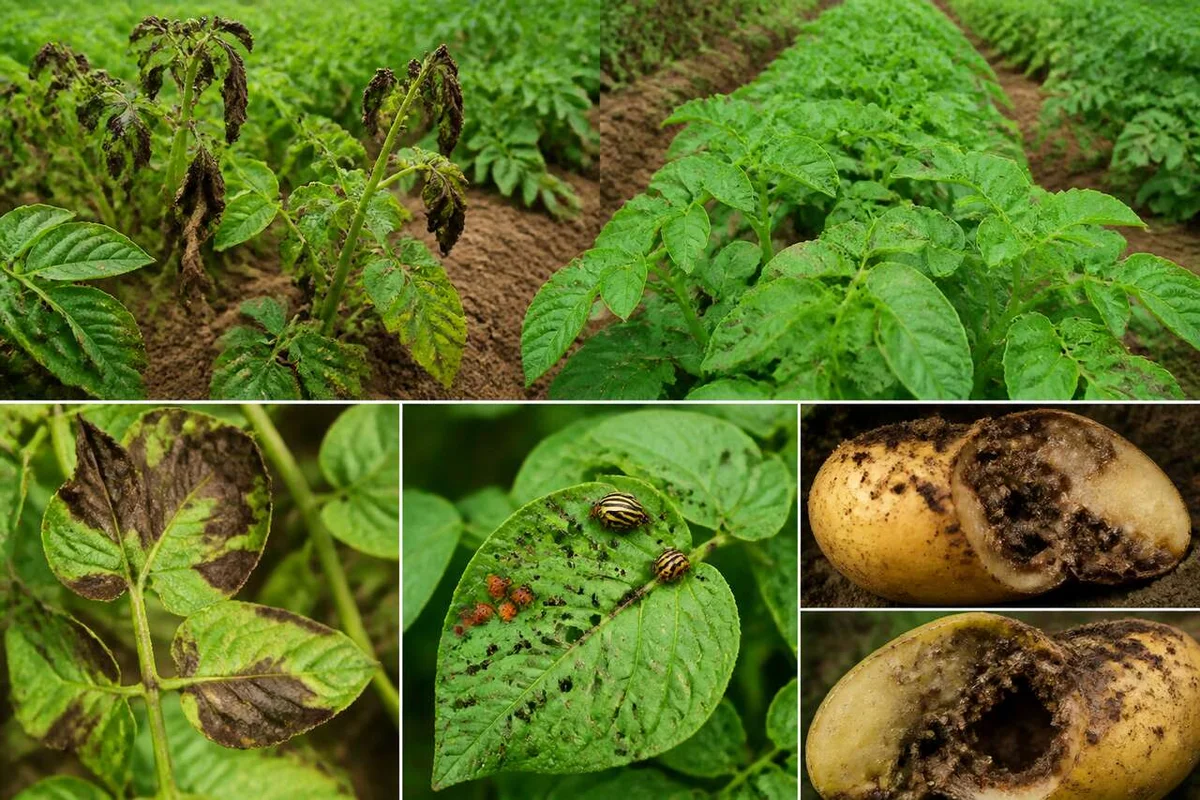
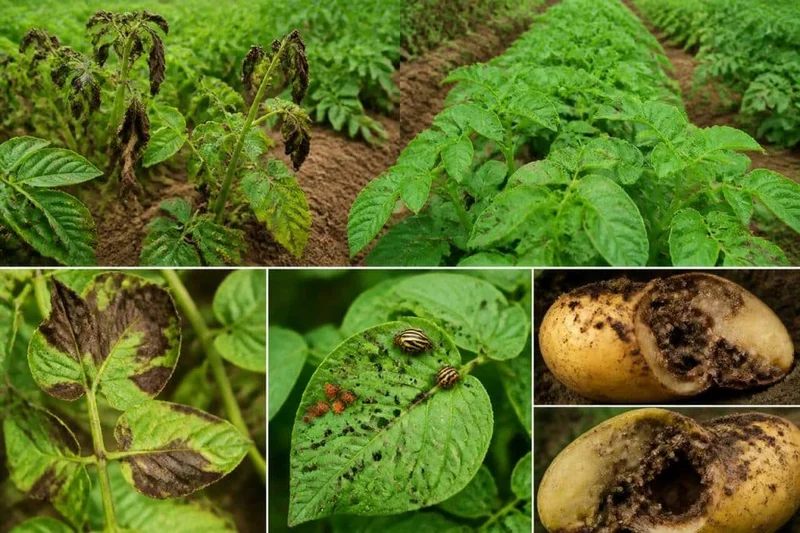
Potato plants (Solanum tuberosum) can exhibit various symptoms, such as yellowing leaves or tubers riddled with tunnels, each telling a unique story about potential issues. Understanding these signs is crucial for timely interventions, preventing unnecessary treatments and ensuring healthy growth from foliage to tubers.
Key Takeaways
- Observing the foliage, stems, and tubers is essential for distinguishing between pests and diseases before taking action.
- The Colorado potato beetle is the most destructive pest, with a life cycle of 5 to 6 weeks and egg-laying beginning in May.
- Wireworms attack tubers deeply, often leaving no visible signs on the surface.
- Common diseases such as late blight, common scab, and brown rot require preventive measures for effective management.
- Crop rotation, hilling, and using certified seed potatoes form the foundation of an integrated pest management strategy throughout the season.
Identifying the Issue: Pest, Disease, or Cultural Disorder
Before addressing any problems, it is vital to pinpoint the symptoms. Gardeners in a hurry may confuse insect defoliation with a fungal disease or misinterpret water deficiency as the onset of late blight. The most reliable method involves examining three distinct areas: the foliage (color, shape of spots, presence of holes), the stems (blackening, wilting, insect presence), and the tubers through light exploratory digging (texture, tunnels, corky spots).
Observing Signs on the Foliage
Holes forming from the leaf edges typically indicate a chewing pest, particularly the Colorado potato beetle. Conversely, concentric brown spots or diffuse yellowing suggest a fungal disease like late blight or alternaria. A rapid defoliation at the top of the plant is often animal-related, while slow progression from the bottom points to a fungal issue rising with moisture.
Checking Stems and Tubers
Blackening at the base of the stems, sometimes accompanied by an unpleasant odor, signals bacterial rot or brown rot. Tubers reveal their secrets quickly: a surface riddled with small, deep holes indicates wireworm damage, while corky crusts suggest common scab. Regular probing with a spade during the season helps anticipate these disorders before the full harvest.
This diagnostic phase is crucial as it directly informs which major pests need monitoring in the garden.
Major Pests: Recognizing Insects and Their Damage
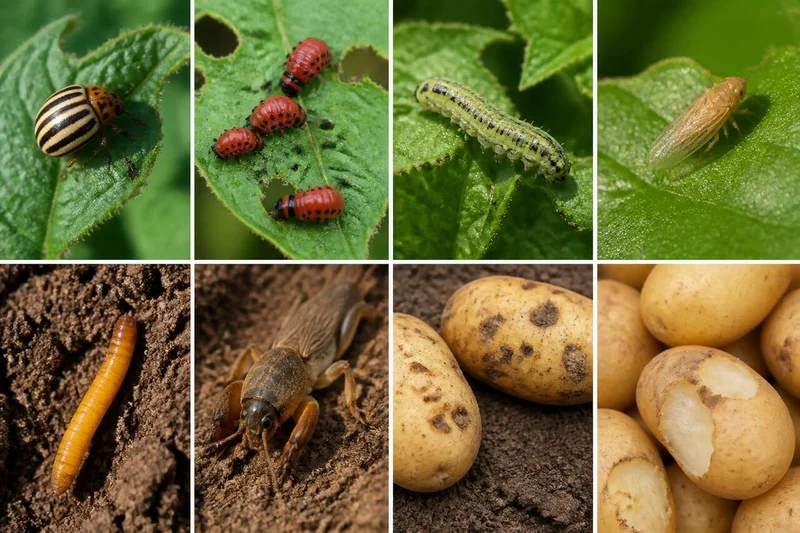
Various insects target potato plants, each with distinct profiles and risk periods. Recognizing them helps avoid blind treatments.
The Colorado Potato Beetle: The Number One Pest
The Colorado potato beetle is recognized as the most destructive pest for potato crops. An uncontrolled infestation can lead to significant yield losses, sometimes total. The adult beetle measures 10 to 12 mm, with a yellow body adorned with five black stripes. The larvae, orange-red with a double row of black spots on their abdomen, are particularly voracious and responsible for most leaf damage. Adults hibernate in the soil and emerge once temperatures exceed 10 °C; egg-laying begins in May, with clusters of orange eggs deposited under leaves. The complete life cycle, from egg to adult, lasts 5 to 6 weeks depending on temperature, with a potential second generation in summer in southern France. Warm, dry springs notably favor population increases.
Aphids, Flea Beetles, Cutworms, and Slugs
Aphids typically infest the undersides of leaves, weakening the plant while transmitting potato viruses. Flea beetles create small round holes in the foliage, while cutworms may damage stems near the ground. Slugs leave characteristic slime trails on lower leaves, especially in damp conditions.
Wireworms: The Discreet Tubers Pest
Wireworms are beetles whose larvae, known as wireworms, inflict most of the damage. These elongated, yellow-orange larvae range from 5 to 25 mm and can live up to four years in the soil before maturing into adults. They create deep tunnels, rendering tubers unfit for consumption and storage. At harvest, round, deep holes are evident, sometimes without any visible signs on the surface: a seemingly healthy tuber may conceal significant tunneling. Gardens previously used as pastures or those receiving fresh manure are particularly susceptible.
This overview of pests raises the crucial question of how to respond effectively without resorting to indiscriminate treatments.
Managing Pests: Immediate Actions, Biocontrol, and Reasoned Approaches
Integrated pest management emphasizes a tiered response, from manual removal to targeted treatments, reserving active products for situations with significant pressure.
Manual Collection and Biocontrol Against the Colorado Potato Beetle
The most effective method remains daily manual collection of adults, larvae, and egg clusters as soon as signs of attack appear. Larvae, being more vulnerable than adults, should be prioritized targets. Additionally, Steinernema carpocapsae nematodes can parasitize larvae, killing them within 48 hours—an effective biocontrol solution. Several natural predators, such as the golden carabid beetle and the green lacewing, should be preserved in the garden to help regulate populations.
Preventive Spraying and Physical Barriers
Preventively, evening sprays of nettle juice, white vinegar, garlic maceration, black soap, or baking soda can limit pest establishment. Insect netting provides an effective barrier against the Colorado potato beetle, provided the edges of the net are buried properly; while effective, this method can be costly for larger gardens.
- ★ 『Simple and practical』: The insect netting is made of high-density polyethylene, stretched and woven. The insect protection net is tear-resistant, high-temperature resistant, and corrosion-resistant, effectively blocking ultraviolet rays. ★『Easy to use』: The garden protection net can be cut to various sizes as needed to cover plants, effectively preventing small insects from entering and damaging plants without blocking sunlight, air, and moisture. The insect protection net can be easily stored or transported. ★『Wide range of applications』: The insect netting for gardens is breathable and odorless, and can be used to protect seedlings, vegetables, fruits, and other plants from birds and insects.