Penjing: The Chinese Art That Inspired Bonsai
Explore the fascinating art of penjing, its origins, differences from bonsai, and how to create and maintain these miniature landscapes.
Penjing: The Chinese Art That Inspired Bonsai
July 16, 2026
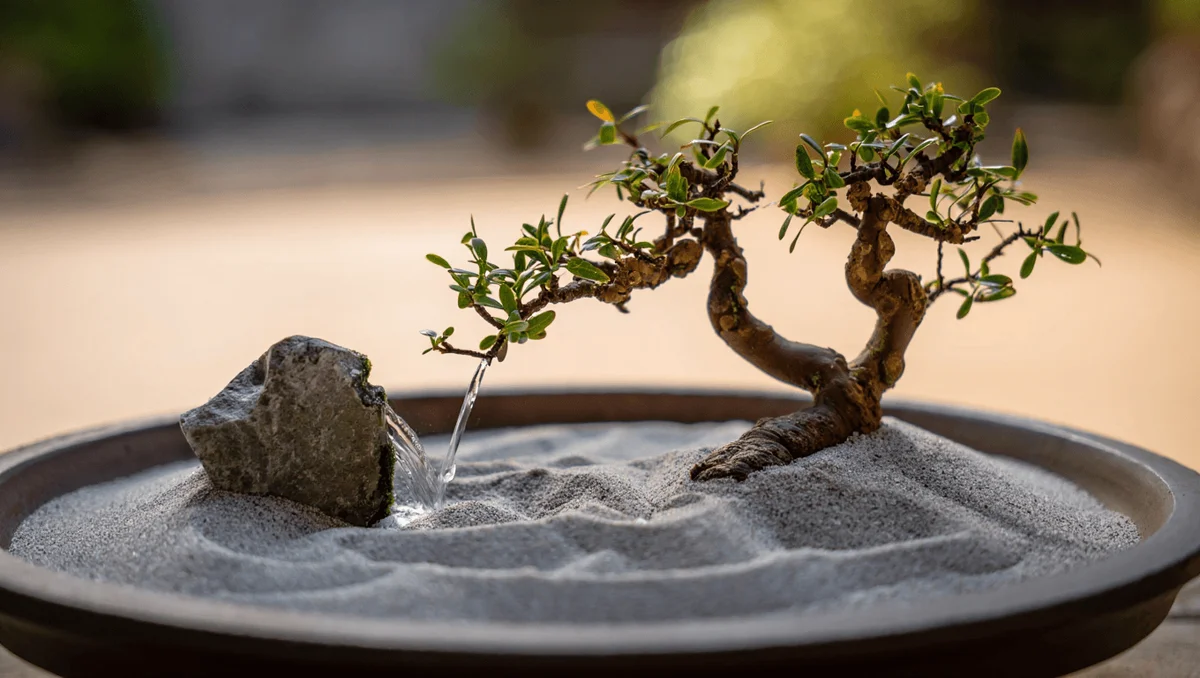
Penjing captivates enthusiasts with its ability to encapsulate an entire landscape within a pot. Often mistaken for bonsai, this ancient Chinese art form harmonizes rocks, trees, and sand to evoke miniature mountains, ravines, and rivers. Today, garden lovers seek out these landscapes in pots for their contemplative power and deep-rooted tradition. Delving into this art reveals a rich history alongside the technical requirements needed to master its poetic essence.
The Origins of Penjing
Penjing traces its origins back to the gardens and workshops of Chinese monks and scholars. As early as ancient dynasties, there was a desire to represent nature within confined spaces, as evidenced by miniaturized scenes in Song dynasty paintings. These practices influenced the entirety of Asia and laid the groundwork for what the Japanese would later term bonsai.
Over the centuries, the art of p’en-tsai transitioned from an elite pastime to a more widespread practice during the Ming and Qing dynasties. Displayed objects became increasingly sophisticated, incorporating sculpted rocks and miniature accessories. This evolution allowed penjing to develop a variety of regional styles, emphasizing landscape over the solitary tree.
How Does Penjing Differ from Bonsai?
The primary distinction between penjing and bonsai lies in their approach to landscape. Bonsai often highlights the individual tree, reduced to a sculpted, contemplative form. In contrast, penjing combines rocks, vegetation, and sometimes figurines to recreate a fragment of the world in miniature.
Aesthetic differences are also apparent, with penjing favoring visual storytelling. Compositions aim to evoke a narrative, such as a cliff or valley, while bonsai seeks the formal purity of its subject. This divergence influences maintenance techniques and container selection.
Element | Penjing | Bonsai --- | --- | --- Objective | Recreate a landscape in a pot | Enhance the individual tree Components | Rocks, multiple plants, accessories | A main subject, minimal ornament Style | Narrative and landscape-oriented | Formal and sculptural Maintenance | More demanding in extreme climates | More standardized technical requirements
This table summarizes key differences and can assist you in choosing the practice that best aligns with your sensibilities. Some contemporary artists even blend both traditions to create hybrid works, offering new aesthetic avenues while respecting the essence of each discipline.
How to Create and Maintain a Penjing
Creating a penjing begins with selecting the support and rock, as these elements dictate the final composition. A traditional suiban made of marble or a tray without drainage holes often serves as the base to stabilize the landscape. Next, the choice of trees and plants is made based on the desired effect; they should harmonize with the rock's shape.
Maintenance requires careful attention since a penjing is sensitive to extreme temperatures and watering cycles. Roots are often constrained, and the substrate must drain properly to prevent rot. Adjustments to watering, pruning, and exposure should be made according to the seasons.
- Essential Materials: Rocks, draining substrate, suitable plants, tray without holes.
- Useful Tools: Pruning shears, root tweezers, wiring, small trowel.
- Best Practices: Observe the microclimate, create protections against frost or heat, and fertilize moderately.
Various traditional styles exist that influence planting methods and plant selection. Some styles favor the mume apricot, while others prefer banyan figs or pines, depending on the region. Skills in bonsai are a significant asset for achieving a durable and expressive penjing.