It's Not a Digitalis, But It Looks Like One
This week we delve into a group of plants from the Scrophulariaceae family: the Penstemon, known for their bell-shaped flowers and adaptability in gardens.
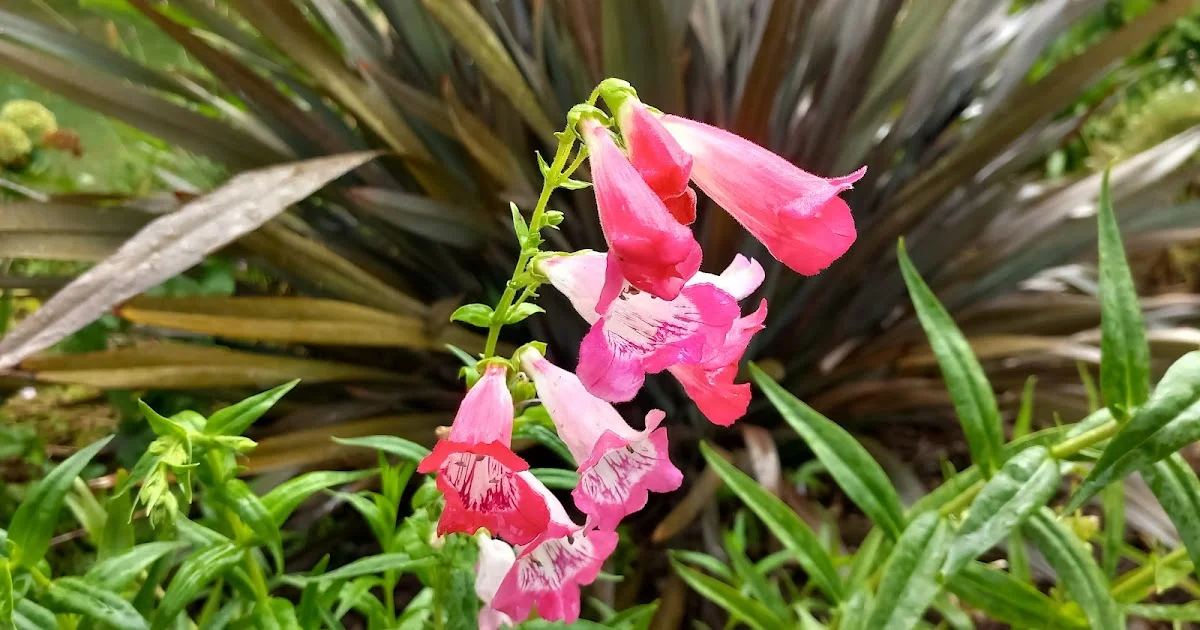

This week we delve into a group of plants from the Scrophulariaceae family: the Penstemon.
Talking about this genus of plants is complex as it includes annuals, perennials (more accurately, herbaceous), and shrubs. This genus, Penstemon, boasts over 250 species (plus more commercial varieties and hybrids).

Penstemon digitalis
These plants originate from North America and have found a place in our gardens (perhaps there was a boom in other countries, which was less pronounced in Spain... and they fell out of fashion, although they are still used, and I have the feeling they are starting to come back into style).
Their flowers, in various colors, remind me of foxgloves (Digitalis purpurea click here), and I can't be the only one thinking this since there is a species called Penstemon digitalis.
They are plants with generally lanceolate leaves that can exceed one meter in height depending on the species. They bloom with characteristic bell-shaped flowers in various colors. The flowering period lasts from late spring until nearly autumn.


Originally, they were not particularly cold-resistant plants, but selections made by nurserymen and breeders have resulted in cultivated varieties that withstand various environmental conditions, tolerating low temperatures in some cases. That said, not all cultivars adapt equally, and for safety, we can protect the base of the plant to prevent frost damage, which can lead to death by freezing.
They should be placed in full sun or partial shade, tolerating poor soils (they can develop well in richer soils) and well-drained conditions. Generally, they are drought-resistant. This makes them suitable for gardens with very low water consumption (xeriscaping), although they will appreciate occasional watering, just enough to maintain soil moisture. They can work well in rock gardens, planters, mixed with other species (beds, mixed borders, meadows, dry borders), or in large monospecific groups.

They are not very delicate plants, being quite resistant to attacks from pathogens and pests.
Regarding pruning, cut back the plants each year before they sprout in spring and perform deadheading to remove wilted flowers, which would otherwise cause the mother plant to expend energy producing seeds at the expense of more growth and flowering. This can also stimulate new blooms.
New specimens can be obtained through vegetative propagation by cuttings, which will facilitate the uniformity of the resulting plants. If this is not important, or if we have varieties or species that are not selected and are considered "botanical."
Did you know about this species? And the number of different species and varieties? Do you grow them?
I look forward to your comments!