Incorporating Organic Matter into the Garden: An Effective and Eco-Friendly Method
Discover how to incorporate organic matter into the garden for natural soil enrichment. A practical guide with expert tips for successful gardening.
Incorporating Organic Matter into the Garden: An Effective and Eco-Friendly Method
4.8/5 - (10 votes)
Incorporating organic matter into vegetable gardens is a common practice, often regarded as a fundamental technique. However, the outcomes can vary significantly based on factors such as depth, type of material added, and soil condition. While there is a promise of enriched soil, there is also the risk of fermentation due to insufficient oxygen. Thus, this practice warrants a thorough examination, drawing insights from both observed gardening results and natural processes: organic matter falls to the ground, transforms into humus through exposure to air and active microbial life.
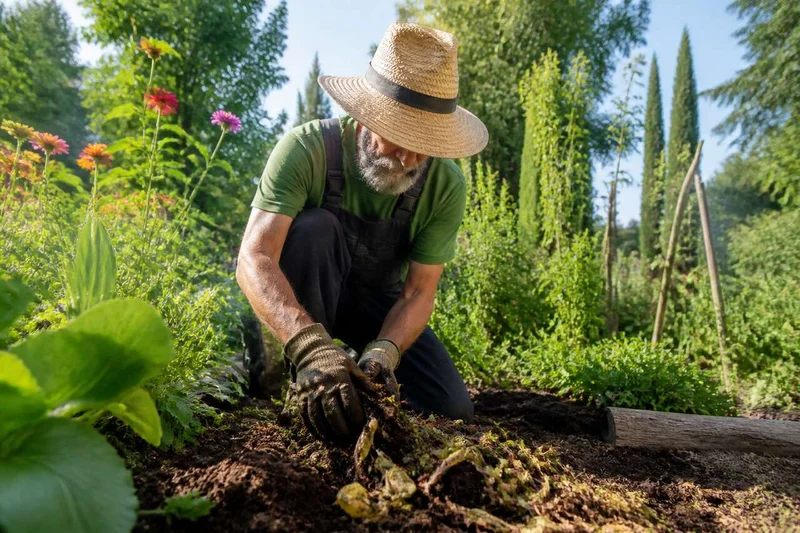
Understanding the Process of Incorporation
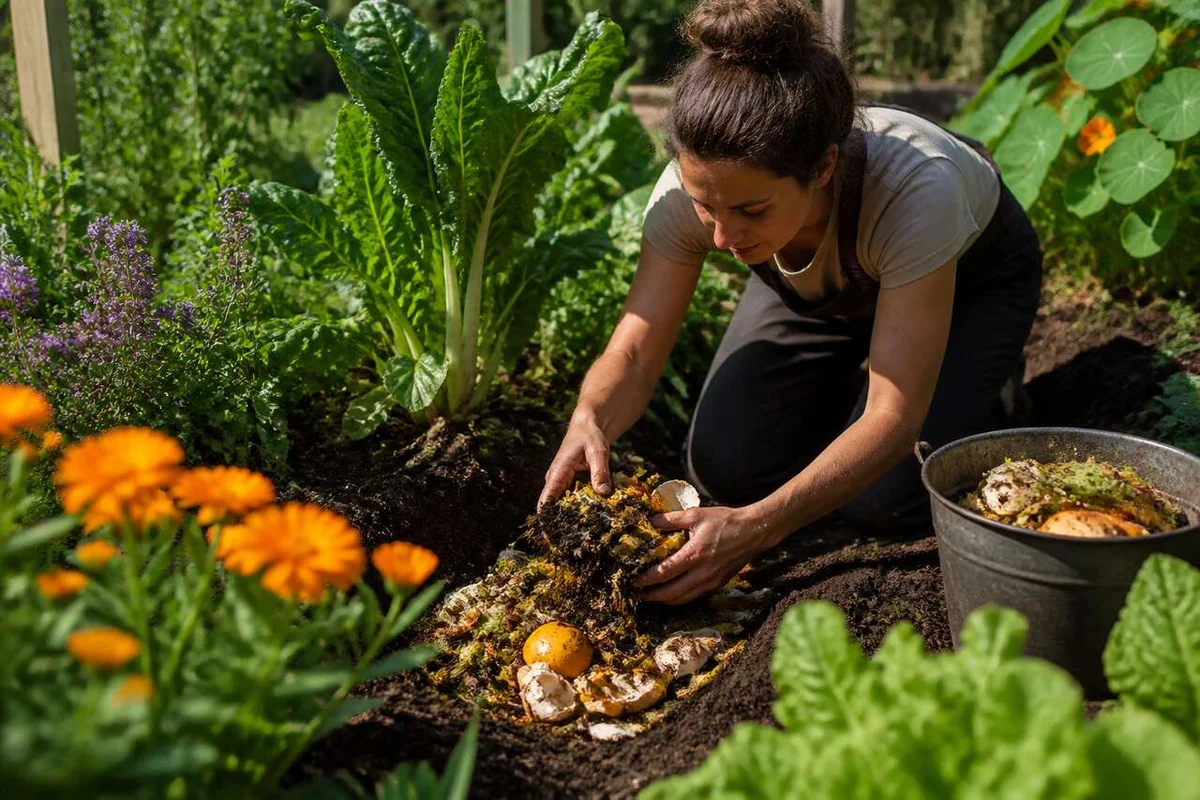
In gardening, incorporating organic matter involves mixing organic materials into the soil, typically using a spade, fork, or other surface-working tools. The materials used can vary widely, including compost, manure, crop residues, leaves, grass clippings, shredded plant material, and kitchen vegetable scraps. A crucial aspect is not only the type of material but also the depth and aeration level available for the microorganisms responsible for decomposition.
The Debate Among Gardeners
The division among gardeners stems from a straightforward reality: as one digs deeper, oxygen levels diminish. Many organisms that convert matter into humus thrive in aerated environments. Excessive depth can push organic matter into zones where microbial activity slows, risking incomplete decomposition. Conversely, shallow incorporation can protect materials from drying out and limit wind dispersal while maintaining adequate aeration.
Common Organic Materials in Gardening
Not all organic materials are equal; some are already stabilized while others are highly “energetic” and nitrogen-hungry during decomposition. The choice of material directly impacts the speed of transformation and its effect on crops.
- Mature compost: relatively stable amendment, easier to integrate.
- Manure: varies by source and composting level, rich but can be “hot.”
- Plant residues: stems, leaves, roots, often beneficial for covering or light incorporation.
- Fresh waste (clippings, peels): quick decomposition but sensitive to oxygen shortages when buried.
Incorporation vs. Surface Application: Two Approaches to Aeration
Surface application mimics natural processes: plant debris accumulates, breaks down, and gradually integrates thanks to soil organisms. Incorporation aims for faster “mixing.” The primary difference lies in access to air and the continuity of soil life, especially in the uppermost centimeters, the most biologically active zone.
Once the framework is established, it's essential to assess what incorporating organic matter can concretely bring to the garden, beyond traditional practices.
Benefits of Incorporating Organic Matter
Direct Material Contribution to the Root Zone
Light incorporation can bring organic matter closer to the root zone, especially in vegetable gardens. The goal is to enhance fertility by gradually feeding the soil's ecosystem: bacteria, fungi, microfauna, and subsequently nutrient availability. When kept superficial, biological activity can remain high, promoting humus formation.
Improving Soil Structure: Heavy and Poor Soils
Organic matter acts as a “binder” and “aerator” depending on the context. In clay soils, it can help create a more crumbly and permeable structure. In sandy soils, it enhances water retention and nutrient-holding capacity. The benefits are often more noticeable with regular applications than with isolated efforts.
| Type of Soil | Common Issues | Expected Effect of Organic Contribution | |--------------|---------------|----------------------------------------| | Clay | Asphyxiation, compaction, runoff | Improved crumbly structure, enhanced infiltration | | Sandy | Rapid drying, leaching | Better water retention, more stable fertility | | Loamy | Capping, surface crust | Protected surface, stimulated soil life |
Reducing Household Organic Waste
Utilizing organic waste in the garden can significantly diminish the amount of household waste. Estimates suggest that composting and garden utilization can reduce up to 40% of household waste, depending on dietary habits and green space availability.
| Waste Stream | Examples | Potential Share in Residual Bin | |--------------|----------|----------------------------------| | Organic Waste | Peels, grounds, plant leftovers | Up to 40% | | Green Waste | Clippings, leaves, prunings | Varies by garden | | Others | Packaging, textiles, various | Remainder |
Protection Against Drying and Pests
In certain exposed gardens, light incorporation helps limit the drying of materials and reduces direct access for opportunistic animals. It can also mitigate odors from very fresh materials. However, this benefit is contingent on reasonable depth; excessive incorporation may compromise decomposition efficiency.
These advantages do not overshadow the limitations observed when incorporation is too deep or poorly executed, prompting a closer look at the main points of caution.
Drawbacks of Incorporating Organic Matter
Oxygen Deprivation and Slowed Decomposition
The core issue is both mechanical and biological: oxygen diminishes with depth. Burying rich, fresh materials can create an area where humus transformation slows down or becomes incomplete. The risk is to end up with stagnant material instead of quickly nourishing the soil life.
Risk of Fermentation and Odors in Overly Compacted Soil
When soil is heavy, moist, or compacted, incorporation can encourage fermentation, often resulting in unpleasant odors during subsequent soil work and less favorable biological activity for crops. In extreme cases, local structure degrades, harming root development.
Temporary Nitrogen Immobilization with High Carbon Materials
Carbon-rich materials, such as dry stems or certain shreds, can tie up nitrogen during their decomposition. If buried in large quantities, microorganisms may “consume” available nitrogen, temporarily leaving plants deficient. This phenomenon is particularly evident in demanding crops and already poor soils.
- Possible Signs: yellowing, stunted growth, pale foliage.
- Risky Situations: massive burial of dry materials, cold soil, little mature compost.
- Corrective Measures: mix with mature compost, reduce volumes, prefer surface application.
Disruption of Soil Life with Deep Tillage
Incorporating organic matter often involves deeper soil work. However, turning the soil disrupts tunnels, exposes organisms to drying, and shifts microbial communities between layers. The biological cost is not always systematic, but it increases with the intensity of the work and the frequency of interventions.
These drawbacks do not manifest uniformly; they depend heavily on climate and soil type, necessitating method adaptation to the context.
The Role of Climate and Soil in Incorporation Decisions
Humidity and Temperature: Two Game-Changing Variables
Decomposition requires both water and air. In humid climates, already waterlogged soil can become asphyxiating if fresh materials are buried. Conversely, in dry climates, the surface can dry out quickly, slowing decomposition unless some cover is provided. Temperature also plays a role: during cold periods, biological activity slows, making deep incorporation even less effective.
The Biological Activity Depth: The Surface as a Strategic Zone
Most rapid biological exchanges occur in the top few centimeters, where oxygen and materials arrive. This is also where earthworms, microfauna, and fungal filaments are most abundant. Focusing on this layer, whether through surface application or very light incorporation, often aligns with working with natural dynamics rather than against them.
Choosing a Strategy Based on Soil Type
The same action can yield opposite results depending on texture and structure. In sandy soil, light incorporation can mitigate drying. In compact clay soil, it may exacerbate asphyxiation. Decisions should be based on simple observations.
- Sticky, compacted soil: favor surface application, avoid deep incorporation.
- Very permeable soil: light incorporation possible, but covering recommended.
- Living, crumbly soil: surface incorporation feasible, without turning.
| Context | Main Risk | Often the Most Robust Option | |---------|-----------|------------------------------| | Wet clay soil | Asphyxiation | Surface applications, mulching | | Dry sandy soil | Drying | Surface applications + cover, or very light incorporation | | Compacted soil | Fermentation | Gentle decompaction, surface applications |
When the context favors limiting incorporation, a method increasingly adopted in gardens is surface composting, which mimics the natural cycle of litter.
Alternatives to Incorporation: Surface Composting
The Principle: Deposit, Cover, Let Nature Take Its Course
Surface composting involves placing organic materials on the soil and allowing them to decompose in contact with air. This method aims to maintain high microbial activity, protect the surface, and gradually nourish the soil. It is based on a simple observation: in natural environments, organic matter initially forms on the surface, then gradually incorporates.
Which Materials Work Best on the Surface
Surface applications can vary widely, provided moisture and aeration are balanced. Very moist materials benefit from being mixed or covered with drier material.
- Half-mature or mature compost: easy to spread, quick effect.
- Dead leaves: good cover, progressive decomposition.
- Clippings: in thin layers to avoid matting.
- Shredded material: useful as cover, slower to degrade.
Practical Gains: Less Soil Work, More Protection
By limiting tilling, soil structure and fauna are better preserved. Covering reduces evaporation and cushions the impact of rain, minimizing capping. From a waste perspective, this approach aligns with the goal of reducing organic waste while avoiding the drawbacks of deep incorporation.
Monitoring: What to Observe
Surface composting is not a hands-off approach. It requires monitoring the decomposition rate, moisture levels beneath the layer, and potential compacted zones. A layer that is too thick with moist material may become deprived of air, leading to other issues.