Identifying and Caring for Sick Trees: A Comprehensive Guide for Gardeners
Identifying signs of a sick tree is crucial for timely intervention. This guide covers symptoms, diagnosis, and treatment options for common tree ailments.
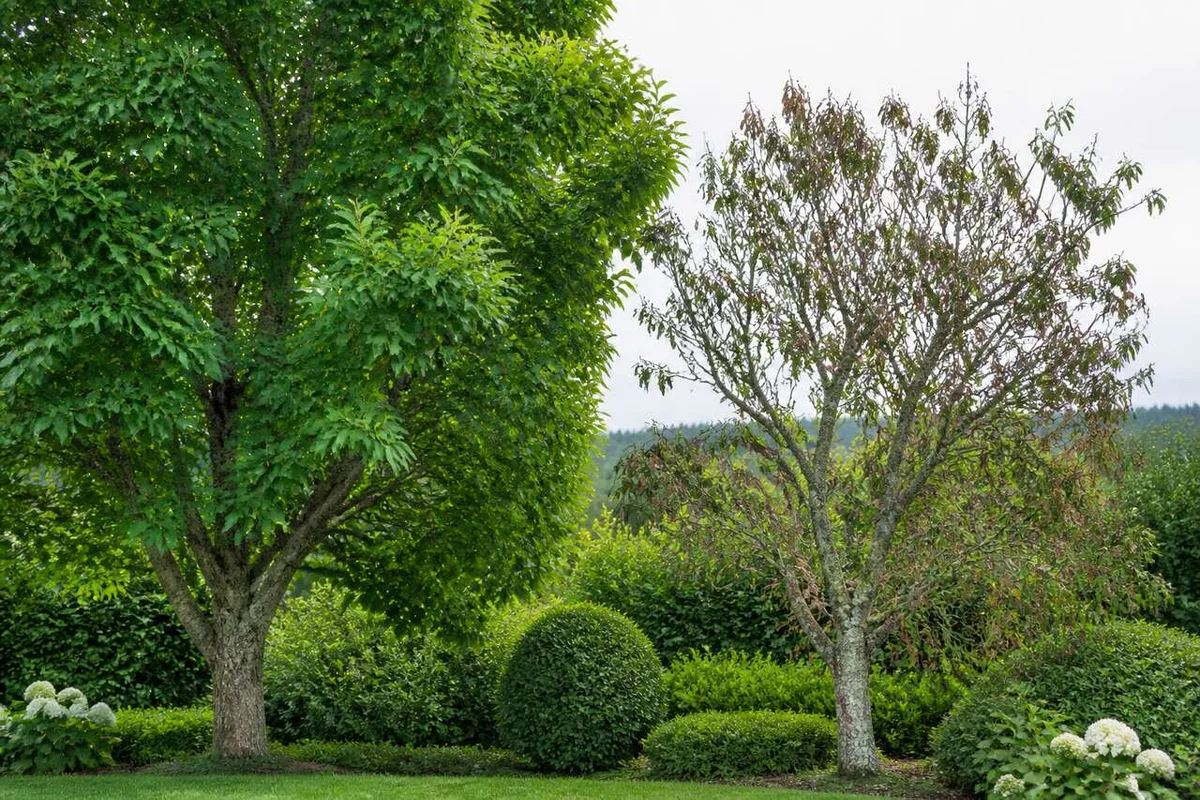
A tree exhibiting yellowing leaves, cracked bark, or sudden fungal growth at its base is signaling distress. Early detection of these symptoms is crucial for preventing further deterioration, but it requires a systematic approach to diagnosis before any intervention. Causes such as water stress, compacted soil, nutrient deficiencies, fungal infections, or pest infestations each necessitate different responses. Missteps in treatment can exacerbate the decline rather than mitigate it. Below is a straightforward, step-by-step method for observing, understanding, and determining the appropriate level of intervention, leading up to when the expertise of an arborist becomes essential.
Key Takeaways
- The leaves, trunk, and roots provide complementary clues to pinpoint the source of the issue.
- Water stress, fungal diseases, and pests have distinct symptoms but can coexist.
- A fifteen-minute on-site diagnosis often suffices to guide initial actions.
- Mulching, careful watering, and disinfecting tools can limit exacerbation without harming the tree.
- Instability, wood-decaying fungi, or rapid decline necessitate the intervention of a climbing arborist, sometimes leading to tree removal.
Recognizing Signs of a Sick Tree
Leaves: The First Visible Indicator
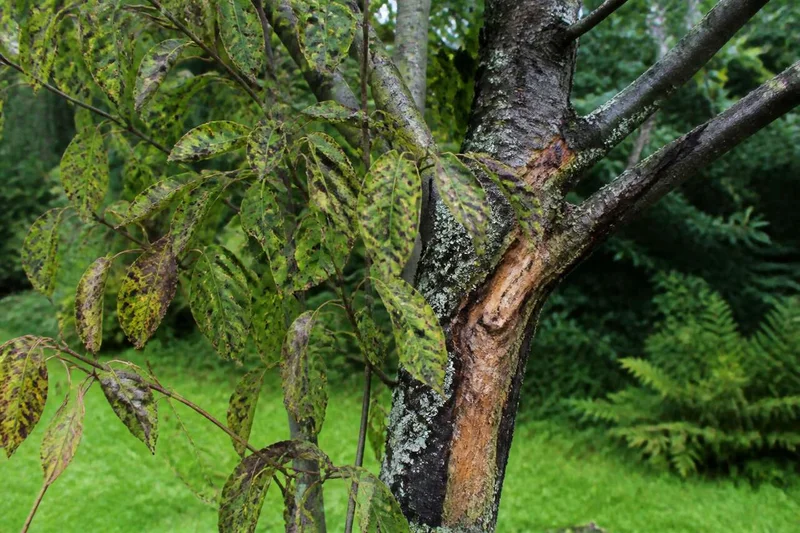
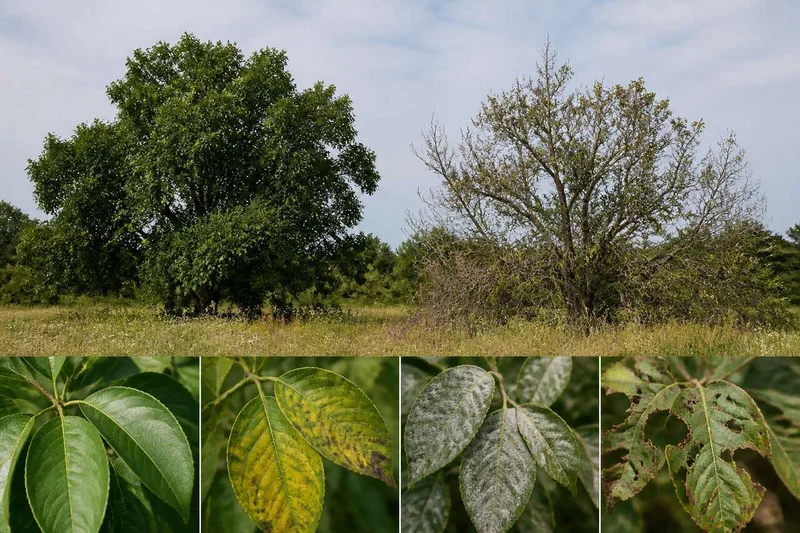
Leaves quickly respond to imbalances. General yellowing often suggests water stress or nutrient deficiency, while black, brown, or white leaf spots usually indicate a developing fungal infection. Premature leaf drop, outside of the autumn season, is a red flag, signaling deeper issues, either root-related or vascular, that the tree is trying to compensate for by reducing its leaf area.
Trunk and Bark: A Record of Injuries
The bark tells the health history of the tree. Vertical cracks, dark streaks, or gum exudation (gummosis) indicate internal stress or bacterial infection. The presence of wood-decaying fungi like Armillaria or Polyporus on the trunk is never coincidental; these organisms thrive on already decomposing wood, indicating that structural weakening has begun, often invisibly.
Collar and Roots: High-Risk Zone
The collar, the transition area between the trunk and roots, often shows the first signs of necrosis. Soil settling around the base, fungi emerging near the trunk, or a smell of decay suggest advanced root damage. A sudden tilt of the trunk is the most urgent signal, potentially indicating a loss of anchorage and a fall risk. These observations lay the groundwork for a more refined assessment: distinguishing between stress, disease, and pests.
Distinguishing Between Stress, Disease, and Pests
Physiological Stress: Water, Soil, Weather
A tree experiencing water stress exhibits wilting, dull foliage, and often symmetrical leaf drop across the crown. This type of symptom develops slowly over weeks and worsens with heat or prolonged dry spells. Stress from compacted soil or excess water manifests differently, with leaves yellowing in patches, often starting from the lower crown, indicating an asphyxiated root system.
Fungal and Bacterial Diseases
Unlike stress, diseases progress locally before spreading. Powdery mildew is characterized by a white, powdery coating on young leaves and shoots. Cankers appear as depressed, necrotic areas on the bark, sometimes accompanied by exudate. These conditions often follow a specific entry point: poorly healed pruning wounds, mechanical injuries, or pre-existing weak spots.
Pests: Specific Indicators
Aphids cause sticky, deformed foliage, often accompanied by ants. Scale insects leave waxy clusters along the branches. Bark beetles are more insidious, tunneling beneath the bark, visible only by lightly scraping a suspicious area or finding fine sawdust at the trunk's base. These three groups of bio-aggressors can coexist with pre-existing stress, making the weakened tree an easier target. This theoretical distinction becomes practical once on-site: here’s how to conduct a fifteen-minute diagnosis.
Conducting an On-Site Diagnosis in 15 Minutes
Quick Inspection of the Collar and Trunk
Begin by clearing the base of the trunk if it is buried or covered with thick mulch, a common mistake that promotes collar rot. Look for cracks, areas of bark peeling, exudates, or fruiting bodies of wood-decaying fungi, often found at the base or on exposed roots.
Vigor Testing and Soil Observation
Gently scrape the bark of a young shoot with your nail: vibrant green beneath the surface indicates living tissue, while dry brown signifies a dead branch. Next, observe the soil around the base: is it compacted, cracked from drought, or perpetually waterlogged? Soil that sounds hard when struck with a stick indicates problematic compaction for the roots.
Searching for Sawdust, Galleries, and Injuries
- Fine sawdust at the base of the trunk: likely presence of bark beetles.
- Small circular holes in the bark: galleries from wood-boring insects.
- Exudates of gum or resin: a defense response to injury or infection.
- Visible fungi on the trunk or roots: wood decomposition is already underway.
- Old, unhealed pruning wounds: entry points for pathogens.
This express checklist allows for prioritizing urgency. If soil and watering seem to be the issue, it’s essential to delve deeper into the most common factors related to roots and hydration.
Common Soil and Watering Issues
Compacted Soil: An Invisible Barrier
Compacted soil, often caused by repeated passage of machinery or vehicles, drastically reduces oxygen availability for roots. This lack of aeration limits nutrient and water absorption, even when watering appears adequate. Symptoms can mimic deficiency, complicating the diagnosis without a simple test: inserting a spade into the soil a few meters from the trunk helps gauge resistance and assess compaction levels.
Poor Drainage, Irregular Watering, and Recent Work
Insufficient drainage causes excess stagnant water that suffocates fine roots, which are crucial for absorption. Conversely, irregular watering, with cycles of drought followed by heavy applications, stresses the tree almost as much as chronic water shortage. For a young tree, a regular supply of 50 to 100 liters in spring, depending on its size, serves as a reasonable foundation for supporting growth recovery.
Root Competition and Mechanical Disturbances
The proximity of other water-hungry plants or recent excavation work that has severed part of the root system frequently explains a decline that appears without an obvious cause. These mechanical disturbances can weaken the tree over several years, long after the completion of the project. Once these environmental causes are identified, it's time to explore common diseases and pests to refine the phytosanitary diagnosis.
Common Diseases and Pests: Symptoms and Initial Responses
Leaf Damage
Powdery mildew, recognizable by its white, powdery coating, can be treated with natural sulfur-based fungicides applied at the first signs. Fungal leaf spots require systematic collection of fallen leaves in autumn to limit the spread of spores the following year.
Damage to Shoots and Trunk
Cankers are treated by removing affected areas, cutting well into healthy wood to prevent recurrence. Gummosis, often linked to stress combined with injury, requires monitoring to confirm whether it is regressing without overly aggressive intervention.
Pests: Act Without Delay
- Aphids: treat with black soap or introduce natural predators like ladybugs.
- Scale insects: manual brushing of clusters followed by an oily treatment during dormancy.
- Bark beetles: quickly remove and destroy infested wood to prevent spread to other trees.