Embracing Uncertainty in Gardening: Lessons from the Garden
Explore the complexities of gardening, understanding that survival and production are not the same, and learn to embrace uncertainty while nurturing plants.
Watering Alone Is Not Enough
When plants face drought conditions, the instinctive response is to provide them with water, which is often essential. However, water is just one of many factors influencing a plant's growth. To thrive, plants also require compatible temperatures, adequate light, available nutrients, a root system capable of accessing these nutrients, and a supportive environment to perform their various functions.
During extreme heat, several of these conditions can simultaneously become unfavorable. In such scenarios, plants may reduce their activity to conserve water. Their stomata may close more tightly, photosynthesis can slow down, and growth may significantly diminish. If high temperatures persist, flowering and fruiting can also be adversely affected.
In these circumstances, while watering can sometimes prevent wilting, it may not restore normal growth patterns.
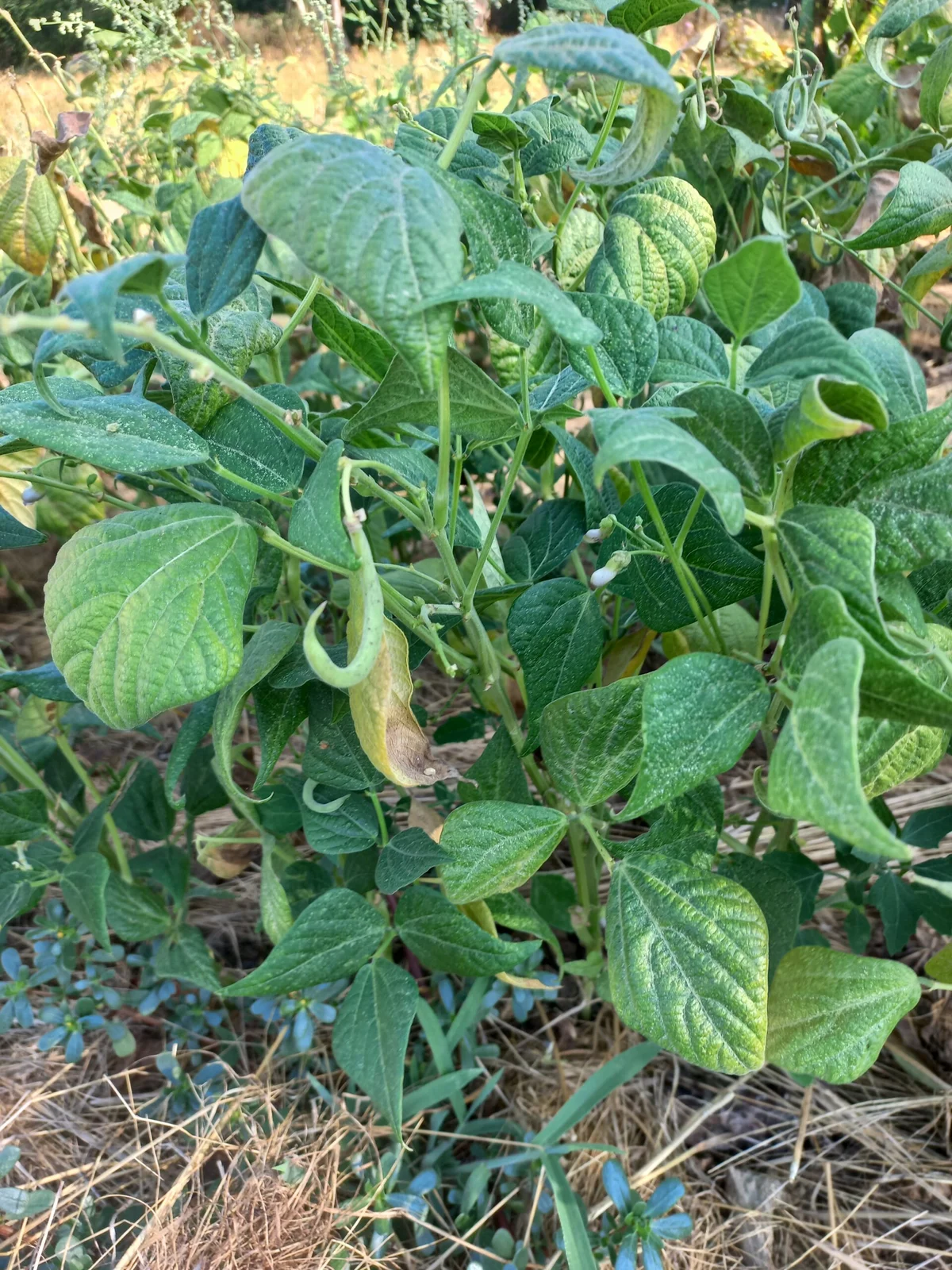
This situation can be observed in my own bean plants: they remain alive but lack the favorable conditions needed to grow properly until harvest.
Survival vs. Production
Understanding the distinction between survival and production is crucial, especially for annual vegetables. When cultivating crops like beans, tomatoes, or zucchinis, we naturally expect a harvest. However, for the plant, producing fruits or seeds requires significant resources and is an additional step.
Under considerable stress, plants may alter how they allocate these resources. Their priority shifts from production to maintaining essential functions. This is particularly visible during prolonged periods of high temperatures.
A plant can continue to appear green, retain some leaves, and seem "alive," while having already lost much of its production potential for the season. Furthermore, when conditions improve, there is no guarantee that it will quickly recover to make up for lost time.
It’s essential to remember that a plant does not operate like a machine that can simply be fed more to yield more.
The Living World Does Not Follow a Set Recipe
This is one of the most significant challenges for novice gardeners. We instinctively seek solutions: a plant is struggling? We must intervene. It’s not growing well? It must be lacking something. Its leaves are yellowing? There’s likely a deficiency. It’s not producing? Perhaps we need to add fertilizer.
This mindset can lead to excessive interventions. However, some situations cannot be corrected with additional actions. If temperatures remain excessively high for a crop, no amount of watering can completely transform its environment. If flowering is disrupted by heat, simply adding nutrients may not restore production. And if a plant has endured significant stress for weeks, it will not necessarily regain its full potential as soon as temperatures drop.
This does not mean that we should take no action. Rather, it highlights that there are limits to our interventions.
Focusing on What We Can Control
Gardening with living plants does not imply leaving them to fend for themselves. There are numerous aspects we can influence. We can improve soil structure, gradually increase organic matter content, maintain appropriate ground cover, select varieties that better suit our climate, position certain crops in more favorable exposures, provide water when necessary, and protect plants from extreme temperatures.
All these practices are significant. However, they do not grant us control over the final outcome. We can create more favorable conditions, but we cannot dictate the weather.
This distinction may seem obvious, but it profoundly shifts our perspective on gardening. It allows us to move away from the notion that every problem must have a solution and that every insufficient harvest is a consequence of the gardener's error.
A Challenging Year Is Not a Failure
When a crop fails, it’s tempting to reflect on what went wrong. However, an exceptionally hot season can also provide valuable insights into our garden. The beans that struggled this year have revealed information that might have gone unnoticed in a milder season. They illustrate the limits of this crop under such conditions, prompting me to reconsider their location, planting times, or the varieties I might choose in the future.
Drought also enables us to observe which areas of the garden are more resilient, which soils retain moisture better, which plants endure extreme temperatures, and which reach their limits quickly. All these observations can inform future gardening decisions.
Thus, a failed crop can serve as additional data for better understanding our garden.
Supporting Rather Than Controlling
This may represent the key difference between striving to control a garden and learning to garden in harmony with nature. Control implies that we can predict what each plant will produce and intervene whenever something deviates from our expectations. In contrast, supporting involves observing what occurs, understanding the plant's needs, and intervening only when we can genuinely enhance its living conditions.
This approach may require accepting that immediate solutions are not always available. There will be years when tomatoes flourish and others when they are less productive. Some seeds may not germinate, flowers may drop, and certain crops may remain small despite our diligent care.
At times, we will have done everything reasonably possible. This does not equate to poor gardening.
Accepting that we cannot control everything does not mean becoming fatalistic. On the contrary, the more we understand how living systems function, the more effectively we can act. We learn when watering is genuinely necessary, when protection is beneficial, when an intervention may be futile, and when it is best just to observe.
This ability to discern what can be improved and what lies beyond our control ultimately constitutes a form of learning. It also helps us avoid a relentless pursuit of solutions: more compost, more mulch, more water, more treatments or products aimed at "stimulating" plants.
Sometimes, the best choice is to do what is necessary… and then accept that nature will take care of the rest.
We appreciate effective methods, schedules, beneficial plant associations, and proactive measures to anticipate problems. All of this is valuable. Yet, gardening remains subject to numerous factors beyond our control.
Weather is one such factor, but not the only one. Soil biological activity changes, plants respond differently from year to year, pests can appear unexpectedly, and the same practice can yield varying results depending on the context. This unpredictability is what makes gardening so engaging.
It is not about applying a flawless recipe every year but about learning to observe, understand, experiment, and sometimes accept that the outcome may not align with our expectations.
Conclusion
This year, my green beans taught me an important lesson. I watered them throughout the summer, ensuring they survived, but I failed to provide conditions conducive to production. I must accept that, despite my care, this crop will yield nothing this year.
This realization can be frustrating, but it does not necessarily signify failure. In gardening, we can influence the soil, water, exposure, varieties, and our practices. We can support plants and enhance their environment. However, we cannot command rain, lower temperatures, or dictate the pace at which a plant grows.
Gardening with living systems may not be about mastering everything. It is about learning to act where we can, observing what unfolds, and accepting what is beyond our control.
Sometimes, a crop that fails to produce teaches us just as much as a bountiful harvest.