Choosing the Right Automatic Irrigation System for Your Garden
Explore the benefits of automatic irrigation systems that can reduce manual labor and water consumption in your garden. Learn about different types of systems, their installation, and smart technology options.
Automatic irrigation systems can significantly reduce manual labor by up to 70% while decreasing water consumption by an average of 30% to 50% compared to traditional hose watering. For most home gardens up to 200 square meters, drip irrigation systems are the most cost-effective option, whereas larger lawns of over 100 square meters are best served by in-ground sprinkler systems.
Summary
When considering irrigation solutions for home gardens, three main types stand out: drip irrigation (efficient and precise), sprinkler systems (ideal for lawns), and above-ground sprinklers with timers (affordable and versatile). Key factors to consider include garden size, types of plants, and budget. Basic starter systems can be installed for around 50 euros, providing fully automated watering that can be controlled via smartphone.
Types of Irrigation Systems and Their Functionality
The market offers three primary categories of automatic irrigation systems, each differing in technology, effort required, and cost.
Drip Irrigation delivers water directly to the roots through fine tubing. This method minimizes evaporation losses to less than 10%, while sprinklers can lose up to 40%. Systems like the Gardena Micro-Drip can be expanded modularly and are suitable for raised beds and balcony boxes.
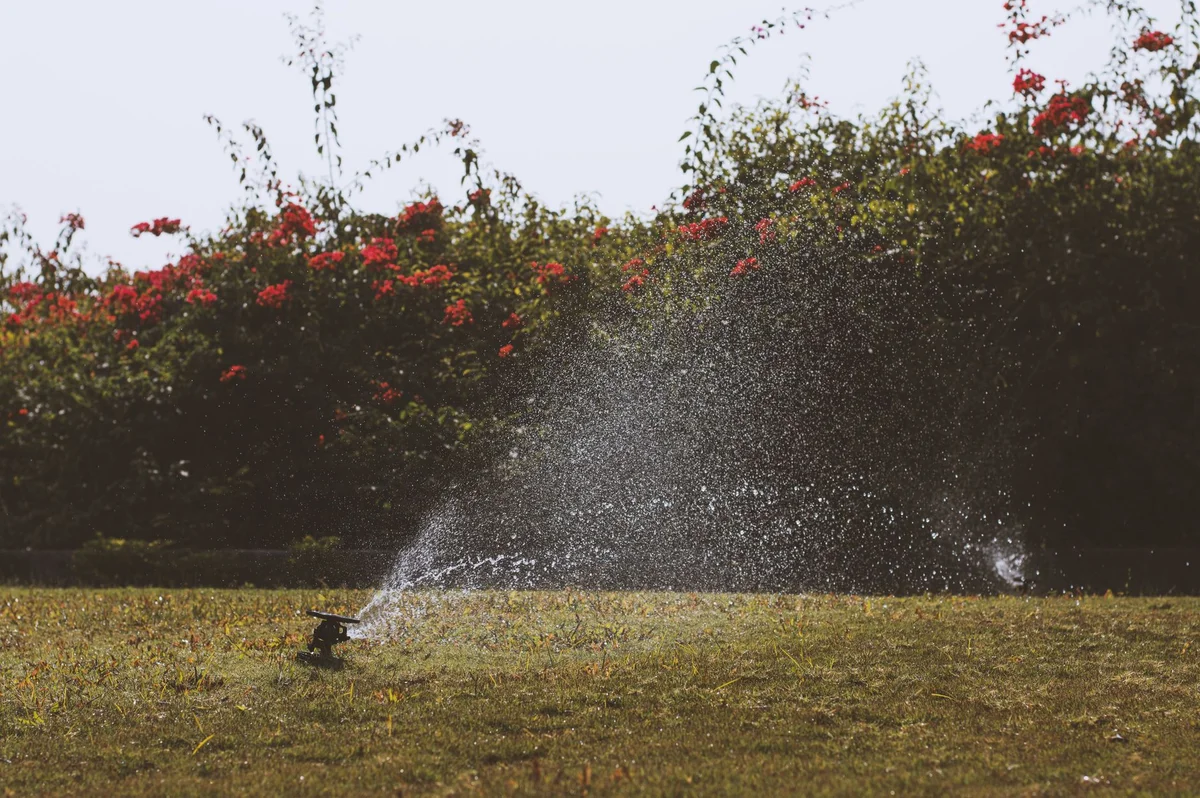
In-Ground Sprinkler Systems are permanently installed in the ground and provide uniform coverage for lawns. They consist of distribution pipes, pop-up nozzles, and a control unit. Although the installation process is more complex, these systems can last over 15 years with proper maintenance.
Above-Ground Sprinkler Systems with hose connections and timers offer the simplest entry point. They can be set up in about 30 minutes, are budget-friendly (starting at 20 euros), and do not require any digging—though they can be visually less appealing.
| System Type | Suitable For | Water Savings | Starting Costs | Installation | |----------------------------------|-----------------------------|---------------|----------------|----------------------------| | Drip Irrigation | Beds, pots, raised beds | Up to 50% | From 50 euros | Simple, 1-2 hours | | In-Ground Sprinkler | Lawns over 100 m² | 20-30% | From 300 euros | Complex, requires digging | | Above-Ground Sprinkler + Timer | Lawns up to 100 m² | 15-25% | From 20 euros | Very simple, 30 minutes | | Smart Irrigation Controller | All garden types | Up to 60% | From 80 euros | Moderate, app setup |
The Benefits of Smart Irrigation Controllers
Modern irrigation controllers connect via Wi-Fi or Bluetooth to smartphones, allowing them to adjust watering schedules based on weather data. Devices like the Gardena Smart Water Control or Netro Spark analyze local rain forecasts and postpone scheduled cycles accordingly, potentially saving an average of 42% water compared to purely time-based systems, according to a study from Wageningen University.
Investing in a smart irrigation controller is beneficial for gardens of approximately 50 m² or larger, or for those who frequently travel for over two weeks. Most households can expect a payback period of under two years when factoring in savings on water bills.
Expert Insight
Soil sensors are often an overlooked game-changer; they measure actual soil moisture at a depth of 10 cm, preventing both overwatering and drought stress. Integrating a soil sensor (costing around 25-60 euros) into an existing system can lead to an additional 15-20% water savings, especially in clay soils that retain moisture better than sandy soils.
A Four-Step Planning Framework for Home Installation
A structured planning process can help avoid costly mistakes. The 4-Step Planning Framework covers all essential decisions:
- Needs Assessment: Measure garden area and plant types. Vegetables require 4-6 liters per m² daily, while lawns need 15-20 liters per m² weekly.
- Water Pressure Check: Measure the water pressure (at least 2 bar for sprinklers, 1 bar for drip systems). A simple pressure gauge costs under 10 euros.
- Zoning Plan: Divide the garden into irrigation zones based on plant needs and sunlight exposure.
- System Selection and Layout: Plan the layout of hoses and distributors on a scaled map before purchasing materials to minimize waste and incorrect purchases.
Important Note
In Germany, the Drinking Water Ordinance (TrinkwV) stipulates that direct connections between irrigation systems and the drinking water supply require an approved backflow preventer (Type BA or CA). Failure to comply can result in fines and loss of insurance coverage. Consult your water provider for local requirements.
Installing Drip Irrigation: A Step-by-Step Guide
Drip systems are ideal for raised beds, vegetable gardens, and planted terraces. Installing a typical starter set for 15 plants takes under two hours and requires no tools other than a hole punch.
The main pipe (16 mm PE hose) connects to the faucet with a timer. From there, 4 mm micro-tubing leads to individual drippers or mini-sprayers. Choosing the right type of dripper is crucial: pressure-compensated drippers (e.g., 2 l/h) deliver consistent water amounts regardless of pressure loss along the tubing length, which is important for long runs over 15 meters.
For Mediterranean potted plants, specialized drip systems are recommended, as these plants dry out faster and require more frequent, shorter watering cycles compared to garden bed plants.
In-Ground Sprinklers: Are They Worth the Investment?
In-ground sprinkler systems represent the most significant initial investment for home gardens but offer the best long-term results for lawns over 80 m². The Hunter or Rain Bird rotor sprinklers evenly cover areas of 30 to 120 m² per nozzle with a deviation of only 2%, which is difficult to achieve manually.
DIY installation costs for a system covering 150 m² of lawn range from 400 to 800 euros for materials. Hiring a professional can cost between 1,500 and 3,000 euros for the same area, including excavation work. Efficient coverage relies on proper overlap planning: each nozzle should cover 60% of the reach of neighboring nozzles to avoid dry spots.
Utilizing Rainwater: Cisterns and Pumps for Sustainable Irrigation
Using rainwater to irrigate your garden can save 40% to 60% on drinking water costs, depending on the region. An underground cistern with a capacity of 3,000 liters is sufficient for a 200 m² garden during an average dry summer. Combining a cistern, submersible pump (with a minimum output of 3,500 l/h), and an automatic irrigation system creates a closed-loop system. In Germany, this setup qualifies as a household service for tax deductions if installed by a professional.
My Assessment Many purchasing guides recommend opting for smart, connected systems, but in practice, I often find that simple mechanical systems run more reliably than app-dependent solutions. A battery-operated timer without Wi-Fi continues to function during power outages, router changes, and smartphone replacements. My counterintuitive advice: start with a simple, robust system and only add smart features once you are comfortable with the basic setup. This approach helps avoid frustration from synchronization errors and app updates that reset settings—a common issue noted in user reviews of entry-level devices.
Key Takeaways
- Drip irrigation can save up to 50% water and is available from 50 euros for beds and pots.
- Smart irrigation controllers can reduce water consumption by an average of 42% due to weather adjustments.
- In-ground sprinklers are worthwhile for lawns over 80 m², with DIY costs starting at 400 euros for materials.
- Backflow preventers (Type BA/CA) are legally required when connecting to the drinking water supply.
- Soil sensors can provide an additional 15-20% savings compared to purely time-based systems.
- Rainwater cisterns of 3,000 liters can sustain a 200 m² garden through an average dry summer.
Sources and Further Reading
- Federal Environment Agency Germany: Brochure "Water Saving in the Garden", Dessau-Roßlau (latest edition)
- Wageningen University, Department of Environmental Sciences: Study on Water Efficiency of Smart Irrigation Systems in Private Gardens (2023)
- German Institute for Standardization (DIN): DIN EN 1717 – Protection of Drinking Water from Contamination, Berlin
- Federal Center for Health Education / Federal Ministry of Food and Agriculture: Guide to Sustainable Water Management in the Garden