Caring for the Larix Bonsai: A Comprehensive Guide
Explore the care and maintenance of the Larix bonsai, a unique deciduous conifer known for its rapid growth and seasonal beauty. Learn about watering, repotting, and pruning techniques.
Larix Bonsai Care
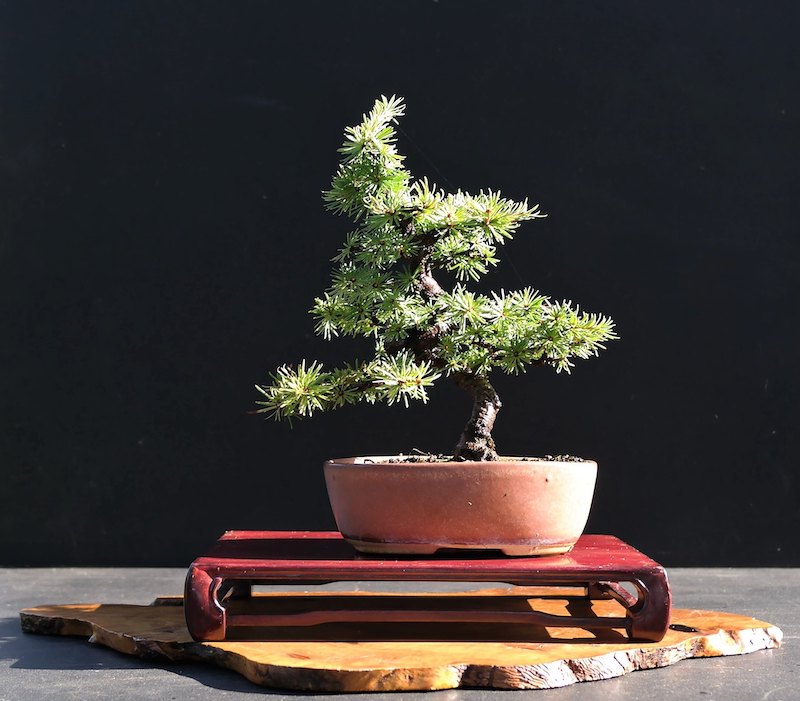
The Larix bonsai, commonly known as the larch, is a mountain species native to Europe and various regions in the Northern Hemisphere, including North America, Japan, and Siberia. This species is favored by bonsai enthusiasts for its rapid growth and the quick thickening of its trunk.
In addition to its growth characteristics, the larch is notable for the seasonal color change of its needles and its small cones, making it a visually appealing choice for bonsai cultivation. Uniquely among conifers, the Larix is deciduous, shedding its needles in the autumn.
Overview of the Larix Bonsai
The Larix genus comprises nearly 15 different species, with Larix decidua (European larch) being the most recognized. It's important not to confuse the Larix with Pseudolarix, also known as the false larch or Chinese larch.
General Information
- Genus: Larix
- Family: Pinaceae
- Origin: Europe
- Common Name: Larch
- Type of Bonsai: Deciduous conifer
- Location: Outdoor bonsai
- Growth Rate: Rapid
- Difficulty Level: Easy
- Foliage: Deciduous
- Propagation: Seed, cutting, layering, grafting
Placement and Temperature
- Location: Outdoor bonsai
- Exposure: Full sun, partial shade, very bright
- Light Requirements: Prefers light
- Temperature Range: -15°C to 30°C
- Cold Resistance: High
- Winter Protection: Required if temperatures fall below -15°C
- Ventilation: Thrives in windy conditions
The larch must be kept outdoors year-round and should be placed in a sunny location. During extreme summer heat, partial shade is advisable to prevent yellowing or wilting of the needles. As a mountain tree that can thrive at altitudes over 2000 meters, the larch is highly resistant to cold and wind and can withstand winter temperatures down to -15°C without special protection.
The foliage should not remain damp continuously, as this can lead to fungal attacks. A well-ventilated area is preferable to avoid confined spaces.
Growth
The larch exhibits rapid growth, with its trunk thickening quickly, even when cultivated in a bonsai pot.
Styles and Forms
The larch's main characteristics include:
- Rapid growth
- Quick trunk thickening
- Easy formation of foliage clouds
All bonsai styles are possible with Larix, including upright, slanted, cascade, and S-shaped forms. Young larches are often used in forests to highlight less structured subjects. When forming a solitary tree, it is crucial to differentiate and aerate the foliage clouds, as this bonsai tends to develop a very compact branching structure.
Creating Jin is feasible with the larch, although it is more suitable for older specimens.
Pot Selection: It thrives best in moderately deep pots.
Care for Larix Bonsai
Watering
The European larch (Larix decidua) is among the most water-demanding conifers, especially during the summer months. Regular yet moderate watering is essential to keep the substrate or soil moist without overwatering, which can lead to elongated needles. Like other conifers, the larch is sensitive to both overwatering and drought.
In winter, the soil should remain slightly moist, while summer watering should increase, particularly in full sun conditions.
Repotting
Conifers generally require less frequent repotting than deciduous trees, and the larch follows this trend. Typically, repotting every two to three years is ideal for this species, with the best time being early spring, just as the buds begin to swell.
When repotting the Larix, it is important not to prune the roots too severely (no more than one-third), as they are fragile and not dense.
Pot Selection: It develops better in moderately deep pots.
Repotting Tips:
- Repot when the substrate is no longer draining well.
- If you acquire the bonsai outside of repotting season, consider a transplantation until the next spring.
- For young larches (pre-bonsai), it is advisable to repot into a larger pot.
- After repotting, wait at least 2 to 3 weeks before fertilizing.
Substrate and Soil
The larch prefers a well-draining and slightly acidic soil. Here are some recommended mixtures, which can be adjusted based on its location:
- Mix 1: 50% pumice, 25% kiryu, 25% akadama.
- Mix 2: 50% pumice, 30% akadama, 20% composted pine bark.
Fertilization
Regularly provide the larch (Larix) with an organic solid fertilizer from spring to autumn. A slow-release solid fertilizer like Biogold is recommended for this species. If using a liquid chemical fertilizer, halve the recommended dosage and space applications every 15 days.
Fertilization Months: April, May, June, July, September, and October.
Pruning and Wiring
In the early years, it is advisable to allow the young larch to grow without pruning from spring to autumn, with pruning occurring at the end of its growth period, just after needle drop.
Structural Pruning
Structural or formative pruning should be done in winter, specifically in January or February. During this time, the needles have fallen, making it easier to assess the bonsai's structure. Remove damaged branches or those that distort the tree's shape.
Maintenance Pruning
Maintenance pruning can be performed throughout the growing season on already formed trees. Allow interesting branches to grow, then trim them back to the desired height. Always leave at least a tuft of needles to prevent branch dieback. Cease pruning by the end of July.
The larch is a vigorous species, so monitoring for new growth during summer is essential.
Leaf Pruning
Needle pruning, leaf removal, or defoliation is not practiced on the larch.
Wiring
Typically, the larch grows upright. However, wiring can be employed to achieve an informal, slanted, or twisted style, which is best done in early summer (May to June). Given the larch's rapid growth and quick thickening of branches, wiring should not remain in place for long.
Remove wires after 8 weeks and repeat annually if necessary, as the wood has significant elasticity. Regularly check that the wires do not dig into the bark.
Pinching
Pinching is possible on this species. Pinch off new shoots and trunk growth in spring and throughout the growing season.
Diseases and Pests
The larch is primarily susceptible to rust, drying of shoots, and rot. It can also be attacked by various scale insects, bark beetles, aphids, and other pests.
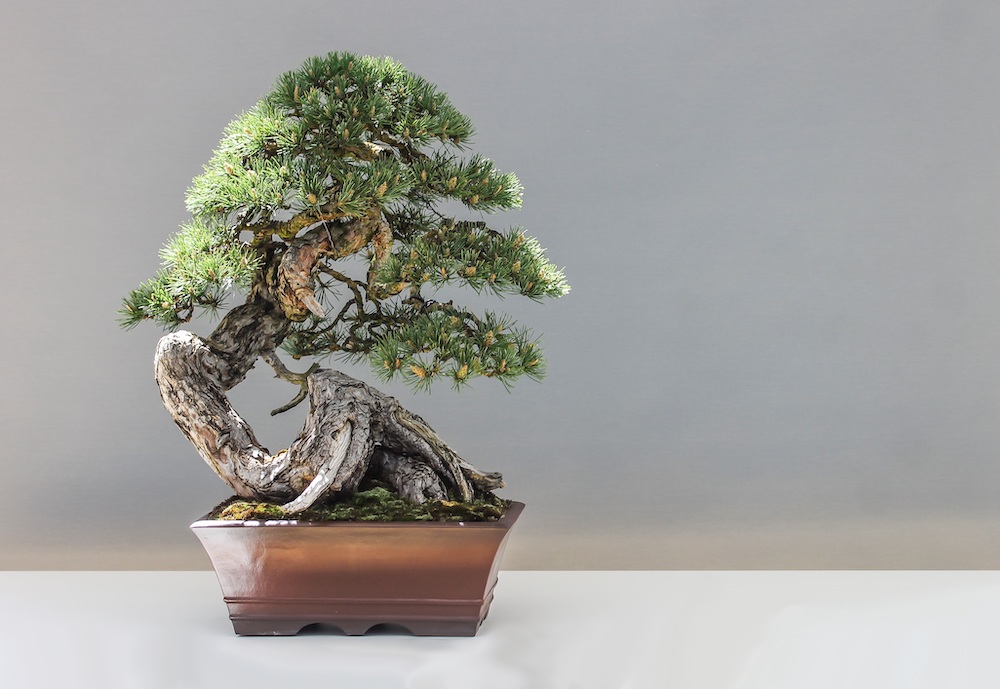
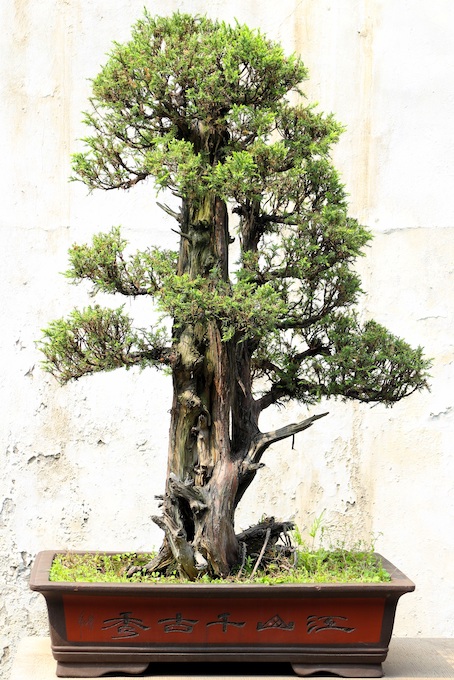
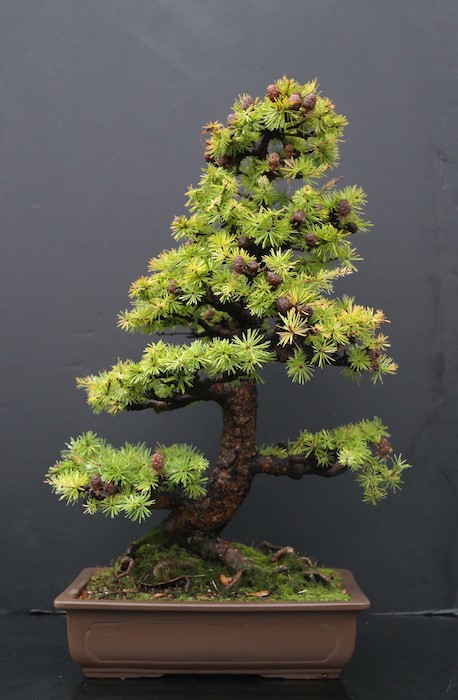
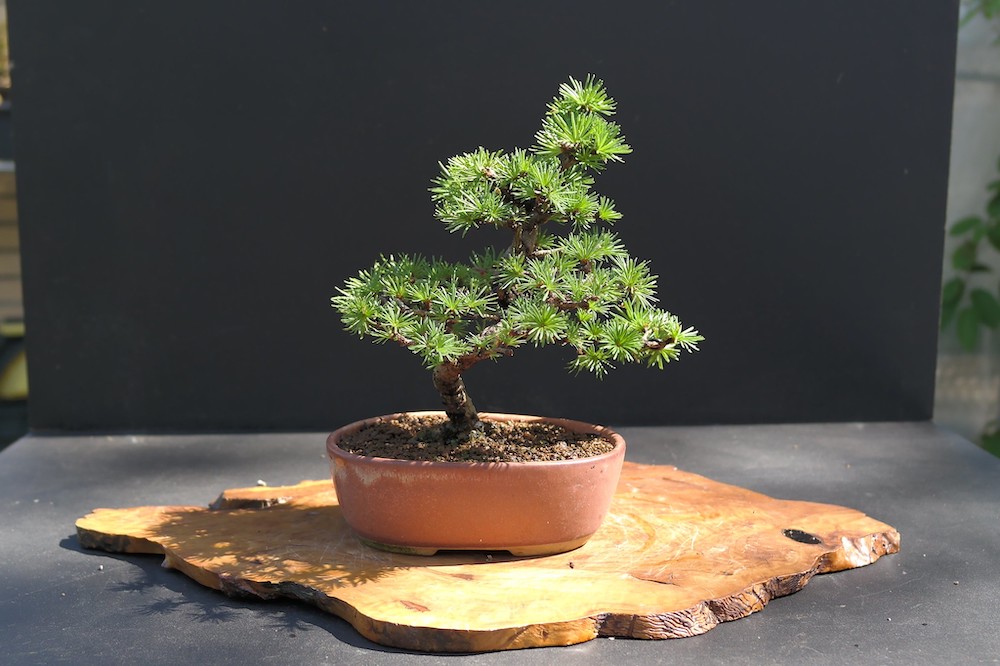
Photos of the Larix Bonsai