Caring for the Carmona Bonsai: A Comprehensive Guide
Explore the essential care tips for the Carmona bonsai, including watering, fertilization, repotting, and addressing common issues like leaf drop and pests.
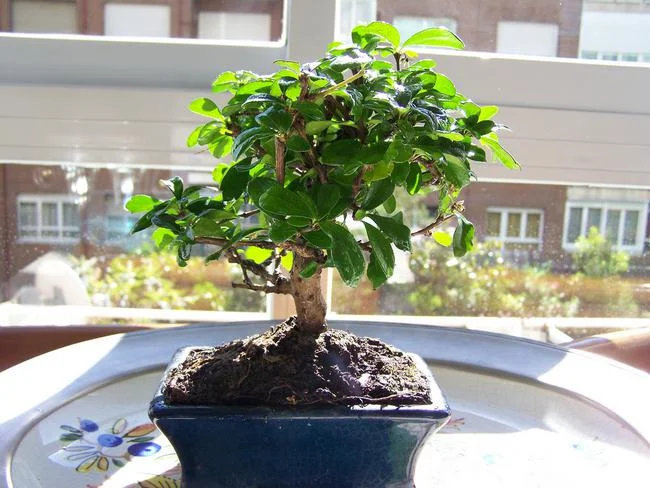
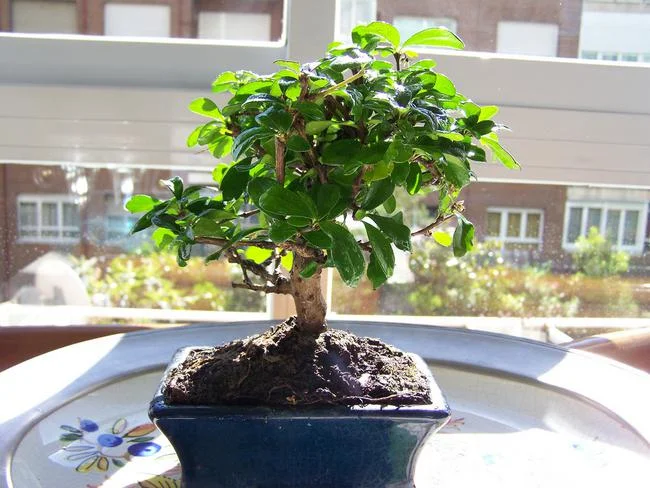
The Carmona bonsai, also known as the Fukien Tea Tree, Carmona microphylla, or Ehretia, belongs to the Boraginaceae family and is native to China and Southeast Asia. This species is widely recognized as a popular indoor bonsai found in garden centers and retail stores.
Characterized by its shiny green leaves and small white flowers that bloom in spring, the Carmona bonsai transforms in late summer when its flowers develop into round berries that start green and ripen to purple.
Location Requirements for the Carmona
Being a tropical species, the Carmona must be kept indoors during winter months. It thrives best within a temperature range of 15°C to 25°C. This bonsai requires a bright location but should be shielded from direct sunlight.
In winter, it’s advisable to place the Carmona in a well-lit room near a window, ensuring it remains in an environment of at least 15°C. During spring or summer, as temperatures stabilize above 15°C, it can be moved outdoors, but care should be taken to avoid strong winds and excessive direct sunlight, particularly during the hottest parts of the day.
For outdoor placements, watering should be adjusted according to the tree's size, sun exposure, and temperature.
Sunlight Needs: Regardless of the season, the Carmona requires a bright spot. However, in summer, a location with partial shade is preferable.
Watering Practices
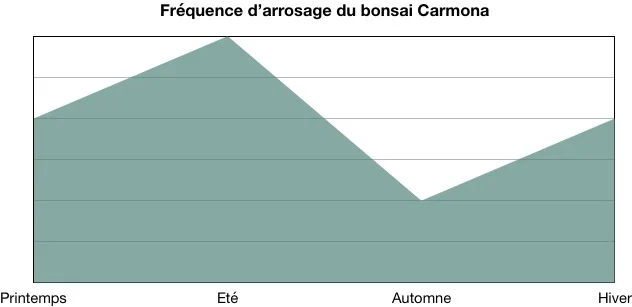
Determining the exact watering schedule for your bonsai can be challenging, as the frequency depends on several factors including tree size, substrate, season, location, and pot size. The general principles of watering apply to this species.
To ascertain when to water, observe the substrate by inserting your finger a few centimeters into the soil. If it feels dry, it’s time to water.
Water only when the substrate is dry and allow the soil to dry out between waterings. In urgent situations of advanced dehydration, drenching can be used as a remedy.
Watering Frequency
Fertilization and Nutrients
You can fertilize your Carmona bonsai with a balanced NPK fertilizer throughout the year, but it’s important to reduce the frequency and dosage during winter.
If using a liquid fertilizer, follow the instructions on the label closely, and consider halving the recommended dosage to prevent root burn, which is a risk with liquid fertilizers. Solid fertilizers are less risky. For safety, it’s advisable to use an organic slow-release fertilizer, such as Biogold.
Nutrient Roles in Bonsai Fertilizers:
- Nitrogen (N): Promotes leaf and stem growth.
- Phosphorus (P): Enhances root development and disease resistance.
- Potassium (K): Encourages flower development in the bonsai.
Tips:
- Do not fertilize a bonsai that is unhealthy.
- Avoid fertilizing immediately after repotting.
- When using liquid fertilizer, ensure the soil is moist before application.
- If you notice enlarged leaves, this may indicate over-fertilization. Cease all fertilization for a few weeks.
Repotting and Substrate
The Carmona should be repotted annually for young trees and every 2 to 3 years for older specimens, ideally between April and June.
If you purchase your Carmona from a store and the substrate quality is poor, it’s advisable to repot it. During repotting, if the tree is healthy, you may trim about one-third of the roots to encourage new root growth.
Substrate Requirements: The Carmona bonsai thrives in a draining and aerated substrate. A mix of 100% Akadama or a blend of Akadama and pumice or lava rock is recommended.
Repotting Steps:
- Remove the bonsai from its pot and cut any anchoring wires.
- Clear all substrate and gently untangle the roots.
- If the tree is healthy, trim larger roots to promote new root growth.
- Prepare your pot with a drainage grid over the holes.
- Place a layer of pumice or coarse Akadama at the bottom for drainage.
- Cover with a thin layer of substrate and position your bonsai in the pot.
- Fill any gaps with substrate and compact it gently.
- Finally, water your bonsai thoroughly.
Pruning
Structural pruning should ideally be done at the end of winter to maintain the desired shape and health of the bonsai.
Addressing Leaf Drop in Carmona Bonsai
If your Carmona bonsai is shedding leaves, it may indicate either a lack or excess of water. Observing the tree closely can help identify the cause.
Common Pests
The Carmona is susceptible to pests such as aphids, slugs, and scale insects. Being a delicate variety, it requires natural treatments without the use of harsh insecticides.
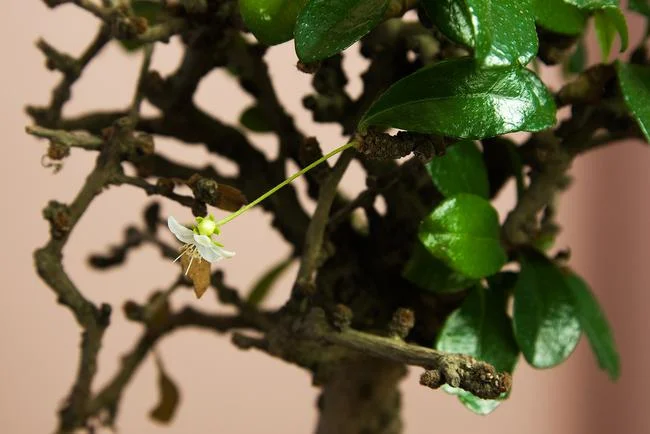
The leaves and flowers of the Carmona