Bonsai Malus (Apple Tree) - Care Guide
Explore the care and cultivation of Bonsai Malus (apple tree), including species, watering, pruning, and more.
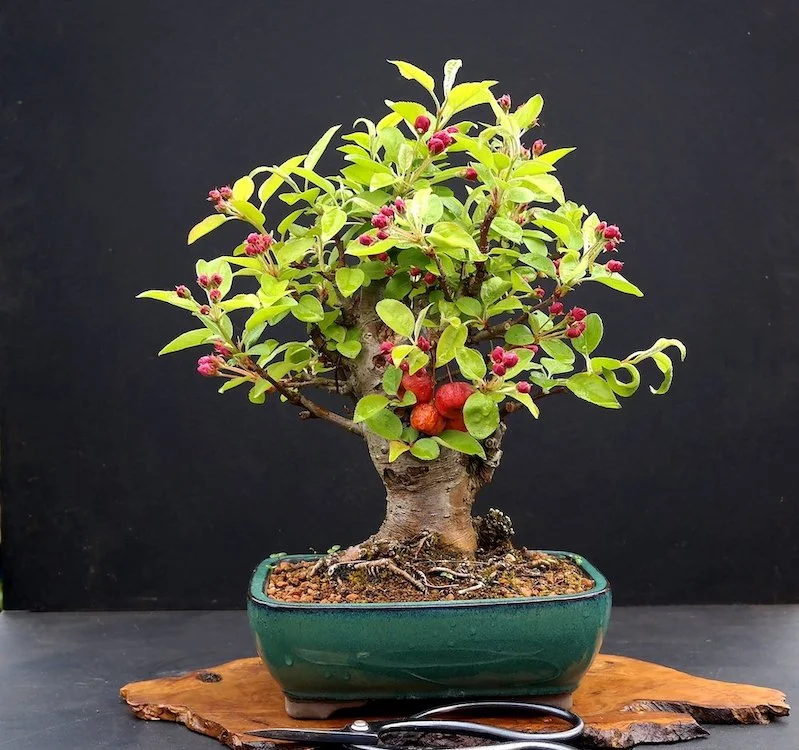
Bonsai Malus – Apple Tree
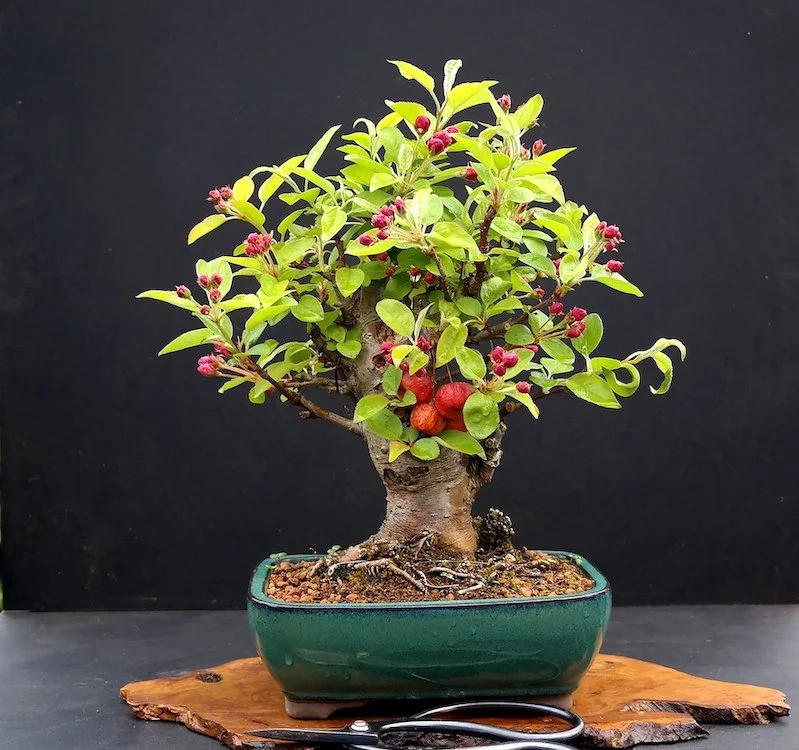
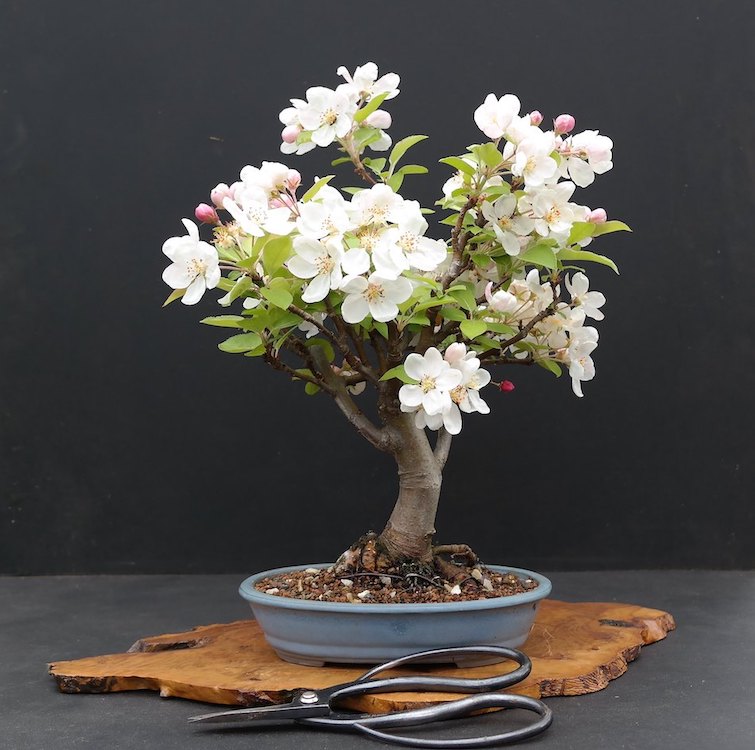
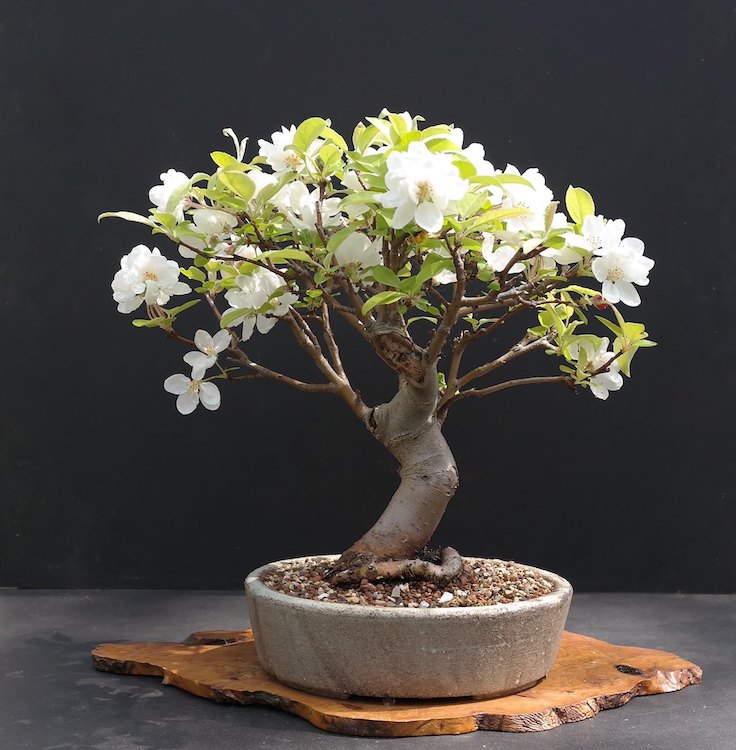
The apple trees, belonging to the genus Malus and the family Rosaceae, encompass around 40 species native to Europe, Asia, and North America. These deciduous trees are particularly valued in bonsai cultivation for their colorful flowers and small fruits.
Overview of Bonsai Malus
- Family: Rosaceae (Rose family)
- Common Name: Malus, Apple Tree
- Origin: Europe, Asia, North America
- Type of Bonsai: Deciduous and fruit-bearing
- Difficulty Level: Easy
- Growth Rate: Fairly rapid
- Foliage: Deciduous
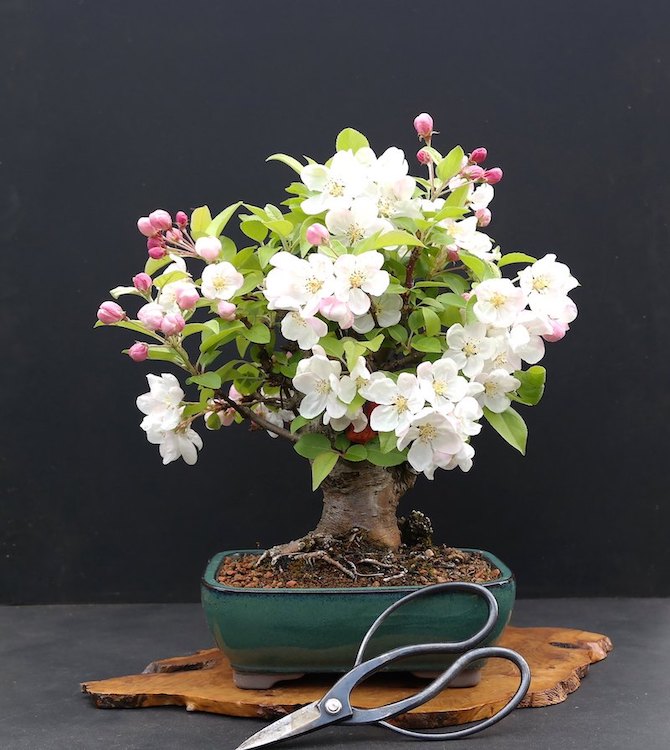
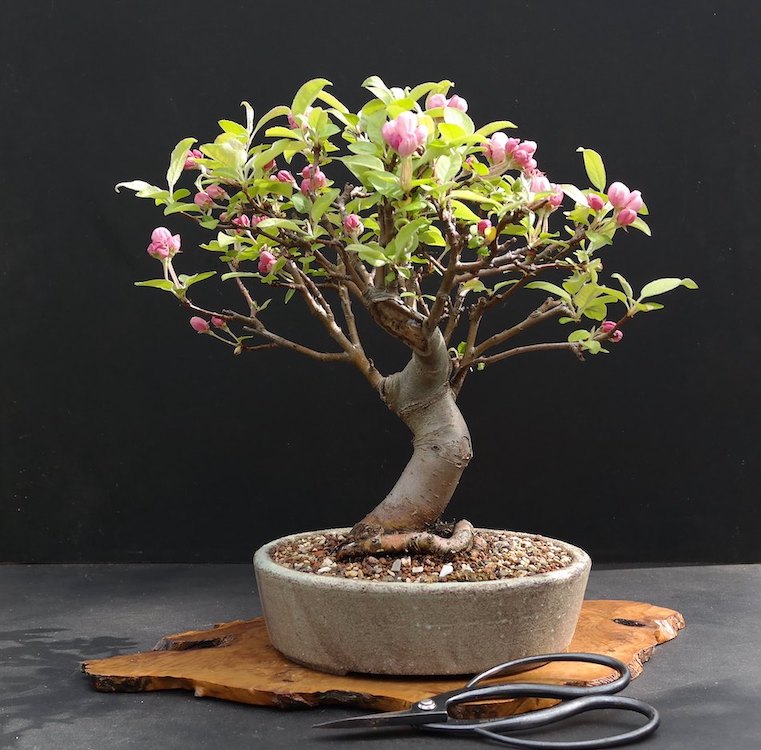
- Blooming Season: Spring
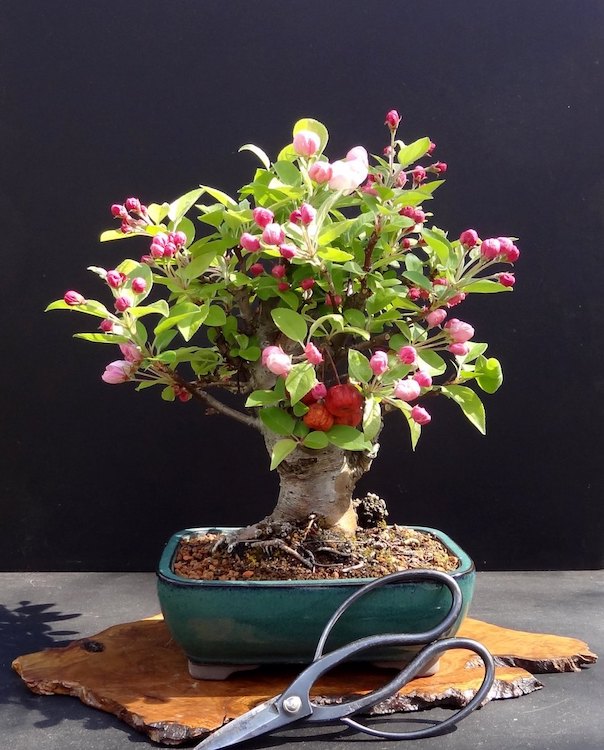
- Flower Colors: White, pink, or reddish
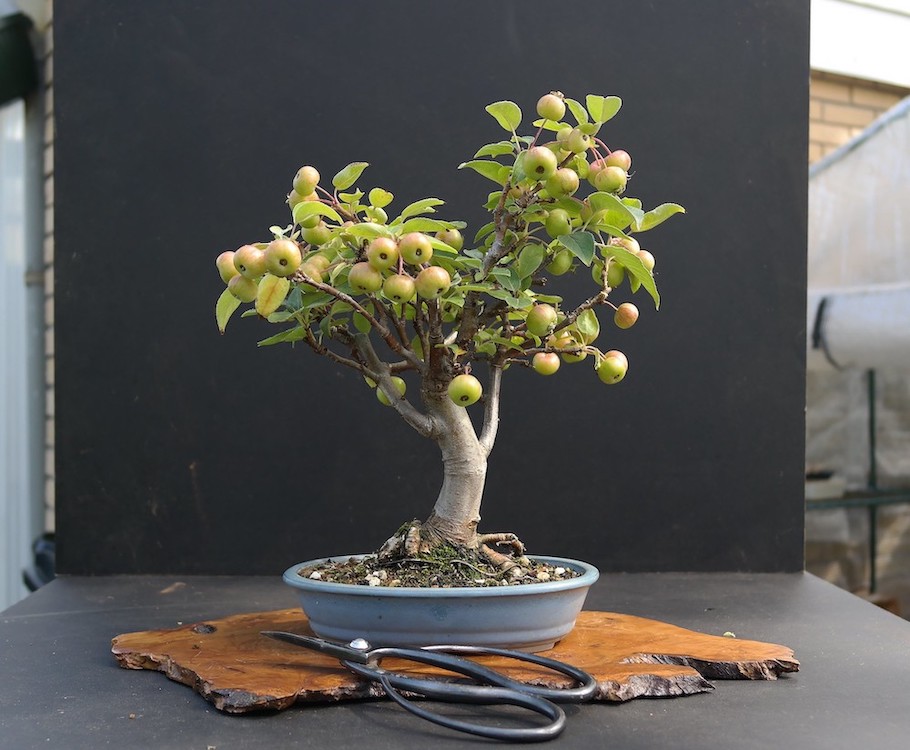
- Fruit Bearing: Autumn
- Fruit Colors: Green, yellow, orange, or red
- Location: Outdoor bonsai
- Exposure: Full sun, partial sun, and partial shade
- Ventilation: Tolerates wind
- Propagation: Seeds, grafting, cuttings, layering, young plants...
Species Suitable for Bonsai
Malus Cerasifera (Cherry Apple)
Originating from Japan, the Malus Cerasifera, commonly known as the cherry apple, is a favored choice for bonsai. This species is notable for its small green leaves, white flowers, and cherry-sized fruits that can be red or yellow, depending on the cultivar.
Malus Baccata (Siberian Apple)
The Malus Baccata, or Siberian apple, hails from northern Asia. This ornamental species is chosen for bonsai cultivation due to its small fruits and leaves. It is also used as a rootstock.
Malus Halliana
Known as the Hall's crabapple, the Malus Halliana is native to East Asia (China). Its oval foliage, pink flowers, and tiny red or yellow fruits make it suitable for bonsai.
Malus Sieboldii (Siebold's Apple, Toringo)
Also referred to as Siebold's crabapple or Malus Toringo, this wild species from Asia (Japan, China) produces small apples (approximately 1 cm) well-suited for bonsai, particularly in the Shohin style. Its fruits can be yellow or red, with flowers that are pink and white.
Malus Sylvestris (Wild Apple)
The Malus sylvestris, or wild apple, is native to Europe. It features white and pink flowers in late spring, followed by small apples approximately 2 cm in size, which transition from green-yellow to red.
Other Varieties
Additional varieties of Malus include Malus Everest, Malus Floribunda, Malus Spectabilis, and Malus Domestica, among others.
Location and Temperature
The Malus (apple tree) is a hardy outdoor bonsai that can thrive in gardens, terraces, or balconies year-round. This fruit-bearing species prefers sunny locations, ideally facing south.
It can withstand a temperature range from -10°C to +30°C.
Winter Care
While quite cold-resistant, it is advisable to protect the tree when temperatures drop below -2°C. Finding a sheltered spot away from harsh weather conditions like snow, hail, and frost is recommended. Be cautious of late frosts during flowering.
Summer Care
This bonsai can handle full sun, but during heat waves, a partially shaded location is preferable. Insufficient watering from July to August can be detrimental.
Watering
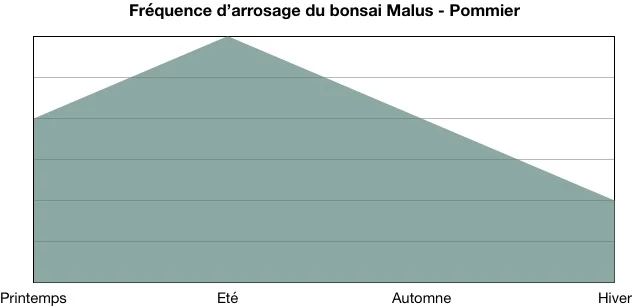
In winter, watering should be moderate, ensuring the soil does not dry out completely.
As the tree begins to form flowers and fruits, more substantial watering will be necessary. Care should be taken to avoid wetting the flowers directly to prevent premature dropping and reduce pollination.
In summer, more frequent watering may be needed, especially daily during heat waves or depending on the location and soil type.
Frequency of Watering
Watering Tips:
- Avoid scheduled and blind watering. Observe, touch, and determine if your bonsai needs water.
- Opt for rainwater instead of tap water, or let tap water sit for a few days before use.
- If your bonsai is on a saucer, be sure to remove excess water.
- In summer, early morning or evening watering is preferable.
Pruning and Wiring
For pruning and wiring the apple bonsai, you will need:
- A concave cutter for clean cuts on branches.
- Wound sealant for larger cuts.
- Bonsai scissors for young shoots.
- Aluminum or copper wiring for shaping.
Pruning
Green pruning can occur after flowering until July, while structural pruning is best done in autumn after fruit ripening. The apple tree's flowers predominantly develop on short branches.
Make sure to remove shoots at the base of the trunk and any excessive growth to conserve the tree's energy.
Cleaning
Remove dead leaves or those that have not fallen during autumn. Before winter, eliminate any remaining fruit. In winter, clear away dead wood.
If your bonsai produces too many fruits during growth, it is advisable to remove some apples to prevent overburdening the tree and breaking branches due to weight.
Pinching
Pinching can be done from early spring to late summer.
Wiring
You can wire your Malus bonsai from spring to autumn. The branches are quite flexible, and the wires can remain for several months as long as they do not cut into the branch.
Due to the smooth bark of the apple tree, it is better to use aluminum wire, which is more manageable than copper wire.
Styles
The Malus bonsai is typically styled in an informal upright or slightly slanted form. It can also be formed into cascade or semi-cascade styles.
Fertilization
Fertilize the Malus bonsai starting in March to prepare for the flowering period. It is best to use a slow-release organic fertilizer. Additionally, every two weeks, you can incorporate some liquid fertilizer into your watering regimen.
During the flowering period, cease fertilization to allow the apples to develop.
From late summer to early winter, use a balanced fertilizer like Biogold to prepare for the winter dormancy.
Fertilization Tips:
- After repotting, wait 2 to 3 weeks before applying liquid fertilizer.
- Follow the manufacturer's recommendations on the fertilizer packaging.
- After fertilization, monitor the tree's response to adjust future applications.
Substrate and Repotting
Repotting
The apple bonsai (Malus) requires relatively frequent repotting, preferably at the end of winter (March) when the first signs of growth appear. Young bonsais should be repotted annually, while older bonsais can be repotted every 2-3 years. During repotting, it is advisable to trim about one-third of the roots.
Repotting Tips:
- If you purchased the bonsai outside of the repotting period, consider performing a transplanting instead until the following year.
- After repotting and root trimming, wait 2 to 3 weeks before applying liquid fertilizer.
- Depending on the training stage and age of the bonsai, do not hesitate to select a larger pot.
Pot Selection
The Malus bonsai requires a fairly deep pot. It can be glazed or unglazed, with colors that complement its flowers and fruits. Common colors include blue, gray, and brown. The shape can be oval, rectangular, or round. Since it lives outdoors, the pot must be frost-resistant.
Substrate
For the apple bonsai, use a substrate based on Akadama. You can use a substrate made entirely of Akadama or a mix that includes potting soil, pumice, and sand.
Tips:
- For smaller bonsais, use sifted Akadama at 2-3 mm.
- Use a sieve to control grain size.
Example Substrate Mix:
- 100% Akadama
- 80% Akadama and 20% Pumice (volcanic rock)
- 80% Akadama and 20% potting soil
- 60% Akadama, 20% potting soil, and 20% Pumice
You can also add sand and peat to the mix.
Diseases and Pests
Although the apple bonsai is robust, it can be susceptible to pests and certain diseases. Common pests include scale insects, aphids, and spider mites. It is advisable to employ treatments as needed.
The Malus bonsai may also suffer from diseases such as powdery mildew and downy mildew, which can be treated with Aliette or Bordeaux mixture.
In cases of deficiencies like chlorosis, it is recommended to provide an anti-chlorosis treatment to prevent leaf yellowing.
Photos of Bonsai Malus