Bonsai Bougainvillea Care Guide
Explore the care and maintenance of Bonsai Bougainvillea, a vibrant flowering plant known for its colorful blooms and unique growing needs.
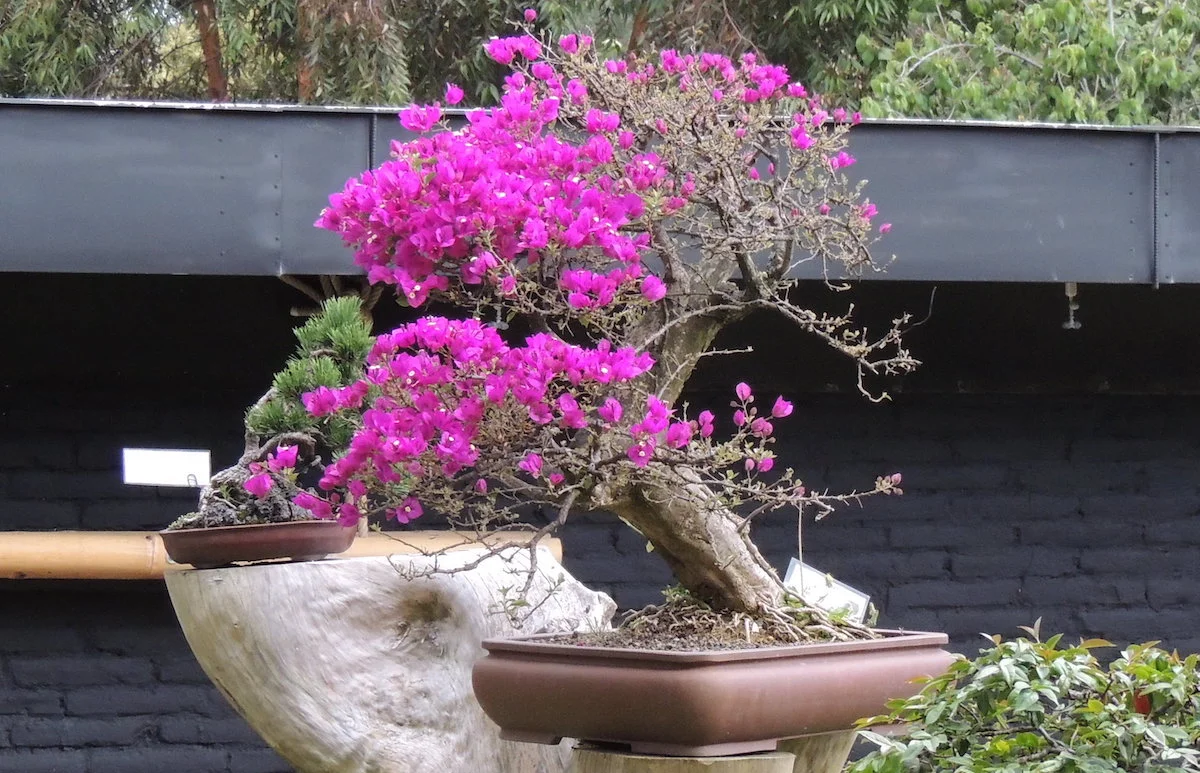
Bonsai Bougainvillea Overview
The Bougainvillea, also known as bougainvillier or bougainvillée, is a climbing and thorny shrub belonging to the Nyctaginaceae family. Native to the forests of South America, particularly Brazil, this plant is cherished for its vibrant flowers and bracts that come in shades of pink, red, purple, and white.
This species is characterized by its flowering capabilities and evergreen leaves, although in temperate climates, it may become semi-deciduous.
- Family: Nyctaginaceae
- Genus: Bougainvillea
- Common Names: Bougainvillier, Bougainvillea, Bougainvillée
- Species: Bougainvillea Spectabilis, Mini-thai, Glabra, Buttiana
- Origin: Brazil (South America)
- Type of Bonsai: Outdoor bonsai, flowering bonsai
- Foliage: Evergreen, semi-evergreen
- Flowering: Yes
- Flower Colors: Red, purple, pink, orange, white
- Propagation: Cuttings, layering, and collection
- Cultivation Difficulty: Quite challenging
- Growth Rate: Relatively fast
Location and Temperature
Placement and Sunlight
The Bougainvillea bonsai should be placed outdoors, requiring a location that receives as much sunlight as possible. Adequate sunlight is crucial for achieving beautiful blooms. During winter or when temperatures drop below 10°C, the plant should be moved indoors to a bright, unheated space, ideally a cold greenhouse or a sunlit veranda. If kept in a basement, additional light from a grow lamp may be beneficial.
It is important to note that some varieties may lose their leaves during winter.
Temperature
This bonsai thrives within a temperature range of 10°C to 30°C. In colder conditions, particularly below 10°C, it must be protected from the cold.
Watering
The Bougainvillea requires frequent yet moderate watering. It does not tolerate excessive moisture and can manage short periods of drought. Signs of overwatering include leaf drop, while wilting leaves indicate a need for water.
When grown in a pot or as a bonsai, watering should occur when the soil is nearly dry. Overwatering can lead to root rot and fungal issues.
Watering Frequency

Watering Tips:
- Bougainvillea prefers non-calcareous water (pH 6 to 6.5).
- During flowering, reduce watering to promote bud formation, resuming normal watering afterward.
Repotting and Substrate
Repotting
For young bonsai or pre-bonsai, repotting should occur every 2 to 3 years, while older bonsai can be repotted every 3 to 5 years. The best time for repotting is at the end of spring (May-June), before the summer heat sets in. The root system is delicate, requiring careful handling to avoid damaging the thin roots.
Repotting Advice:
- After repotting, the Bougainvillea may lose some leaves, but new growth should emerge within 2 to 3 weeks.
- If purchased outside the repotting season, perform a transpotting instead until the next spring.
- Wait 2 to 3 weeks post-repotting before fertilizing with liquid fertilizer.
Substrate
The Bougainvillea needs a well-draining and aerated substrate with a neutral to acidic pH (5.5 to 7.5). The choice of substrate should also consider pot size, region, and bonsai placement.
Example Substrates:
- 100% akadama for beginners.
- 60% akadama and 40% pumice.
- 80% akadama, 10% pumice, and 10% kanuma.
- 70% akadama, 15% heather soil, and 15% pumice.
- 50% heather soil and 50% pumice.
Pot Selection
A moderately deep to deep pot with good drainage is essential for the Bougainvillea. The pot color should complement the flower hues.
Fertilization
Provide solid organic fertilizer pellets monthly throughout the year, except in winter (like Biogold or similar). In spring, opt for a low-nitrogen (N) and higher potassium (K) fertilizer to encourage flowering, and consider a mini-dose of liquid fertilizer every two weeks.
Fertilization Tips:
- An additional iron supplement can enhance flower color and production.
- Prefer slow-release organic solid fertilizers.
- When using liquid fertilizers, follow the label instructions closely, possibly halving the dosage.
Pruning and Shaping
Pruning the Bonsai
Structural pruning can be done in winter when growth slows and leaves are fewer. Trim dead or overly long branches to maintain the bonsai's shape. Maintenance and ramification pruning should occur after flowering, as Bougainvillea blooms on new growth, making it essential to retain these branches. Trim back shoots to 2-3 leaves after flowering.
The Bougainvillea readily buds back on old wood, so it is vital to remove unnecessary shoots. While the species can withstand severe pruning, it does not heal well, thus applying a healing paste on larger cuts is recommended.
Wiring
Wiring can be performed year-round, but care should be taken as the wood can be brittle. Use aluminum wire and protect the wood with raffia. Check the wiring regularly to ensure it does not embed into the bark.
Cleaning
Remove faded flowers promptly to maintain aesthetics.
Propagation
Bougainvilleas can be easily propagated through cuttings taken in spring from young, non-woody shoots. Rooting hormones can be beneficial during this process.
Diseases and Pests
When cultivated under optimal conditions, the Bougainvillea is relatively resilient against pests and diseases. However, it can occasionally face infestations from aphids or scale insects.
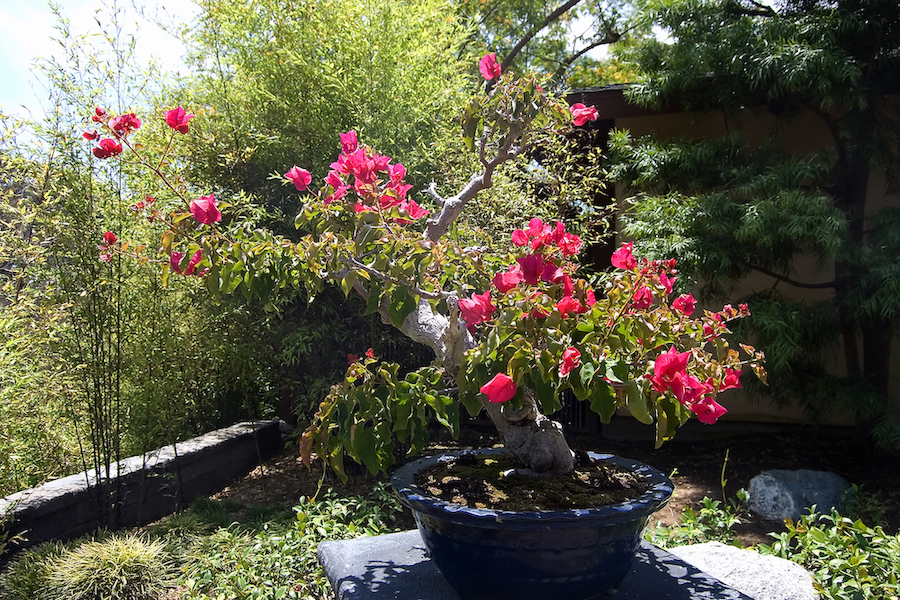
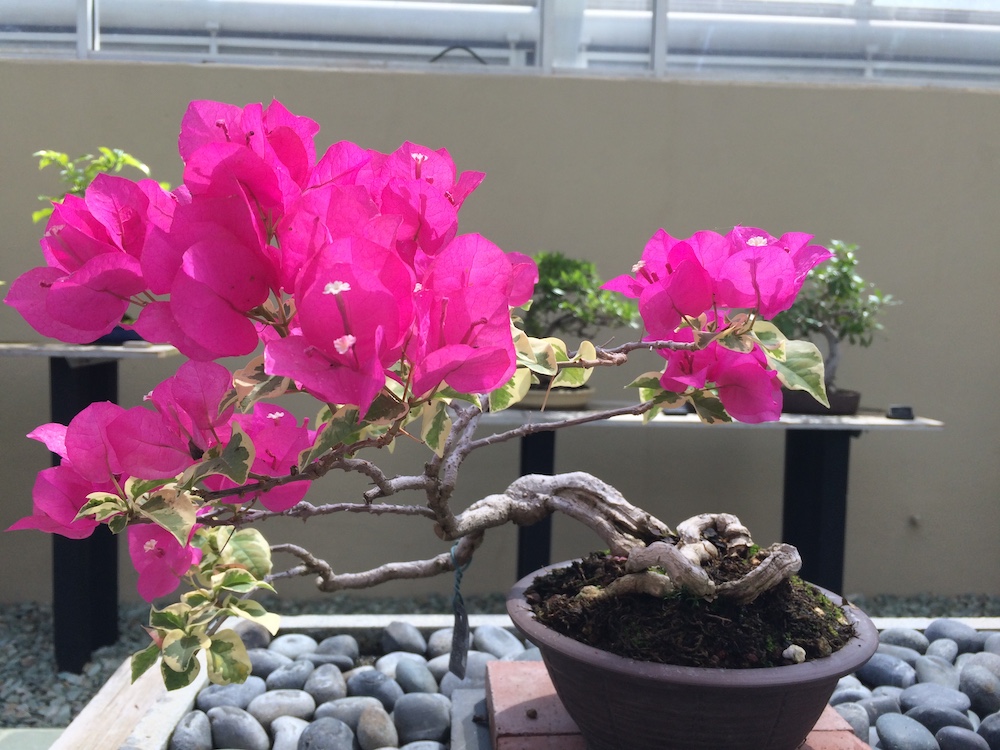
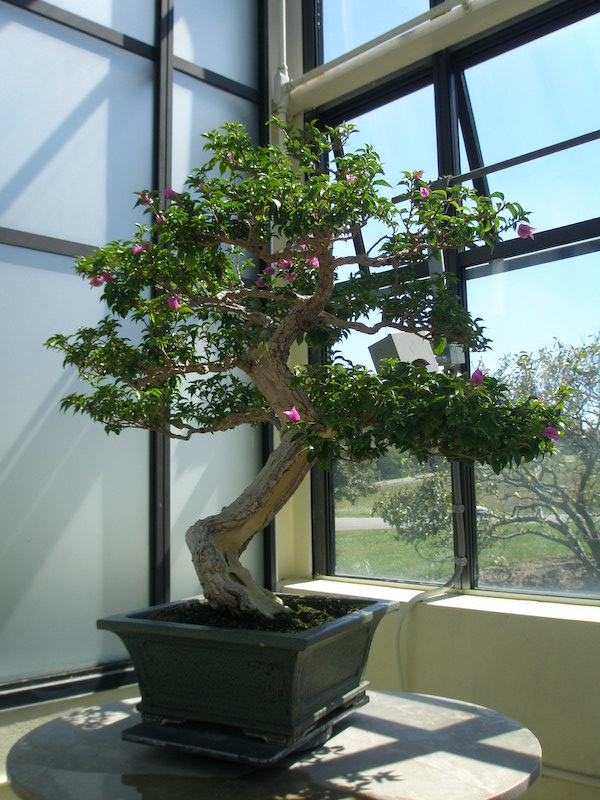
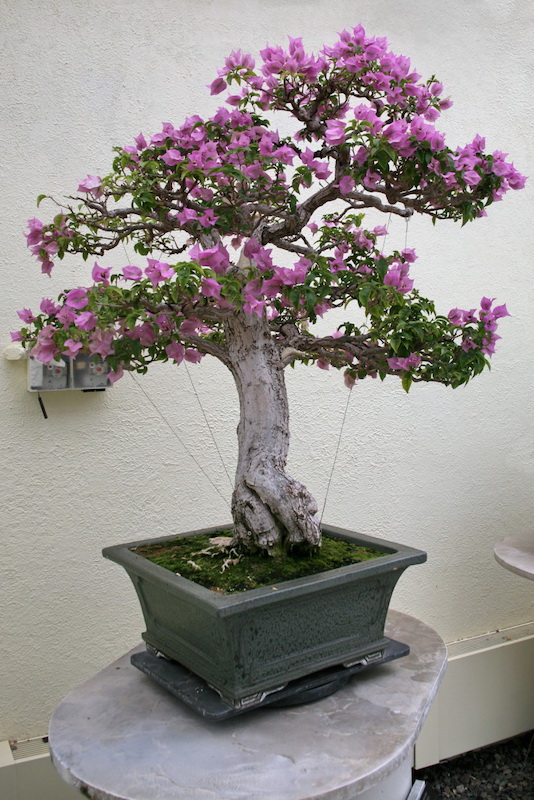
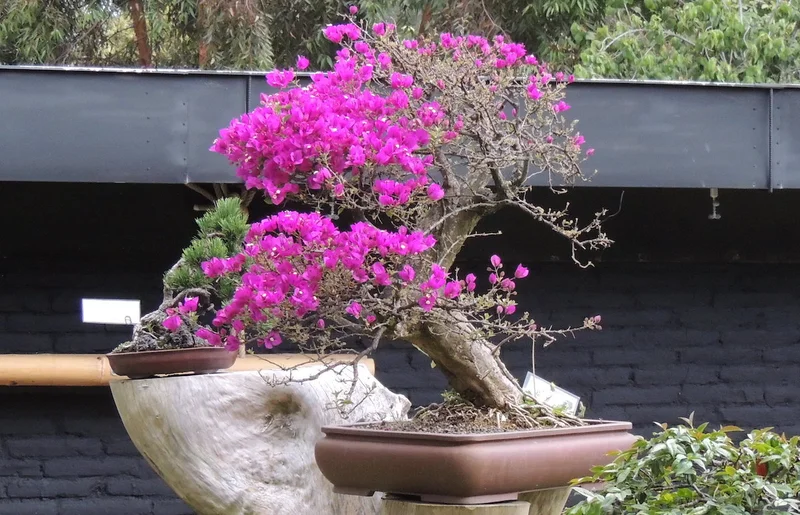
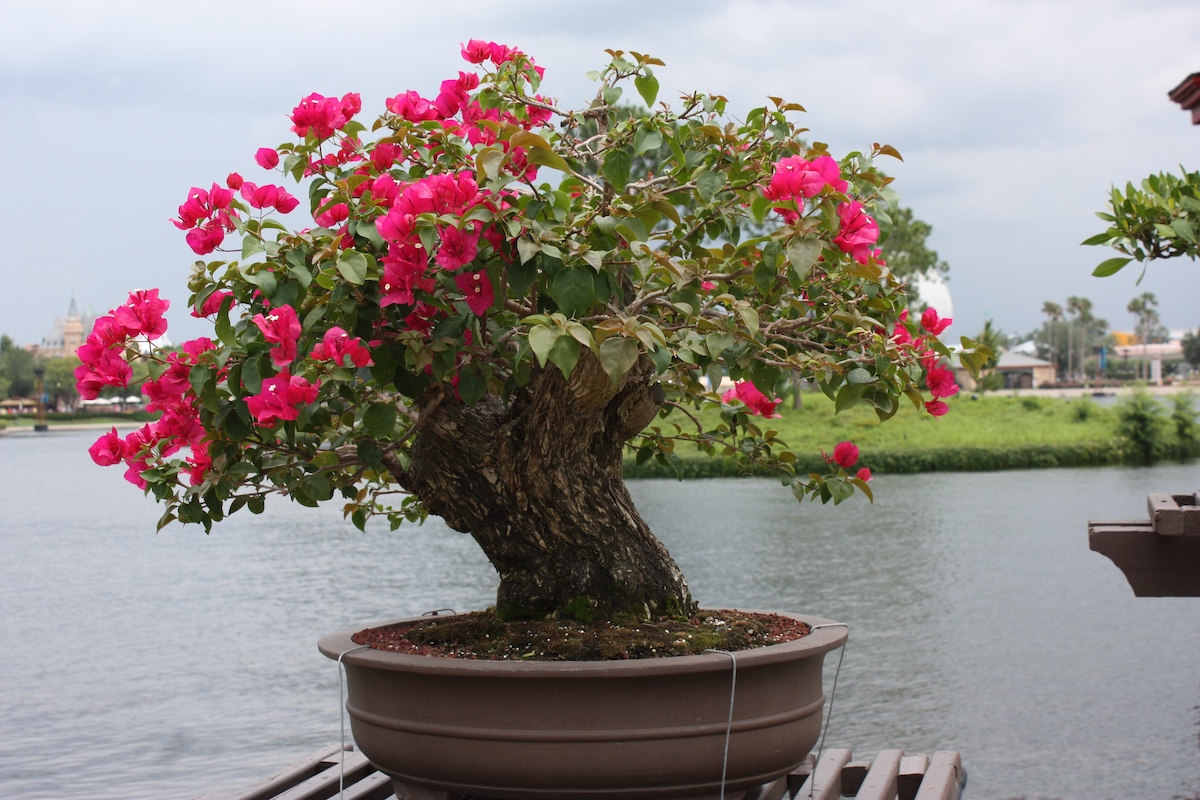
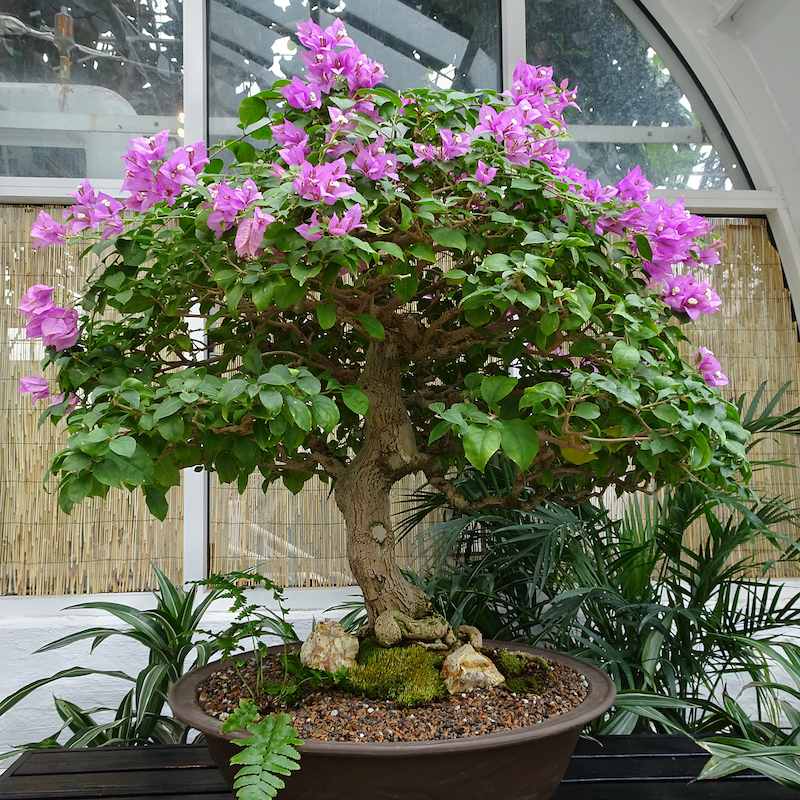
Photos of Bonsai Bougainvillea