Bonsai Cotoneaster: A Comprehensive Care Guide
Explore the essential care guide for Bonsai Cotoneaster, a flowering species ideal for both beginners and experienced bonsai enthusiasts.
Bonsai Cotoneaster
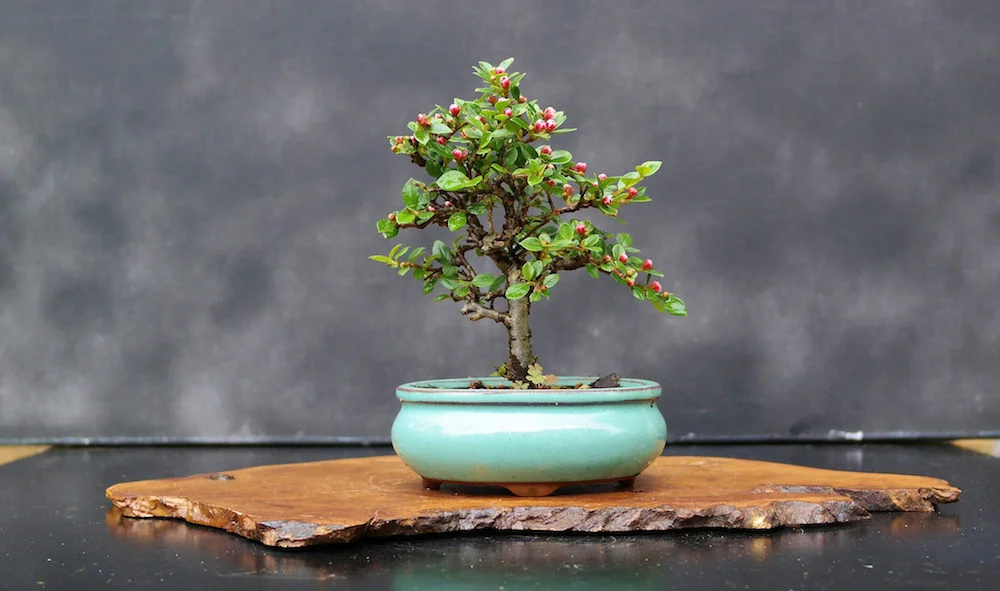
The Cotoneaster is a flowering and fruit-bearing species belonging to the Rosaceae family, native to Europe and Asia. This species boasts over 200 varieties commonly used as ornamental shrubs.
Overview of Cotoneaster
The bonsai version of Cotoneaster is particularly suitable for beginners in the bonsai art due to its rapid growth, ease of care, and ability to quickly develop lush foliage. It also appeals to experienced bonsai enthusiasts who wish to explore new pruning and cultivation techniques.
General Information
- Family: Rosaceae (Rosaceae)
- Common Name: Cotoneaster or Rock Nettle
- Origin: Europe and Asia
- Type of Bonsai: Deciduous
- Difficulty Level: Easy
- Growth Rate: Quite fast
- Foliage: Deciduous to semi-evergreen
- Blooming Period: May – June
- Fruit Maturity: September – October
- Location: Outdoor bonsai
- Exposure: Full sun, partial sun, and partial shade
- Ventilation: Tolerates wind well
- Propagation: Seeds, cuttings, layering, young plants...
Different Species of Cotoneaster
Several species exist, including: Adpressus, Dammer, Franchetii, Horizontalis, Acteus, Integerrimus, and Scandinavicus.
Cotoneaster Integerrimus
This species, also known as common or wild cotoneaster, features oval leaves, pink flowers, and bright red berries.
Cotoneaster Horizontalis
Known as horizontal cotoneaster, this deciduous species has rounded leaves, white or pink flowers, and red berries.
Cotoneaster Microphyllus
This species is characterized by its evergreen leaves, white flowers, and red berries.
Placement of the Bonsai
The Cotoneaster bonsai thrives outdoors and prefers full sun, partial sun, or partial shade. It is generally hardy and can be grown outside year-round, but it requires protection from severe or prolonged frosts during winter.
Exposure
The Cotoneaster bonsai prefers sunny locations but can tolerate partial sun and shade. Its hardiness allows for year-round outdoor cultivation, though it must be shielded from harsh winter frosts. During summer heat, careful watering is essential, particularly if grown in a small pot. In extreme heat, shade cloth can be used for protection.
Temperature
This species is robust, exhibiting good resistance to both heat and cold. However, when cultivated as a bonsai, it should be shielded from frost when temperatures drop below -5°C.
Growth of the Bonsai
The Cotoneaster grows relatively quickly, especially in its early years. Through regular pinching, one can achieve dense foliage rapidly, although the trunk may take longer to thicken. For younger plants, consider growing them in the ground or larger pots for a few years.
Watering the Bonsai Cotoneaster
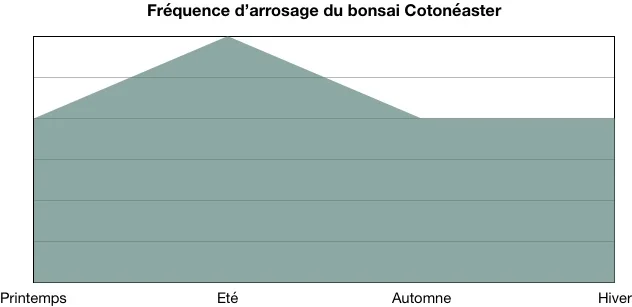
The Cotoneaster does not have specific watering requirements. It can tolerate slight drought but should never be allowed to dry out completely. During hot summer months, more frequent watering is necessary.
Repotting and Substrate
Repotting
Repotting should occur annually or biennially in spring for younger specimens. Depending on the bonsai's training stage and age, consider using a larger pot.
The Cotoneaster bonsai thrives in relatively deep or medium-depth pots, which can be glazed or unglazed.
Substrate
A well-draining substrate is crucial for the bonsai cotoneaster. A neutral or slightly acidic soil composition, such as 100% Akadama or a mix of 80% Akadama with 20% Pouzzolane, is ideal.
Fertilization
Regular fertilization in spring and autumn is recommended using a slow-release organic fertilizer (like biogold). A low-nitrogen fertilizer is preferred to encourage berry formation.
Pruning and Shaping the Cotoneaster
Structural and Maintenance Pruning
In the initial years, allow the Cotoneaster to grow freely to develop a quality pre-bonsai. For older specimens, structural pruning should be done in early winter after the growing season ends to remove excess shoots and unattractive branches.
The Cotoneaster can produce suckers, so it’s important to eliminate these during pruning to stimulate trunk growth. For larger branches, apply wound paste to prevent infection.
Wiring
Wiring can be performed at the end of winter or the beginning of spring, just before new growth begins. The wires can remain for several months, but care must be taken as the Cotoneaster’s bark is delicate. Regular checks are necessary to ensure that the wires do not embed into the wood. Wrapping the bark with raffia before wiring can offer additional protection.
Pinching
Regular pinching is effective in densifying the foliage. This involves cutting new shoots to two leaves during May and June.
Styles and Forms
The Cotoneaster adapts well to nearly all bonsai styles and is particularly suited for creating mini bonsai (Mame bonsai).
Diseases and Pests
The Cotoneaster is generally resilient. Maintaining optimal growing conditions and applying preventive fungicide treatments with sulfur can protect the bonsai from diseases and pests. In rare instances, it may be affected by aphids or scale insects.