Winter Covering: Safeguarding Your Plants and Shrubs During Cold Months
Discover how winter covering can protect your plants from harsh winter conditions. Learn which plants need protection and how to effectively use this versatile gardening tool.
As winter approaches, many gardeners are turning to winter covering, also known as forcing cloth, to protect their plants from the harsh conditions of the season. Certain garden plants are not equipped to handle frigid temperatures and require shielding from cold, moisture, and wind.
The winter covering serves as a barrier against wind, cold, hail, and snow, allowing outdoor plants to endure winter's challenges. Its breathable fabric prevents dehydration while its translucent nature creates a greenhouse effect, offering essential protection against winter's perils. ❄️
Which Plants Need Cold Protection?
Rustic plants can typically withstand cold and frost without issue, but it is crucial to safeguard the more delicate varieties or those newly planted.
- Protect tropical plants that are unprepared for frost, such as palm trees and banana plants, which thrive in warm, humid climates.
- Mediterranean plants like oleander, mimosa, bougainvillea, and citrus trees, including lemon trees, also require protection due to their sensitivity to cold, despite increased hardiness in newer varieties selected by nurseries.
- Additionally, safeguard frost-sensitive plants and cacti, including fuchsias, dahlias, geraniums, and daturas. Cacti, typically housed in pots, should be brought indoors promptly as their water-retaining structures are particularly vulnerable to frost and winter's severity.
Deciduous plants lose their leaves and enter a dormant state during winter, making them more resilient to frost in their aerial parts due to reduced sap circulation. ❄️
Beyond the specific plant species, local climatic conditions must also be considered. Protecting an olive tree in Normandy will differ significantly from doing so on the Côte d’Azur. This highlights the importance of preparing your plants for winter to ensure a vibrant summer bloom for your begonias or dahlias in your garden beds or containers. 👨🏼🌾
Benefits of Winter Covering
Winter covering serves multiple purposes:
- During the cold season, it shields plants from frost and wind. 💨
- 🌤️ In spring, as buds begin to emerge, late frosts can threaten their growth. The covering can be a valuable aid at this time.
- It protects small plants and seedlings from pests, deterring slugs and snails from feasting on your salads. Birds and insects will also be kept at bay from your plantings. 🪳
- The covering can raise temperatures by approximately 4 degrees, warming the soil quickly. This allows you to sow seeds about two weeks earlier than planned, leading to faster germination.
- Finally, the winter cover enables staggered harvesting; by covering only part of your seedlings, the protected area will grow more rapidly.
Be cautious with non-hardy plants like citrus or olive trees 🫒, which must be kept frost-free. The winter cover alone will not provide sufficient protection during severe cold, so these plants need to be wintered indoors.

Setting Up Winter Covering
When to Apply Winter Covering?
As winter approaches and morning frosts become a reality, it’s time to protect your most vulnerable plants 🍃. This includes not just your vegetable garden (salads, sorrel, young seedlings) but also sensitive flowers, shrubs, and small trees. Arrange the covering around the vulnerable plants without allowing it to touch the foliage directly to prevent freezing and rot. ❄️
In early spring, certain plants are at risk from late frosts, including young vegetable shoots, delicate flowers like begonias, and potted fruit trees. The winter covering becomes an essential ally in preserving buds and young leaves.
How to Use Winter Covering?
Installing winter covering is straightforward, but adhering to a few guidelines can enhance its effectiveness. ☺️
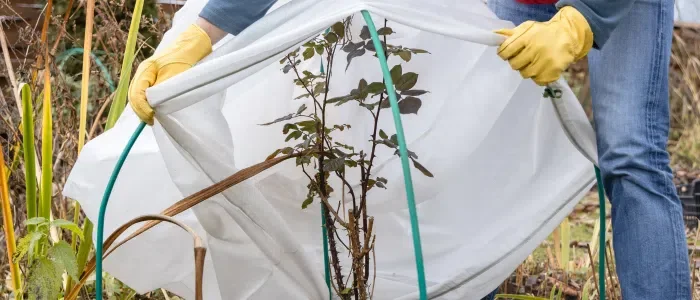
First, avoid placing the covering directly against the foliage, especially for moisture-sensitive plants. Ideally, create a small protective air pocket around the plant. You can gently wrap it around shrubs or use stakes to keep the covering from directly contacting the leaves.
- For in-ground plants (beds, young shrubs, perennials), wrap the upper part and secure the covering at the base to prevent it from blowing away in the wind. Adding mulch around the base of the plant will further enhance frost protection.
- For potted plants (citrus, olives, oleanders…), protect both the foliage and the container. Roots in pots are more exposed to cold than those in the ground, so it’s advisable to insulate the pot as well using covering or insulating material.
Throughout winter ❄️, regularly check the condition of the covering. Adjust it as needed and ventilate on warmer days to prevent excess moisture buildup. In cases of intense frost, doubling the thickness can bolster protection. Gradually remove the covering in spring when the risk of frost has passed, as a sudden exposure to sunlight after weeks of protection could weaken young shoots.
When utilized correctly, winter covering effectively safeguards all your plants, whether flowers, shrubs, or vegetable crops, while respecting their natural growth cycles. 🌱❄️
In conclusion, winter covering is not just a shield against the cold; it is a versatile tool for caring for all your plants, from the vegetable garden to flowers and shrubs, ensuring a peaceful winter for them. 🌸🍃