When to Prune Your Hedges: A Comprehensive Guide to Optimal Timing
Learn the best times to prune your hedges to avoid weakening plants, triggering uncontrollable growth, and facing legal issues. This guide provides a detailed calendar and practical tips.
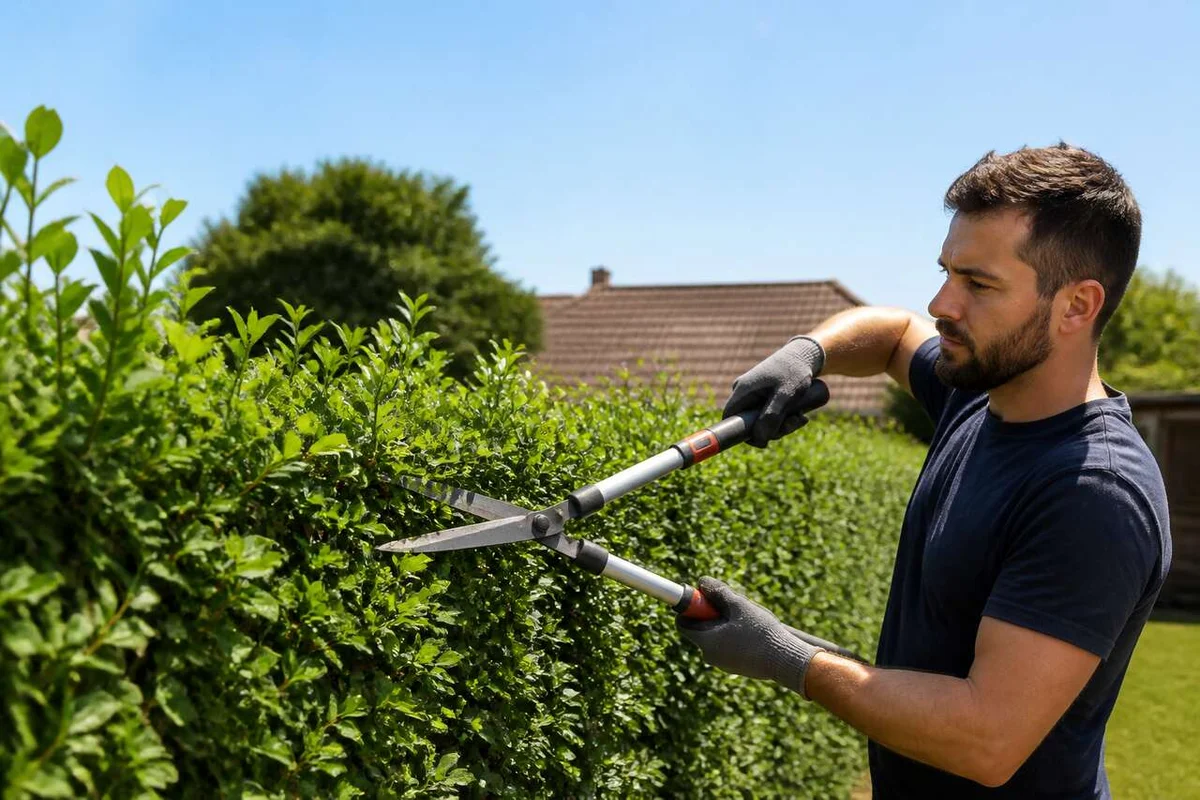
Pruning hedges at the right time is crucial to avoid three significant pitfalls: weakening the shrubs, triggering uncontrollable regrowth, and risking fines or disputes with neighbors. Unfortunately, most available advice remains vague, suggesting only general timeframes like "in spring" or "in autumn" without considering plant biology, local weather conditions, or legal regulations. This guide offers a month-by-month calendar, clear answers for June and July, and targeted recommendations based on plant species.
Key Takeaways
- The two optimal windows for pruning are late winter (before March 15) and autumn (September-October), avoiding frost and drought.
- The nesting period (March 15 – July 31) is legally restricted for farmers and strongly advised against for individuals.
- Pruning in June or July is possible for homeowners, provided they check for nests, act early in the morning, and limit themselves to light trimming.
- Thujas do not regrow from old wood; any deep cuts are irreversible.
- Local regulations or municipal planning documents may impose stricter rules than national laws.
Factors Determining the Best Time to Prune a Hedge
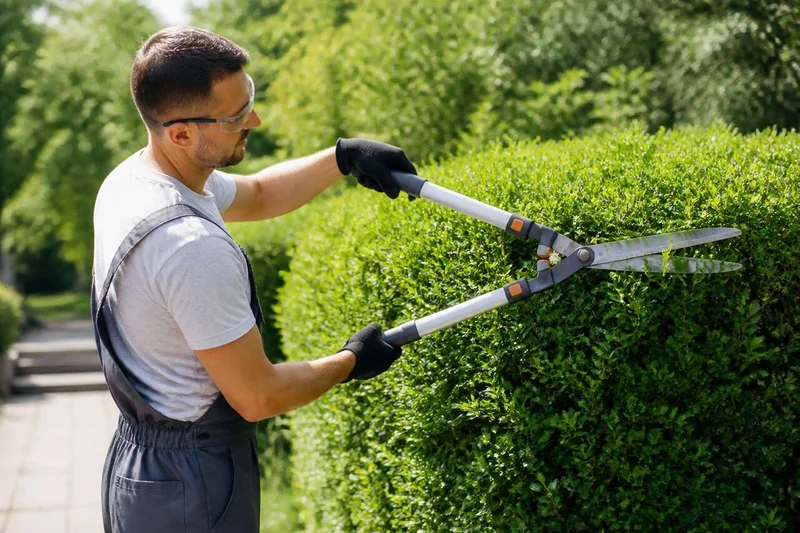
Choosing the right date for pruning involves more than just marking a month on the calendar. Four factors must be considered simultaneously, and their intersection leads to a truly relevant decision.
The growth cycle of the shrub is the primary determinant. Most hedge species experience two periods of intense activity each year: a spring push triggered by longer days—the photoperiod—and a second, more moderate push at the end of summer. Pruning during these phases forces the plant to mobilize its reserves for healing and leaf regrowth, potentially exhausting the roots and leading to a growth spurt that may be more vigorous than before the intervention.
Weather risks form the second filter. Frost can weaken fresh cut wounds: exposed cells freeze, necrosis sets in, and the hedge develops hollow areas that are difficult to fill. Conversely, a heatwave can scorch young shoots that emerge after pruning, and water stress combined with severe cutting can permanently destabilize the shrub.
Biodiversity imposes a third criterion, often underestimated in private gardens. Birds nest in hedges from March to July. Destroying an occupied nest is a legal offense, even if unintentional, under species protection laws. The LPO explicitly recommends avoiding any pruning between March 15 and July 31.
Regulatory frameworks, finally, vary based on property status, land location, and local rules. A homeowner in a suburban area and a farmer in a Natura 2000 zone face different constraints.
Thus, the right date is a compromise: it occurs after active growth, before frost, outside the nesting period, and in compliance with applicable regulations. This compromise points to two specific windows in the year.
The Two Most Favorable Periods of the Year
Arboriculture professionals and nurserymen agree on two reference periods, which are clearly justified by plant biology.
First window: late winter, before March 15. At this time, shrubs are still dormant or just beginning to awaken. Sap flow is minimal, buds are not yet swollen, and the plant has not yet committed its reserves to producing new leaves. Pruning between early February and March 15—provided there is no frost—allows for shaping the hedge before growth begins. Healing is swift as temperatures rise, and the spring regrowth naturally fills in the cuts. This is the ideal period for a formation pruning on young hedges or a renewal pruning on sparse hedges.
Second window: autumn, from September to October. After the second summer push, growth slows down. Birds have left their nests, temperatures are mild, and atmospheric humidity aids healing. This is the optimal time for maintenance pruning: correcting the shape, controlling height, and thickening the sides. Evergreens—such as laurels, thujas, and yews—respond particularly well to pruning in September or October.
| Period | Type of Pruning | Advantages | Vigilance | |-----------------------|-------------------------------------|------------------------------------------|----------------------------------------| | Before March 15 | Formation, renewal | Dormancy, rapid natural regrowth | Avoid any residual frost | | March – April | Regular maintenance | Active growth, visible regrowth | Nesting in progress from mid-March | | September – October | Maintenance, shaping | Post-growth, no nests, mild conditions | Avoid during persistent drought |
These two windows also help to avoid two major calendar mistakes: pruning during sap rise (which stimulates excessive regrowth) and pruning during a heatwave (which can damage cut areas). However, there are periods when intervention is strongly discouraged or even prohibited.
Periods to Avoid: Nesting, Frost, and Heat
Three situations combine risks for the plant, wildlife, and sometimes the gardener himself.
The nesting period: March 15 to July 31. Birds—such as blackbirds, warblers, robins, and sparrows—use hedges for nesting from March to July. Some species may have two or three broods during this time. The LPO recommends avoiding any pruning between March 15 and July 31, with maximum caution between April 1 and July 31. While this recommendation is not a legal obligation for homeowners, the unintentional destruction of an occupied nest remains punishable. Before any intervention between March and August, a careful visual inspection of the branches is essential: observe from multiple angles, and do not confuse an old empty nest with an active one.
Frost. Pruning when temperatures drop below 0 °C exposes fresh wounds to necrosis. Cut plant tissues, deprived of their protective layer, freeze and die back a few centimeters. The result: brown, hollow areas that are difficult to fill. This risk is particularly pronounced for conifers—thujas and cypresses—whose wounds heal slowly. In the event of an announced cold snap, it is better to postpone pruning for a few days.
Heat and drought. Pruning becomes risky above 25 °C. Young shoots that emerge after cutting are exposed to intense sunlight and rapid evaporation. Water stress exacerbates the situation: a hedge already lacking water does not have the necessary reserves to heal and regenerate. If intervention is absolutely necessary during hot periods, it should be done early in the morning or late in the evening, limited to light trimming, and followed by generous watering at the base.
- Avoid pruning during frost (risk of necrosis of cuts)
- Avoid pruning above 25 °C without precautions
- Avoid pruning during drought without compensatory watering
- Visually check for nests before any intervention from March to August
- Postpone rather than rush: a week’s wait costs less than a damaged hedge
These biological and ecological constraints overlap with a regulatory framework that may impose strict prohibitions regardless of weather or season.
Regulations: What is Prohibited, Recommended, or Variable
Regulations regarding hedge pruning are layered: there is a national baseline, prefectural orders that can strengthen it, and local rules that apply independently.
The Rural and Maritime Fishing Code prohibits agricultural operators and local authorities from pruning or uprooting hedges from March 15 to July 31. Some prefectural orders extend this period to April 1 – July 31 depending on the department. This prohibition aims to protect biodiversity in agricultural and bocage areas. It does not directly apply to homeowners for their private hedges, but it sets a reference framework that municipalities can adopt in their local regulations.
The PLU (local urban planning plan) may contain specific provisions regarding hedges: obligations to maintain existing hedges, prohibitions on certain species, or rules regarding maximum height. Some municipalities classify bocage hedges as landscape elements to be protected. Before any significant pruning or removal project, it is essential to check with the town hall.
Prefectural orders vary from one department to another. They may prohibit mechanized pruning during certain periods, impose setback distances from watercourses, or restrict the use of machinery in sensitive areas. The prefecture or the agricultural chamber of the department is the appropriate source to verify these rules.
Abnormal neighborhood disturbances pose another legal risk. A hedge that is too tall and blocks light for a neighbor, or branches encroaching on their property, can lead to formal notices or legal action. The Civil Code sets maximum heights based on the distance from the boundary line: 2 meters if the hedge is planted less than 2 meters from the boundary, with no height restrictions beyond that. These rules may be modified by consistent local practices, which the PLU or subdivision regulations may specify.
Verification Method in Four Steps:
- Consult the PLU of the municipality (available at the town hall or on the urban planning geoportal)
- Contact the prefecture or agricultural chamber to learn about current prefectural orders
- Check property titles and subdivision regulations if applicable
- In case of doubt regarding a shared hedge, prioritize dialogue with the neighbor before any intervention
Finally, there are situations where one may be compelled to prune despite unfavorable seasons: a hedge obstructing visibility on a public road, a neighbor’s formal notice for encroachment, or an obligation stated in a lease. In these cases, pruning should be as light as possible and accompanied by compensatory care. Understanding the regulations also helps in selecting the right time to prune so that regrowth is as manageable as possible.
Pruning to Reduce Regrowth: The Logic of Timing
One of the most common objectives for hedge owners is to reduce the frequency of interventions. The good news is that the timing of the cut directly influences the vigor of regrowth.
The basic rule is simple: pruning when the plant has the least energy available slows regrowth. In late summer or early autumn, after the second push, the shrub's reserves begin to migrate to the roots to prepare for winter. Pruning at this time deprives the plant of some of its foliage without triggering an immediate growth response—unlike a spring pruning that coincides with sap rise and stimulates rapid, vigorous regrowth.
The connection with the photoperiod is crucial. Days shorten after the June solstice. This reduction in daylight signals the plant to prepare for dormancy, making it less likely to respond aggressively to pruning. By understanding these principles, gardeners can better manage their hedges, ensuring they remain healthy and well-shaped while minimizing the need for frequent maintenance.