Water Conservation in the Garden: 3 Effective Solutions Against Drought
Discover three practical tips for collecting and conserving water in your garden to combat drought. Smart watering advice for gardeners.
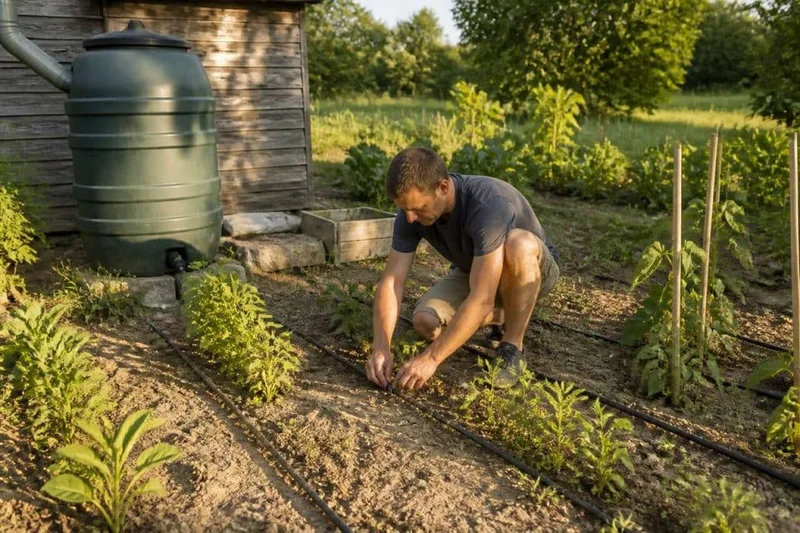
Water Conservation in the Garden: 3 Effective Solutions Against Drought
As water restrictions become commonplace and gardens suffer from drought, the need to recover and utilize every drop efficiently becomes paramount. Here are three practical and easy-to-implement strategies for storing, conserving, and distributing water effectively in your garden.
Key Takeaways
- A small garden can be irrigated using rainwater collected from rooftops, yielding several dozen liters per day.
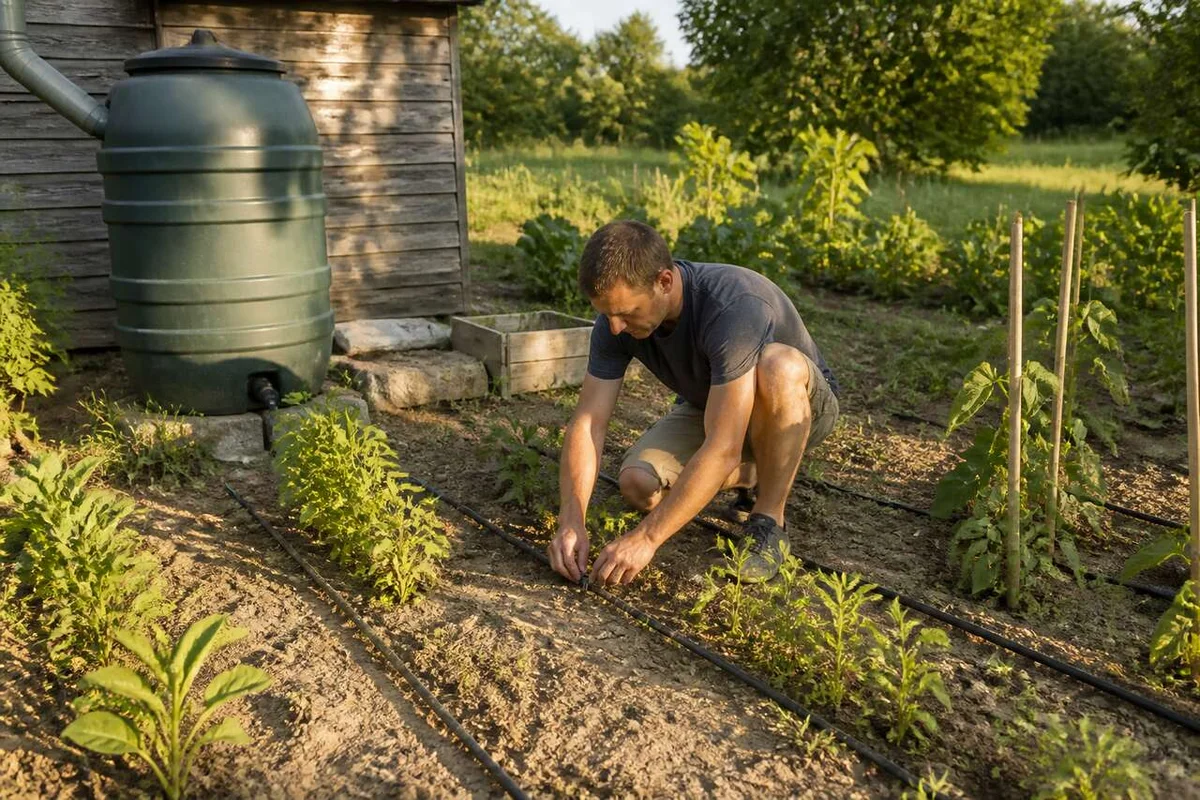
- Watering at the base using drip irrigation or oyas significantly reduces evaporation compared to traditional sprinkling.
- Mulching and hoeing help retain moisture and decrease the frequency of necessary watering.
- Watering restrictions do not always apply to vegetable gardens; it's important to check local regulations.
- Autonomous systems (oyas, perforated bottles, timers) allow for vacationing without sacrificing crops.
Understanding Water Loss in the Garden During Drought
The summer of 2022 left a lasting impact, as widespread drought affected France, with many departments placed under vigilance and local regulations sometimes prohibiting watering. This situation has repeated itself, and by 2025, water restrictions are expected to be common in numerous regions. By 2050, estimates suggest that up to 84% of global agricultural land could face water shortages. Amateur gardeners are not immune to the increasing pressure on this vital resource.
Common Mistakes That Waste Water
Many gardeners water incorrectly, either at the wrong time or in the wrong manner. Watering during the day, under direct sunlight, leads to evaporation of a significant portion before it reaches the roots. Additionally, watering the foliage instead of the base wastes water that runs off or evaporates without penetrating the soil deeply. Lastly, light daily watering encourages roots to remain near the surface, weakening plants in future heat waves.
Clarifying Regulations
It is essential to clarify that water restrictions do not always apply to vegetable gardens. Some regulations permit watering of food crops during specific hours while prohibiting filling pools or washing cars. Therefore, reading the local prefectural order is crucial before abandoning all watering efforts.
In light of these challenges, the solution is not limited to hoping for rain. Collecting rainwater, from simple buckets to larger tanks, is the first step in an effective anti-drought strategy at home.
Collecting Rainwater: From Simple Buckets to Tanks
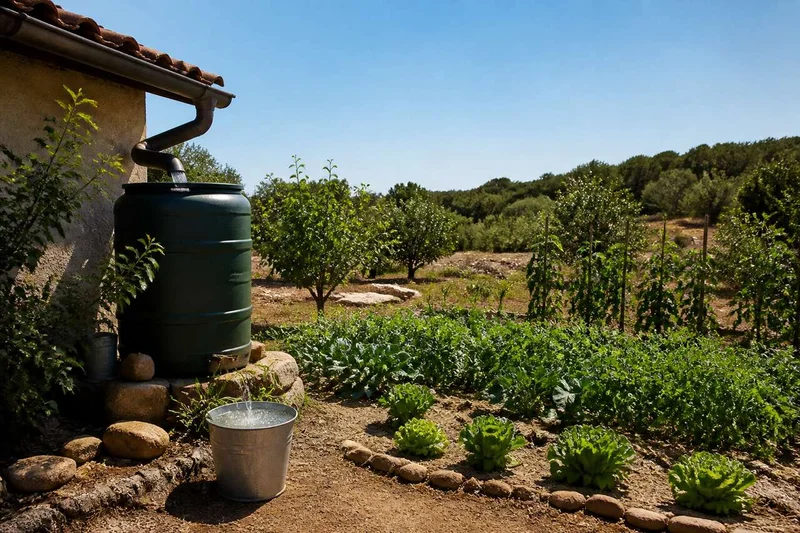
Rainwater harvesting is the most straightforward solution for securing garden irrigation, even under restrictions. A small garden or balcony can benefit from several dozen liters of rainwater collected from a roof, which is sufficient to water 4 to 5 square meters, and up to 10 square meters depending on rainfall and collection area.
Choosing a Collection System
- Buckets or basins placed under a downspout: a free and immediate solution, but with limited capacity.
- A standard rainwater collector, typically holding between 100 and 300 liters, connected to a downspout.
- An underground or above-ground tank for larger gardens, with volumes exceeding 1,000 liters.
- A sloped tarp, useful in emergencies during a storm.
Maintenance Considerations
A poorly maintained tank can quickly become a breeding ground for mosquitoes: a tight-fitting lid or a mesh at the entrance of the pipe is essential. Filtering leaves and debris prevents clogging of the rainwater collector and extends its lifespan. Additionally, it's important to anticipate overflow during heavy rains by installing an overflow directed to a draining area in the garden and ensuring the tank's stability to avoid tipping, especially near children's play areas.
Complementing with Domestic Water
In addition to rainwater, certain gray waters deserve recycling. Cooking water, provided it isn’t salty, is excellent for watering once cooled. Hand rinse water, if clean and free of soap or salt, can also be collected. Shower water offers a significant source: it can be captured and reused for irrigation, contributing further to water conservation efforts.