Understanding Why Your Plants Turn Yellow in Summer: Causes and Solutions
Discover the causes of yellowing leaves in summer and how to address them effectively. Learn about water stress, nutrient deficiencies, and more.
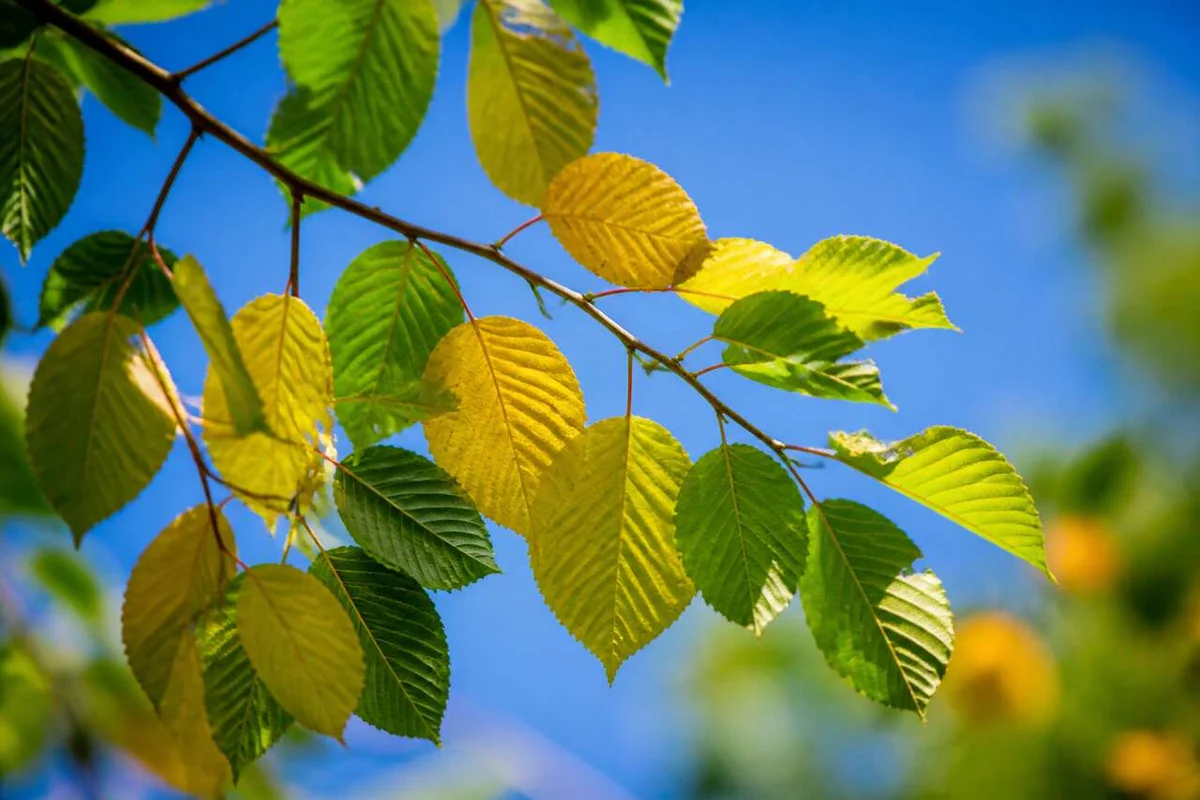
As summer reaches its peak, many gardeners find themselves inspecting their plants only to discover yellowing leaves. The instinctive reaction might be to reach for the watering can, but this could worsen the situation if the yellowing isn't due to a lack of water. During the growing season, yellowing leaves are a physiological signal from the plant indicating that something is disrupting its normal functioning. This article aims to help you understand these signals, identify the symptoms, and take targeted action.
Key Takeaways
- In summer, yellowing leaves are abnormal and indicate physiological stress related to water, heat, light, soil conditions, or pests.
- The location of yellowing on the plant (old leaves at the bottom, young leaves, between veins, or on the edges) serves as the first diagnostic clue.
- Overwatering is the most common cause of yellowing in potted plants, often leading to irreparable root asphyxiation.
- Iron deficiency (chlorosis) or nitrogen deficiency can mimic water stress; soil pH and hard water are often overlooked aggravating factors.
- Removing yellow leaves can be beneficial for the plant's hygiene and energy, provided the underlying cause has been identified and addressed.
Yellow Leaves in Summer: A Signal of Stress, Not a Verdict
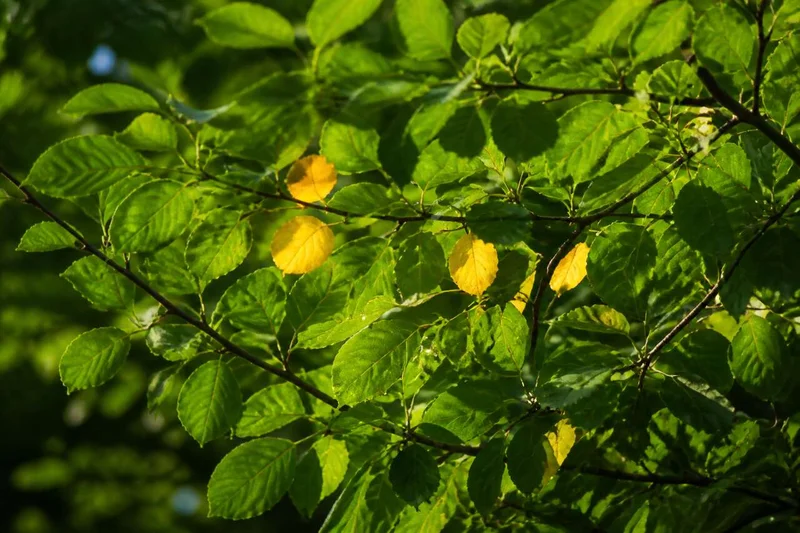
Chlorophyll is the pigment responsible for the green color of leaves, playing a crucial role in photosynthesis. It allows plants to convert light energy, water, and carbon dioxide into sugars for nourishment. When chlorophyll degrades or is not synthesized in sufficient quantities, leaves turn yellow, a phenomenon known as chlorosis. The causes of chlorosis can vary widely.
It's essential to differentiate between two scenarios. In autumn, yellowing is a normal process as deciduous trees reabsorb nutrients from their leaves before shedding them. The sap descends, and vegetation slows with the drop in temperatures—nothing alarming here. However, in summer, the situation is different. Plants are in their peak growth phase, with maximum needs, and if their leaves are yellowing, it indicates a disruption in their functioning. This summer yellowing is considered abnormal and warrants investigation.
Even evergreen plants naturally renew their oldest leaves, which may yellow and drop gradually, affecting only a few leaves at a time, specifically the oldest ones at the base of the stems. Rapid yellowing, especially in younger leaves, signals a different diagnosis.
The yellowing leaves indicate the plant's inability to maintain photosynthesis adequately. This inability can stem from water deficiency, excess water, mineral deficiencies, inappropriate exposure, or external threats. Yellowing itself is not a disease; it is a symptom that requires careful interpretation before any treatment is applied. The challenges posed by summer often clarify the underlying causes.
What Changes for Plants in Summer: Water, Heat, and Light
Summer exposes plants to a combination of stresses that are not as intense at other times of the year. Understanding these mechanisms can help interpret the symptoms more accurately.
Leaf transpiration increases dramatically. In hot weather, plants lose water much faster than in spring. The stomata, tiny pores located on the underside of leaves, regulate gas exchanges and transpiration. In response to heat, they may close to limit water loss, which also blocks CO₂ exchange and slows photosynthesis. Consequently, even well-watered plants can experience functional stress if temperatures exceed their tolerance thresholds.
The substrate also reacts to heat. In pots exposed to sunlight, substrate temperatures can exceed 40 °C in dark containers. At this temperature, roots can be burned, beneficial microorganisms die, and the absorption of water and nutrients becomes compromised. A compact or poorly drained substrate exacerbates the situation: stagnant water deprives roots of oxygen, leading to root asphyxiation.
Summer light is more intense, and days are longer. A plant accustomed to moderate light, suddenly placed near a south-facing window in July, may receive excessive radiation that directly degrades chlorophyll. This sunburn manifests initially as yellowing, followed by brown, dry spots.
Humidity plays a often underestimated role. Extremely dry air, typical during heatwaves, intensifies leaf transpiration and may exceed the roots' capacity to compensate for losses. Indoor plants also suffer from air conditioning, which dries out the ambient air. These combined factors explain why summer is the season with the most frequent and varied yellowing causes. To untangle these issues, careful observation of where and how the yellowing occurs is essential.
Quick Diagnosis: Where Yellowing Appears and Its Rate
The location of yellowing on the plant serves as the first diagnostic tool. Before adjusting the substrate or watering, take a moment to observe the plant closely for two to three minutes.
| Observed Symptom | Likely Cause | |---------------------------------------------|------------------------------------------------------| | Yellowing of old leaves at the bottom, gradual | Normal renewal or nitrogen deficiency | | Yellowing of young leaves at the top | Iron deficiency (chlorosis), unsuitable pH | | Yellow between veins, veins remaining green | Iron or magnesium deficiency | | Edges of leaves yellow then brown and dry | Water stress, sunburn, potassium deficiency | | Soft, translucent leaves, soft stems | Excess water, root asphyxiation | | Yellow and brittle leaves, very dry substrate | Water deficiency, water stress | | Irregular yellow spots with deformation | Pests (mites, aphids), viruses | | Rapid yellowing and massive drop | Thermal shock, sudden relocation, heatwave |
The rate of yellowing is equally informative. Slow yellowing over several weeks, affecting leaves one by one from the base, points towards nutritional deficiency or impoverished substrate. In contrast, rapid yellowing of multiple leaves within a few days suggests acute stress: heat shock, excessive watering after prolonged drought, or sudden relocation to a radically different exposure.
Check the undersides of leaves as well. Small white or silver dots, fine webs, sticky clusters, or visible insects indicate a pest problem, not a deficiency. A yellow and deformed leaf carries a different implication than a yellow leaf that retains its normal shape.
Finally, pinch the substrate at a depth of 5 cm. If it is dry and hard, water stress is likely. If it is soggy and emits a fermented soil odor, excess water and its root consequences are at fault. This simple observation leads directly to the next section.
Watering: Too Little or Too Much, Both Cause Yellowing
One of the most common paradoxes in gardening is that a plant suffering from water deficiency and one receiving too much water can exhibit the same symptom—yellow leaves. However, the treatment for each condition is opposite, and confusing the two can be fatal for the plant.
Water stress due to lack of water manifests dramatically. In dry weather or during a heatwave, the soil hardens on the surface, leaves begin to yellow from the tips and edges, then prematurely fall before drying out completely. The plant wilts, and stems droop. This process can be swift: in pots, a substrate can dry out completely in less than 48 hours during intense heat. The diagnosis is simple: the substrate is dry, light, and pulls away from the pot's sides.
Excess water is noted as the most common cause of yellowing in potted plants, and it is also the most dangerous. Constantly soggy substrate deprives roots of oxygen. Without oxygen, roots rot. Rotten roots cannot absorb water or nutrients, leaving the plant paradoxically in a state of internal drought despite having a saturated substrate. Leaves yellow, soften, and then brown. Root rot can be irreversible if the issue is not detected in time.
- Soft leaves and drooping stems despite a wet substrate: likely excess water.
- Fermented or moldy soil odor when removing the pot from its saucer: a strong alarm signal.
- Black and mushy roots upon inspection: confirmed rot.
- Standing water in the saucer for more than 30 minutes after watering: insufficient drainage.
The most reliable test remains the finger test: insert your index finger 3 to 5 cm into the substrate. If it feels moist, do not water. If it feels dry, water thoroughly until water drains from the drainage hole. Never allow water to stand in the saucer; empty it 30 minutes after watering. For outdoor plants, check moisture at a depth of 15-20 cm before watering.
In cases of confirmed excess water, remove the plant from its pot, inspect the roots, and cut away any that are black or mushy with a clean tool. Allow the substrate to partially dry before repotting in a container with good drainage. The basic rule is simple: most plants do not like to have their roots constantly submerged. Water less frequently but more generously, and wait until the surface of the substrate is dry before watering again.