Understanding Tomato Yields: How Many Fruits Per Plant?
Discover the average yield of tomato plants per season, ranging from 3 to 5 kg, and learn how variety and cultivation practices influence production.
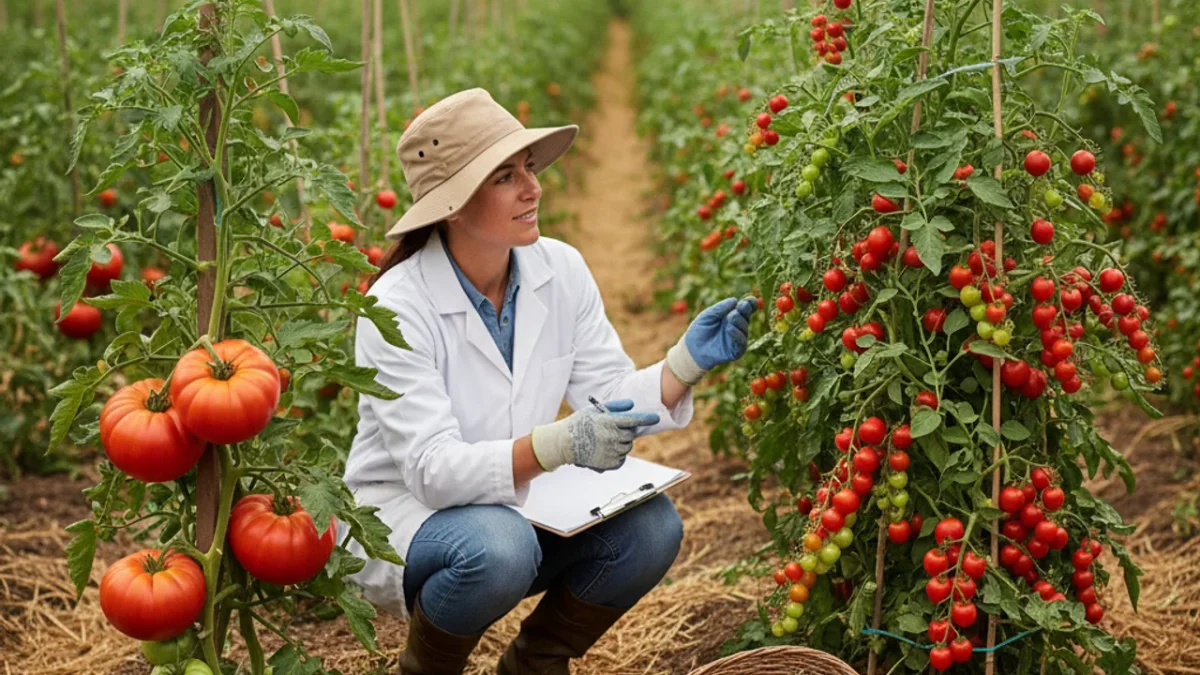
Tomato plants typically yield between 3 to 5 kilograms of fruit per season, translating to about 20 to 40 tomatoes, depending on the variety and growing conditions. Larger varieties, such as the Beefsteak tomato, produce fewer fruits but each is larger in size, while cherry tomatoes can yield an impressive 200 to 300 fruits per plant. Factors such as soil quality, watering practices, pruning, and sunlight exposure significantly affect these yields.
Yield Estimates by Tomato Variety
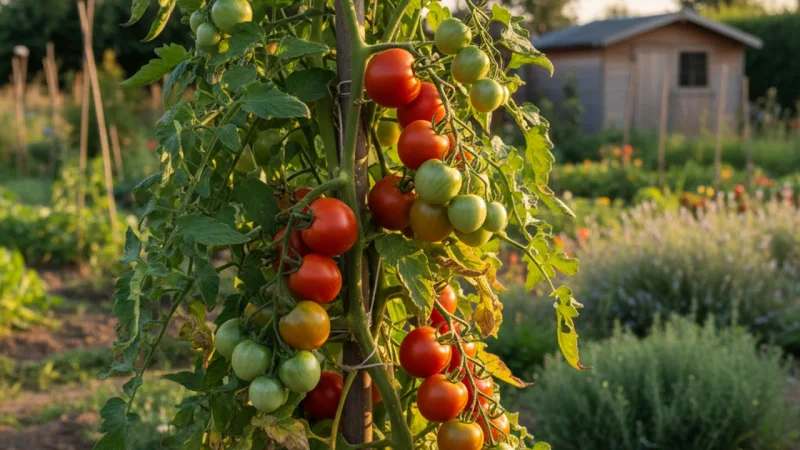
When assessing tomato yields, it's crucial to remember a basic principle: larger tomatoes produce fewer fruits, but the total weight remains comparable. A well-maintained plant can produce an average of 3 to 5 kilograms of fruit, which could mean 20 to 40 large tomatoes or as many as 300 cherry tomatoes. The actual yield can vary greatly depending on the gardener’s skill and the specific variety, as cultural practices like pruning, watering, and mulching are just as important as the plant's genetics.
This variability often leads to differing results between neighboring gardeners using the same plants. To maximize your yield, start by selecting productive varieties and then focus on optimizing soil and water conditions. Beginners might find their initial gardening attempts disappointing if they only focus on the number of fruits without considering their size.
Cherry and Cocktail Tomatoes: The Quantity Champions
Cherry tomatoes, including varieties like Sweet 100, Sungold, and Pendulina, are the most prolific, yielding between 200 to 400 fruits per plant depending on the season. A single Sweet 100 plant can produce over 500 tomatoes in a favorable growing season, resulting in a total weight of 2 to 3 kilograms. Cocktail tomatoes, slightly larger than cherries, such as Black Cherry and Maskotka, can yield around 100 to 150 fruits per plant, weighing in at 3 to 4 kilograms.
Standard Tomatoes (Marmande, Saint-Pierre): A Balanced Choice
Standard varieties provide an excellent balance for everyday cooking, suitable for salads, stuffing, or canning. Expect around 30 to 50 fruits per plant for Marmande, Saint-Pierre, or Carmello, with a total weight of 4 to 6 kilograms when properly cultivated in the ground. These varieties are robust, versatile, and forgiving of beginner mistakes.
Large Tomatoes (Beefsteak, Pineapple): Few but Impressive
Large varieties, such as Beefsteak, Pineapple, Russian, and Brandywine, produce only 8 to 15 fruits per plant, but each weighs between 300 to 800 grams. The total harvest weight remains around 3 to 5 kilograms, but the fruits are striking and perfect for fresh consumption. These varieties require rich soil, consistent watering, and sturdy staking to support their weight.
Key Takeaways
When comparing two tomato varieties, focus on the total weight per plant rather than the number of fruits. A Beefsteak and a Sungold may yield the same weight with ten times fewer fruits.
Factors Influencing Tomato Production Per Plant
The yield of a tomato plant hinges on four main variables: soil quality, watering consistency, plant management (pruning and staking), and sunlight exposure. If any of these factors are lacking, production can drop significantly. The good news is that these factors are within your control and do not require expensive investments.
Soil Quality and Fertilization
Tomatoes are nutrient-hungry plants that thrive in rich, organic, well-drained soil. Adding mature compost (5-10 kg/m²) at planting can significantly boost production. Tomatoes require potassium for fruit development and phosphorus for root health; fertilizers like 4-7-10 or comfrey tea meet these needs effectively. To enhance your garden without industrial products, consider traditional recipes for nurturing healthy tomatoes.
Avoid excessive nitrogen (from fresh manure or immature compost), which promotes foliage growth at the expense of fruiting. An ideal pH is slightly acidic to neutral (6.0 to 6.8). Organic mulching (straw, wood chips, dried grass clippings) helps retain moisture and gradually releases nutrients.
Watering and Drainage
Tomatoes need regular watering without overdoing it, approximately 2-3 liters per plant every 2-3 days during summer. Inconsistent watering can lead to fruit splitting and blossom end rot. It’s best to water at the base of the plant in the morning, avoiding wetting the foliage to reduce the risk of mildew. A drip irrigation system is ideal for family gardens.
Pruning, Staking, and Leaf Removal
Pruning suckers (axillary shoots) concentrates the plant's energy on the fruit clusters and can significantly increase yields per plant. For indeterminate varieties (the majority), keep 1 to 2 main stems and pinch off above the fifth or sixth flower cluster. Stake plants securely right after planting (using a minimum 1.8-meter stake) and gradually remove leaves from the lower part of the plant to improve air circulation.
Sunlight Exposure and Temperature
Tomatoes require a minimum of 6 hours of direct sunlight daily, ideally 8 hours. A south or southwest exposure is most beneficial. Growth halts below 12°C and plants may suffer at temperatures above 35°C. In hotter regions, a light shade cloth during peak summer can protect against heatwaves. In cooler areas, opt for early varieties (like Stupice or Glacier) or consider growing in a cold greenhouse.
Which Varieties Offer the Best Tomato Yields Per Plant?
For those focused on maximizing yield, certain varieties stand out for their prolific production in various conditions. Your choice will depend on your climate, cultivation method (in-ground, greenhouse, or pots), and the intended use of the fruit (fresh, sauces, or preserves).
Top 5 Productive Varieties for Open Ground
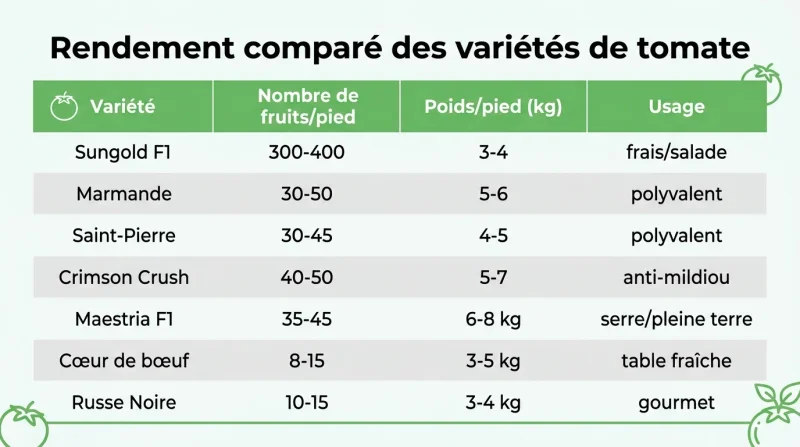
Experienced gardeners frequently recommend five varieties for their exceptional productivity: Marmande (a benchmark variety yielding 5-6 kg/plant), Crimson Crush (downy mildew resistant, yielding 5-7 kg), Maestria F1 (a highly productive hybrid, yielding 6-8 kg), Sungold F1 (yellow cherry, yielding 3-4 kg but in large numbers), and Saint-Pierre (robust and versatile, yielding 4-5 kg). All these varieties adapt well to French open ground conditions and can withstand climatic fluctuations.
Mildew-Resistant Varieties (Crimson Crush, Maestria)
Mildew is a primary cause of yield decline in humid climates. Resistant hybrids like Crimson Crush, Mountain Magic, Maestria F1, or Fantasio F1 maintain their production even during rainy summers. These varieties are a valuable assurance for gardeners in northern and western France, where mildew is a recurring challenge.
Greenhouse or Tunnel Varieties
Under cover, yields significantly increase: 8 to 12 kg per plant for varieties like Pyros F1, Estiva, or Levovil. Greenhouses allow for a longer growing season (April to November in the south) and better humidity control, leading to prolonged and consistent production. Pruning to 8-10 clusters becomes feasible, compared to 5-6 in open ground.
Important Note: F1 hybrids produce more than heirloom varieties, but their seeds are not identical for future planting. If you wish to save seeds year after year, mix F1 and heirloom varieties.
How to Maximize Your Tomato Harvest?
Beyond variety selection, effective cultivation practices can make a significant difference between a mediocre yield of 1 kg/plant and an excellent yield of 6 kg/plant. Simple best practices accessible to beginners can often double your harvest from one year to the next. As with choosing the best natural fertilizers for your garden, consistency is more important than intensity.
Planting Schedule and Cultural Practices
Start seeds indoors from late February to mid-March, transplant into pots when they have 4-5 leaves, and then plant in the ground after the last frost (mid-May in the northern half, late April in the south). Space plants 60-80 cm apart and plant them at an angle, burying the stem 15 cm deep to encourage a robust root system. Mulch immediately and install stakes.
Common Mistakes That Hurt Yields
Common pitfalls include irregular watering (leading to blossom end rot and splitting), planting too early (risking late frosts), neglecting to prune suckers (wasting energy), watering on the leaves (guaranteeing mildew), and planting in the same spot two years in a row (depleting soil and increasing disease risk). Also, avoid overusing nitrogen fertilizers, which promote foliage growth without enhancing fruit set.
How Many Plants to Grow for a Family?
As a general guideline, plan for 4 to 5 tomato plants per adult heavy consumer, and 2 to 3 plants per child. A family of four should consider 12 to 16 plants to cover summer fresh consumption and create a small stock of preserves (sauces, purees). Mix varieties to stagger production throughout the season: early (Stupice), mid-season (Marmande), late (Black Russian), and cherry tomatoes for children and salads.
Also, consider the final use: if you plan to can tomato sauce, double the number of plants intended for processing (like San Marzano or Roma). Conversely, for fresh consumption only, it’s better to diversify varieties and limit the quantity of each type.