Understanding Mulching Fabrics: When They Work and When to Avoid Them
Explore the pros and cons of using mulching fabrics in gardening. Understand when they can be beneficial and when they might cause more harm than good.
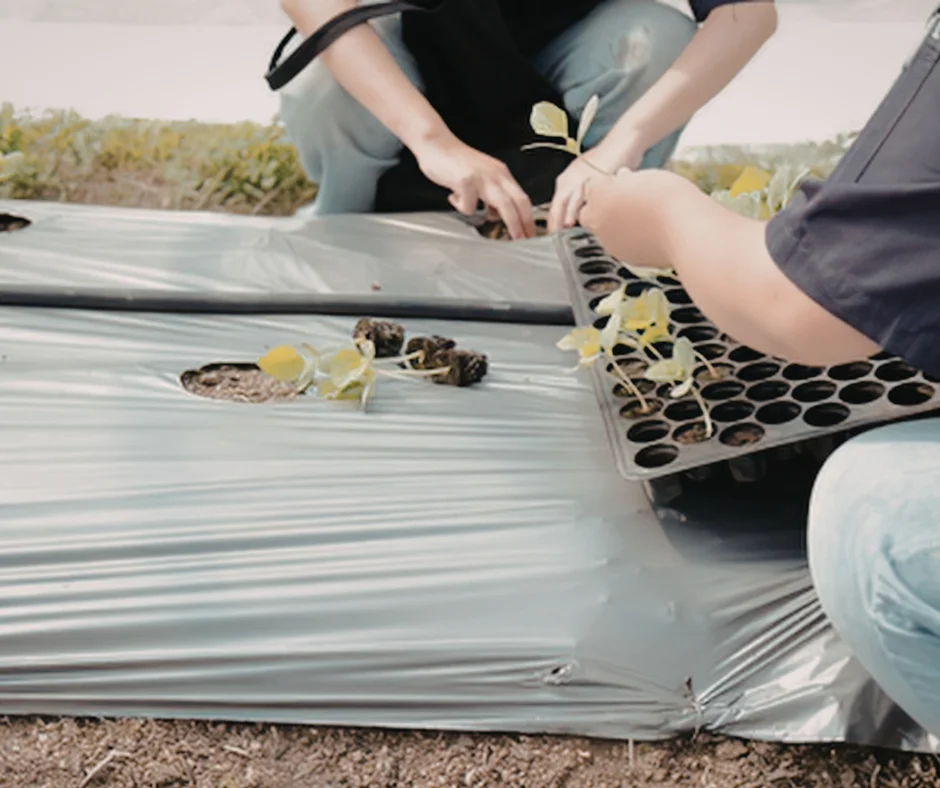
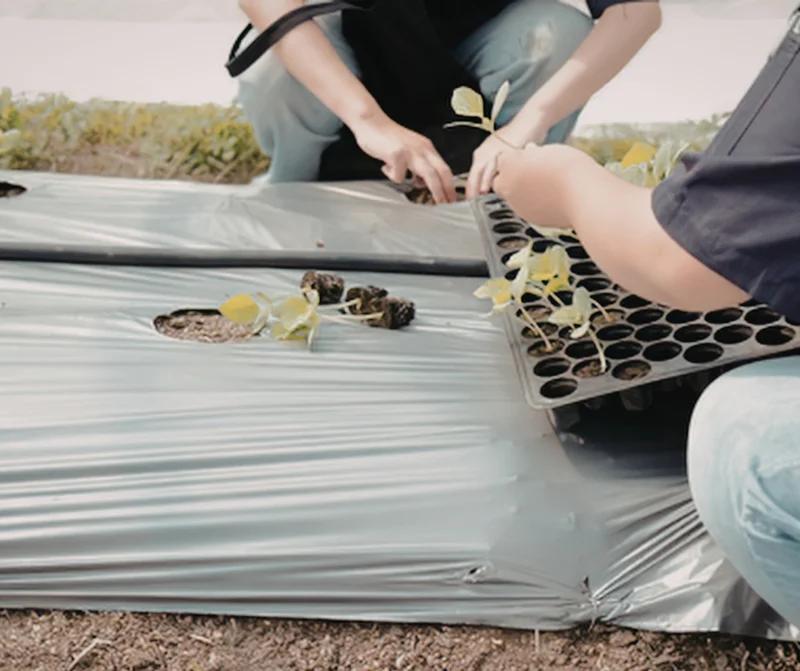
The topic of mulching fabrics often stirs debate among gardeners. Many consider it a clever solution: lay it down, make holes, plant, and cover with mulch or gravel, seemingly solving various problems. The narrative suggests less weeding, reduced labor, decreased water usage, and enhanced order in the garden. However, my perspective diverges significantly.
After years of research, trials, and hands-on experience, I believe that leaving a mulching fabric beneath plants as a permanent fixture is generally ineffective and can lead to more issues than it resolves. In many cases, it represents a misguided shortcut, one that initially appears beneficial but ultimately incurs costs down the line.
This is not to say that mulching fabrics should be completely dismissed. Rather, their role must be clearly understood. In my view, they are most effective as a temporary ground cover prior to planting. By laying it down for a few months, you can suppress weed pressure, then remove it before planting. This approach is practical and allows for reuse in other areas when needed.
This method is particularly advantageous in vegetable gardens or areas designated for bulbs or perennial herbs, where you want to prepare the soil without immediately battling a weed invasion. Here, the fabric acts as a temporary tool, performing its job before being removed.
Problems arise when the fabric is left in place for years, treated as a standard base for flower beds, borders, or entire gardens. That’s where issues begin. To clarify, we should distinguish between different types of mulching fabrics.
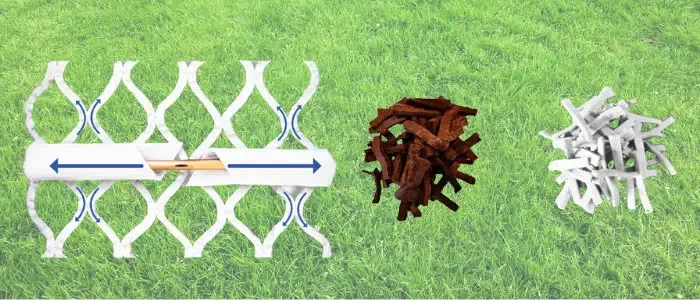
There are synthetic fabrics, often made from polypropylene or similar materials, which are commonly seen in nurseries, public beds, and many private gardens. Then, there are biodegradable options made from jute, coconut, cellulose, hemp, and other natural materials designed to decompose over time. Lastly, true mulches exist that are not fabrics: wood chips, leaves, straw, compost, bark, pumice, and gravel.
This distinction is crucial. Mulching means covering the soil to protect it. The fabric is just one of many possible methods, and in most cases, it is not the best choice. The reason is straightforward: using fabric to cover the ground for a few months to prepare it is very different from sealing it under a material that remains for years.
In the first scenario, the fabric serves as a temporary aid. In the second, it acts as a permanent crutch, and I have little faith in permanent crutches in gardening.
Let’s focus on the valid uses of mulching fabric. If you are starting a vegetable garden, preparing a new flower bed, or dealing with an area overrun by annual weeds, covering the soil temporarily can be highly beneficial. The fabric blocks light, significantly slows weed growth, and allows you to arrive at planting time with cleaner, more manageable soil. However, it must be removed before planting—not left in place.
This practical approach keeps the fabric from becoming part of the garden. It’s merely a tool, akin to a wheelbarrow or shovel, that serves a purpose for a time and then is no longer needed.
In the vegetable garden, this practice makes sense, especially in areas where you want to establish bulbs and perennials without excessive competition from weeds initially. In this context, the fabric aids in establishing a healthier start without suffocating the soil.
My main objection lies with the practice of leaving the fabric in place during and after planting. This method is prevalent but lacks rationale in most cases. It is often claimed to block weeds, which may hold true initially. However, over time, dust, leaves, wind-blown seeds, soil, and organic debris accumulate on top of the fabric, creating a new surface layer where weeds can re-emerge. Thus, the problem doesn’t disappear; it merely shifts, often becoming harder to manage as roots penetrate the gravel, bark, or fabric itself, complicating removal.
Weeds such as crabgrass, bindweed, horsetail, and foxtail are particularly resilient. They may slow down slightly but often find ways to breach the fabric through holes or edges, effectively undermining the effectiveness of the fabric as a weed barrier.
Another argument frequently made is the water-saving aspect of using mulching fabric. While it is true that covering the soil can help reduce evaporation, not all coverings perform equally. Organic mulches protect and nourish the soil, improving its structure and fostering life within it. In contrast, synthetic fabrics merely cover the ground; they separate and seal it off without contributing nutrients or enhancing fertility.
The difference between a vibrant garden and a sterile one is evident here. If you desire a neat appearance in the short term, the fabric might seem appealing. However, if your goal is to build a resilient, stable, and self-sustaining system over time, the narrative changes significantly. Ultimately, the question remains: do you want to cover the soil, or do you want to improve it? These are two distinct objectives.
Leaving fabric beneath plants often prioritizes aesthetics over genuine ecological balance. It serves the immediate need for a clean appearance, particularly for those delivering the garden for a photo opportunity, but offers little to those who will maintain it over the years.
Additionally, the overall effect of gardens using this method can be disheartening. Initially, beds with fabric underneath and gravel on top may appear tidy. However, as time passes, the fabric can become exposed at the edges, tear, deform, and become visible, leading to a less appealing garden. When the day comes to remove the fabric, it often reveals a mess of soil, roots, gravel, and weeds, resulting in a tedious and frustrating clean-up process.
This is far from a practical solution. Therefore, I advocate for a different approach: preparing the soil adequately, selecting appropriate plants, planting at the right density, and utilizing organic mulches where beneficial. Accepting that initial care is necessary allows the garden to gradually fill in, provide shade, occupy space, and stabilize itself over time.
This, to me, represents sensible design. A fixed fabric often symbolizes the opposite: an attempt to resolve issues with a synthetic cover instead of through observation, planning, and patience.
I am not suggesting that all mulching fabrics are inherently bad. Rather, they should be used wisely and sparingly. If asked when I would use them, I would say: as a temporary soil cover before planting, for several months, to reduce weed pressure. I would use them in vegetable gardens and areas designated for bulbs or perennials, treating them as temporary tools that are removed before planting.
If we’re discussing leaving fabric beneath plants as a permanent part of a finished garden, my answer is almost always no. I make a small exception for specific contexts, such as challenging slopes with ground cover plants and biodegradable materials. Even then, the principle remains the same: an initial aid, not a permanent prosthesis.
If the material degrades and supports the initial phase, I can accept that. However, if it is to remain for years as the foundation of the garden, I lose my conviction. Ultimately, the point is straightforward: the fabric is beneficial when it aids in preparing the soil but loses its value when it replaces the soil itself. This is where many go wrong.
A sustainable garden does not emerge from simply covering everything and hoping nothing happens underneath. It develops through understanding the site, recognizing the soil, choosing the right plants, and nurturing the system until it finds its balance.
The fabric can assist in getting started but cannot replace thoughtful planning. When marketed as a universal, definitive solution, I become skeptical. In fact, I outright reject it. I have witnessed too many times the same narrative: a clean job initially, followed by problems later, impoverished soil, returning weeds, waste disposal issues, and gardens that feel rigid and lifeless.
I prefer a genuine garden—one that may require more initial thought but ultimately offers greater balance, beauty, and less reliance on artificial solutions. So yes, the fabric has its place, but only as a temporary measure, solely before planting. When it remains beneath plants, it ceases to be a solution and often becomes a mistake.