
Understanding and Preventing Concrete Carbonation Risks
Explore the risks of concrete carbonation, its effects on rebar, and effective prevention and repair strategies.
Understanding and Preventing Concrete Carbonation Risks
14 July 2026
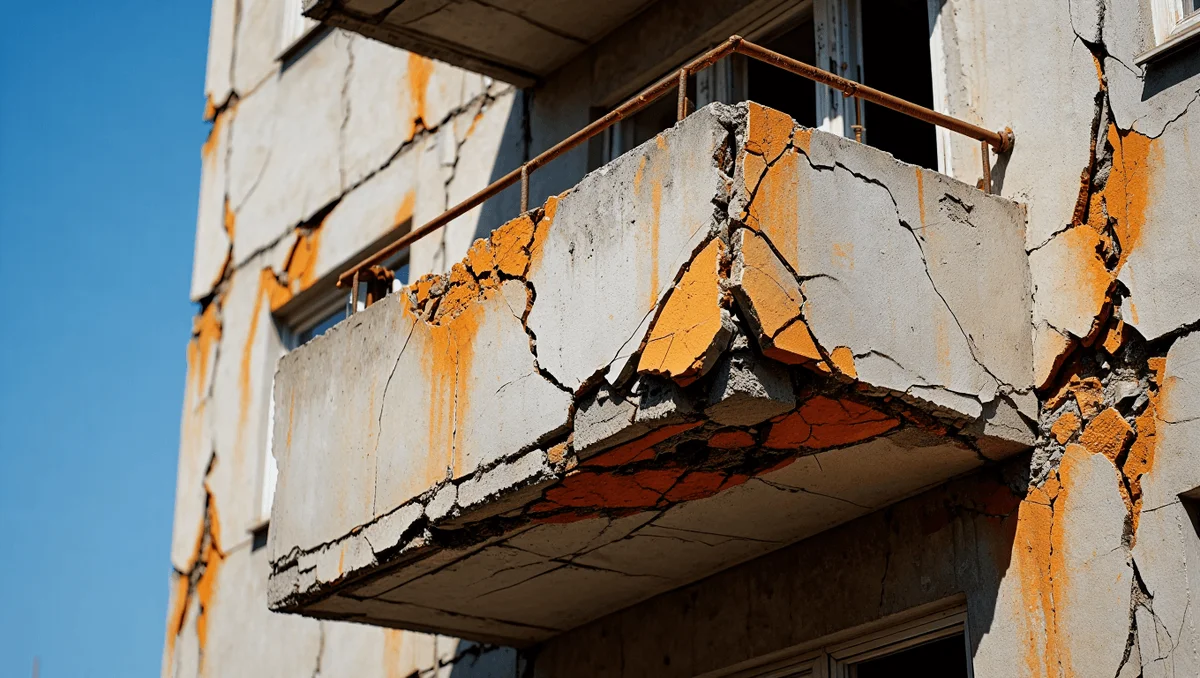
Concrete carbonation is a subtle yet significant process that often goes unnoticed until it leads to visible damage, such as cracking or spalling of the rebar. This natural chemical reaction can compromise the durability of structures like balconies, facades, parking garages, and roadworks as soon as the concrete is exposed to air. By exploring this topic, we can better grasp the associated risks, optimize design choices, and plan effective diagnostics to maintain structural integrity.
What is Concrete Carbonation?
Concrete carbonation occurs when atmospheric carbon dioxide reacts with the alkaline components of concrete. CO2 infiltrates the pores of the concrete and transforms calcium hydroxide, produced from cement, into calcium carbonate. This chemical transformation permanently alters the alkaline environment of the concrete.
A healthy concrete structure maintains a high pH, typically around 12 to 13. This alkalinity creates a protective layer around the embedded steel reinforcements. However, when the pH decreases, this protective measure is compromised, leaving the steel susceptible to rust.
The advancement of the carbonation front towards the rebar signifies a critical turning point. In the presence of moisture and oxygen, the corrosion of the rebar begins, which can jeopardize the load-bearing capacity of the structure.
Why Does Carbonation Threaten Reinforcements?
Reinforced concrete combines steel for tensile strength and concrete for compression and protection of the rebar. This synergy functions effectively as long as the steel remains passivated by the highly alkaline environment. A loss of this passivation leads to an electrochemical attack on the steel.
The thickness of the concrete cover significantly affects the time it takes for the steel to be reached by carbonation. Insufficient cover or poor construction practices accelerate CO2 penetration. Standards dictate appropriate cover thicknesses based on exposure levels to mitigate this risk.
Elements exposed to weather or urban pollution, such as balconies and roadside beams, deteriorate more rapidly. In these environments, carbonation can pose a major concern for safety and maintenance.
How Does Carbonation Spread in Concrete?
Carbonation progresses as a front that gradually penetrates from the surface inward. The rate of this penetration is influenced by porosity, humidity, and CO2 concentration. Highly porous concrete facilitates gas movement, accelerating the process.
Humidity plays a complex role in this reaction. Completely dry concrete slows down chemical exchanges, while saturated concrete restricts gas diffusion. Optimal conditions for carbonation often exist at intermediate relative humidity levels, which are common on surfaces shielded from rain.
The quality of construction also affects the rate of carbonation. Overly wet mixing, insufficient compaction, or inadequate curing can create voids and cracks that promote CO2 entry and lead to a faster advancing front.
How to Identify Carbonated Concrete?
Carbonation is rarely visible to the naked eye until the steel begins to corrode. The initial tangible signs appear when rust generates internal pressures, leading to cracks and spalling in the concrete.
Common indicators include longitudinal cracks parallel to the rebar, spalling known as delamination, and brownish halos on the surface after rain. These symptoms suggest active or imminent corrosion and necessitate a thorough inspection.
It is crucial not to limit interventions to mere aesthetic repairs. Covering cracks without assessing the condition of the rebar may worsen long-term degradation.
What Tests and Diagnostics Exist for Carbonation?
Effective diagnostics involve field observations and instrumental measurements. The phenolphthalein test remains the most widely used method to assess the depth of the carbonation front. Applying a fresh cut with the solution reveals the non-carbonated area in pink or violet.
Additional measurements are often employed based on specific needs: corrosion potential, moisture content, rebar cover detection with a pachometer, and core sampling for laboratory analysis. These data help formulate an appropriate intervention strategy.
Common Tests and Their Utility
| Test | Objective | Advantage | |--------------------|----------------------------------------|---------------------------------| | Phenolphthalein | Estimate carbonation depth | Quick and cost-effective | | Pachometer | Locate rebar and measure cover | Non-destructive | | Corrosion Potentials| Evaluate risk of active rust | Allows prioritization of repairs | | Core Sampling | Laboratory analysis | Detailed information on microstructure |
What Factors Accelerate Carbonation?
The water-to-cement ratio is a key parameter. Excess water during mixing increases porosity after drying, facilitating CO2 entry. The type and quality of aggregates, as well as the initial curing process, also influence the material's density.
Even fine cracks provide rapid pathways for air and moisture. Climatic exposure, pollution, and wet-dry cycles enhance the rate of carbonation. In urban settings or sheltered substructures, carbonation can progress more significantly than in rural areas.
What Actions Can Be Taken to Prevent and Repair Carbonation?
Prevention begins at the design stage with appropriate cover thickness, the selection of low-permeability concrete, and meticulous curing. Standards outline exposure levels and specifications to minimize long-term risk. Adhering to these guidelines significantly reduces future maintenance needs.
Regular maintenance of a structure slows CO2 progression. Monitoring water drainage, sealing relevant cracks, and avoiding purely cosmetic repairs are practical measures. Additionally, using breathable surface protections can limit gas infiltration.
When corrosion is confirmed, repairs follow specific steps: removal of deteriorated concrete, cleaning or replacing excessively corroded rebar, applying anti-corrosion treatments, and reconstructing the cover with suitable mortar. Advanced solutions like electrochemical realkalinization or cathodic protection can be considered depending on the extent of the damage.
- Periodic monitoring of vulnerable points.
- Prompt interventions on active cracks.
- Use of lower permeability concrete in design.