Nutritional Benefits of Quinoa: A Comprehensive Overview
Quinoa is a powerhouse of nutrients, offering protein, fiber, and essential amino acids. Discover its health benefits, cooking methods, and comparisons with other grains.
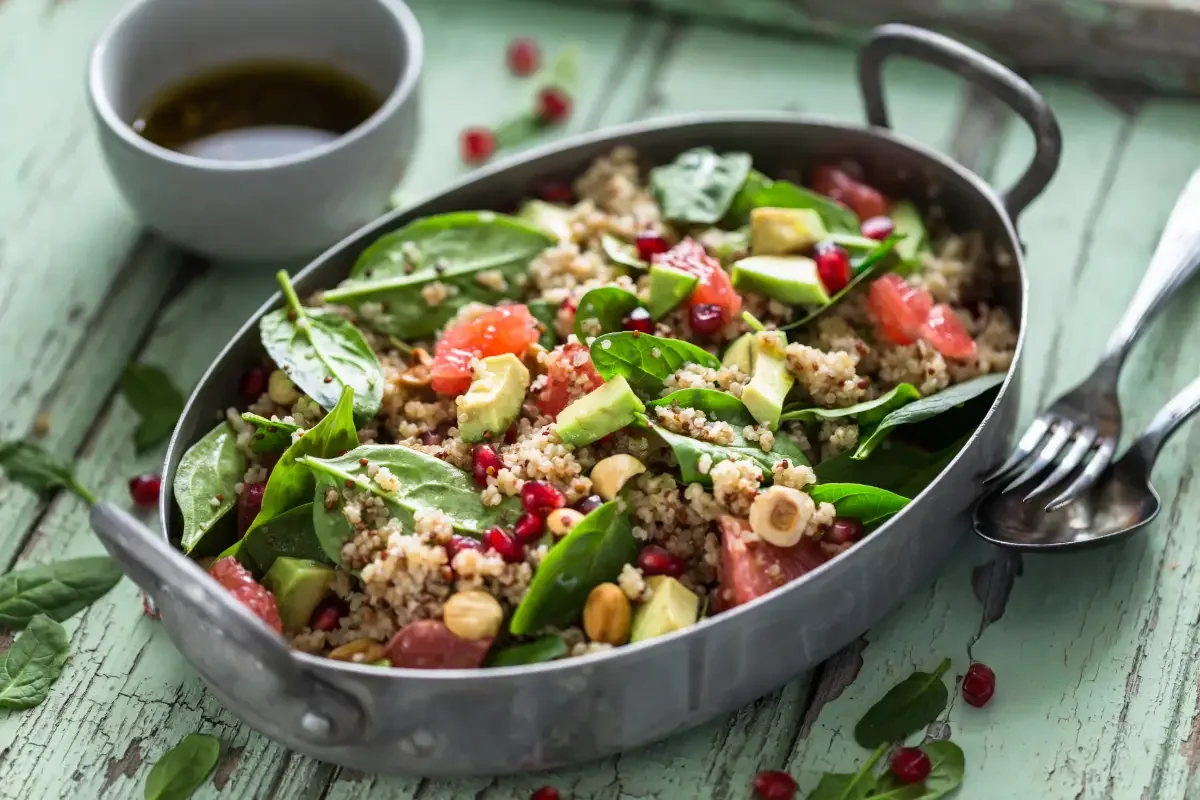
Quinoa is renowned for its impressive nutritional profile, providing protein, fiber, all nine essential amino acids, and vital minerals. This small seed has earned its status as a superfood, but does it truly live up to the hype? Key factors to consider include its protein content, amino acid composition, fiber levels, and mineral richness. Additionally, the nutritional values of raw versus cooked quinoa reveal significant differences based on preparation methods.
Nutritional Check of Quinoa
🔥
Calories
~120 kcal
per 100 g cooked
💪
Protein
4.4 g
per 100 g cooked
🌾
Carbohydrates
21 g
per 100 g cooked
🥑
Fat
1.9 g
per 100 g cooked
🌿
Fiber
~2.8 g
per 100 g cooked
🚫
Gluten
Naturally gluten-free
Quinoa Calories: Raw vs. Cooked
Many consumers are surprised by the high caloric content listed on quinoa packages, with raw quinoa containing approximately 368 kcal per 100 g. This figure seems daunting at first glance. However, when cooked, quinoa absorbs water and triples in volume, transforming 100 g of raw quinoa into nearly 300 g of cooked product. Consequently, the caloric content drops to about 120 kcal per 100 g, placing it on par with rice or couscous, but with a significantly higher nutrient density.
Quinoa Nutritional Table
| Nutrient | Raw (per 100 g) | Cooked (per 100 g) | |----------------------|------------------|---------------------| | Calories | 368 kcal | 120 kcal | | Protein | 13.8 g | 4.4 g | | Total Carbohydrates | 57–64 g | 21 g | | Total Fat | ~6 g | 1.9 g | | Fiber | 7–14 g | ~2.8 g | | Sodium | ~5 mg | ~7 mg |
Minerals
| Nutrient | Raw (per 100 g) | Cooked (per 100 g) | |-------------|------------------|---------------------| | Magnesium | ~197 mg | 64 mg | | Phosphorus | ~457 mg | 152 mg | | Potassium | ~563 mg | 172 mg | | Iron | ~4.6 mg | 1.5 mg | | Zinc | ~3.1 mg | 1.1 mg | | Copper | ~0.6 mg | 0.2 mg |
Vitamins
| Nutrient | Raw (per 100 g) | Cooked (per 100 g) | |---------------|------------------|---------------------| | Folate (B9) | ~184 µg | ~42 µg | | Vitamin B1 | ~0.36 mg | ~0.1 mg | | Vitamin B2 | ~0.32 mg | ~0.1 mg | | Vitamin B6 | ~0.49 mg | ~0.1 mg | | Vitamin E | Traces | Traces |
💡 Tip: Antioxidants as a Bonus Quinoa also contains secondary plant compounds like quercetin and kaempferol, which are flavonoids with antioxidant properties. These compounds can bind free radicals and are being researched for their potential anti-inflammatory effects.
The Nine Essential Amino Acids in Quinoa
Quinoa is a complete protein source, containing all nine essential amino acids:
- Histidine
- Isoleucine
- Leucine
- Lysine ⭐
- Methionine
- Phenylalanine
- Threonine
- Tryptophan
- Valine
Essential amino acids are crucial for various bodily functions, including muscle development, cellular health, enzyme production, hormone synthesis, and maintaining a robust immune system. While a balanced diet often combines different foods, such as rice and beans, quinoa naturally provides all essential amino acids, simplifying meal planning. Notably, quinoa is rich in lysine, an amino acid often lacking in many grains, making it particularly beneficial for tissue repair and muscle recovery.
💡 Tip: Limitations of Quinoa Despite its numerous advantages, quinoa is not a vitamin powerhouse. Its vitamin content is moderate and cannot solely meet daily vitamin requirements. However, when incorporated into a balanced diet, such as in patties served with salad, quinoa remains a valuable food choice.
Quinoa Compared: Rice, Couscous, and Millet
How does quinoa measure up against other popular side dishes? The following table compares their nutritional values for 100 g in cooked form:
| Food Item | Calories | Protein | Carbohydrates | Fiber | Gluten-Free | |----------------|----------|---------|---------------|-------|--------------| | Quinoa | 120 | 4.4 g | 21 g | 2.8 g | ✅ Yes | | White Rice | 130 | 2.7 g | 28 g | 0.3 g | ✅ Yes | | Brown Rice | 112 | 2.6 g | 23 g | 1.8 g | ✅ Yes | | Couscous | 112 | 3.8 g | 23 g | 1.4 g | ❌ No | | Millet | 119 | 3.5 g | 23 g | 1.3 g | ✅ Yes | | Buckwheat | 92 | 3.4 g | 19 g | 2.7 g | ✅ Yes |
The conclusion from this comparison is clear: quinoa has a similar caloric content to its counterparts, yet it excels in protein content and particularly in protein quality, boasting a complete amino acid profile. Additionally, being naturally gluten-free gives quinoa a distinct advantage over couscous.
Health Benefits of Quinoa
The nutritional profile of quinoa translates into tangible health benefits when included regularly in a balanced diet.
For Athletes and Active Individuals
✅ Complete amino acid profile supports muscle building and recovery. ✅ Complex carbohydrates provide sustained energy for workouts and daily activities. ✅ Magnesium helps prevent muscle cramps and supports muscle function. ✅ Good iron supply enhances oxygen transport in the blood.
For a Plant-Based Diet
✅ Provides complete protein without animal products, making it ideal for vegans and vegetarians. ✅ Contains lysine, an amino acid often deficient in plant-based diets. ✅ Iron and zinc from quinoa can help mitigate common nutrient deficiencies in plant-based eating.
For Individuals with Gluten or Wheat Intolerance
Quinoa is naturally gluten-free, making it suitable for those with celiac disease or gluten sensitivity. It serves as a flavorful alternative to gluten-containing grains, whether as a side dish or flour substitute.
For Type 2 Diabetics
With a low to moderate glycemic index (GI 53), quinoa is a beneficial carbohydrate source for individuals with type 2 diabetes or insulin resistance. It causes a slower, more stable rise in blood sugar levels compared to white bread, white rice, or couscous.
💡 Tip: Growing Quinoa Yourself Cultivating quinoa is straightforward and can be done on a balcony or in a garden. Our growing guide outlines the process from sowing to harvest, ensuring that these nutritious seeds find their way onto your plate more often.
Frequently Asked Questions about Quinoa Nutritional Values
How many calories are in a serving of quinoa?
A typical serving (50 g raw = approximately 150 g cooked) contains around 180 kcal. This is comparable to a serving of rice but offers significantly more protein and fiber.
Is quinoa really that high in protein?
Raw quinoa contains about 13.8 g of protein per 100 g, which is impressive and comparable to oats. What sets quinoa apart is its protein quality; it includes all nine essential amino acids, a rarity among plant-based foods.
Can quinoa aid in weight loss?
Quinoa can support weight loss efforts. Its high protein and fiber content promote a lasting feeling of fullness, while its low glycemic index prevents rapid spikes in blood sugar and cravings. However, overall dietary habits are crucial, not just individual foods.
Does quinoa have more nutrients than rice?
Yes, quinoa surpasses rice in several aspects. It contains more protein, more fiber, a complete amino acid profile, and higher levels of magnesium and iron. While white rice has a similar caloric count, it lacks fiber, protein, and a complete amino acid profile.
Can I eat quinoa daily?
Yes, quinoa is well-tolerated and does not contain any components that would cause issues with regular consumption in typical quantities. However, maintaining a varied diet remains advisable.