The Rise of Exoskeletons in Professional Gardening
The increasing demand for exoskeletons among professional gardeners highlights their role in preventing musculoskeletal disorders and enhancing comfort. HMT, a French manufacturer, offers innovative solutions tailored to the landscaping industry.
In recent times, there has been a noticeable uptick in inquiries from professional gardeners regarding exoskeletons. The interest from landscape professionals is growing, and with good reason: these devices are proving to be invaluable in preventing musculoskeletal disorders (MSDs), enhancing workplace comfort, and reducing fatigue. To delve deeper into this trend, we engaged with several manufacturers and distributors, ultimately being impressed by the offerings from HMT.
What Exoskeletons Are Suitable for Landscape Gardeners? If you envision exoskeletons as high-tech robotic tools, you might be surprised to learn that the models we discuss here are 100% mechanical, devoid of any electronic components. There’s no need for recharging, as these are classified as passive exoskeletons or physical assistance devices (PADs). In contrast, active exoskeletons, also known as Robotic Assistance Devices (RADs), are motorized and typically used in medical and industrial applications where significant strength is required. For landscape gardeners, HMT primarily recommends two passive models, which are outlined below.
Exoskeleton for Cervical Support
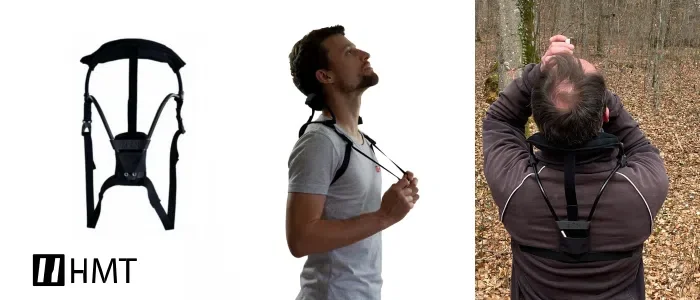
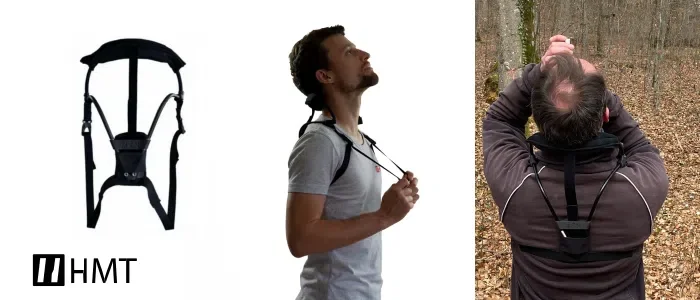
A typical scenario for a landscape gardener involves hedge trimming at height, where using a pole to trim while standing on the ground is essential. This exoskeleton, named Moon, alleviates the weight on the neck, providing enhanced comfort for tasks requiring upward head orientation. It is remarkably easy to put on, taking just seconds to don and adjust. At a mere 250 grams, it is incredibly lightweight.
Exoskeleton for Arms and Shoulders The Plum model from HMT is specifically designed to relieve professionals of the burden on their arms. It is ideal for any tasks that require arm elevation, such as hedge trimming, painting, or wall cleaning. This exoskeleton accommodates various body types with its three adjustable settings. Lightweight at 1.6 kg, it stands out as the lightest arm and shoulder exoskeleton on the market.
What Is the Cost of an Exoskeleton? The price of exoskeletons varies based on several factors. Generally, active exoskeletons are more expensive than their passive counterparts due to their advanced technology. The quality of materials also plays a significant role in pricing, which is crucial for ensuring the durability of the device. Additionally, the manufacturing country and support during integration into the workplace are considered. For work exoskeletons, such as those utilized by landscape gardeners, prices can range significantly from €500 to €10,000 depending on the selected model.
HMT: A French Manufacturer and Distributor of Exoskeletons
A Compelling Journey
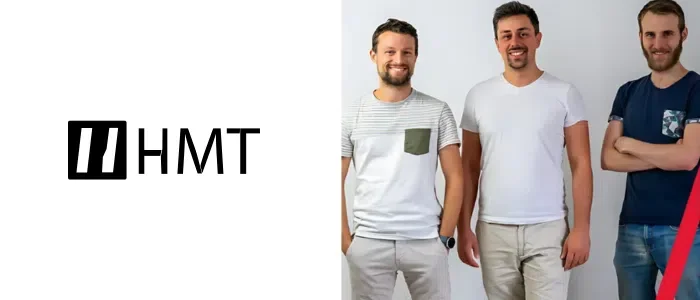
HMT, based in Tarbes in the Hautes-Pyrénées, originated from a remarkable blend of human and technological adventure. Three students from the École Nationale d’Ingénieurs de Tarbes (ENIT) embarked on a mission to create exoskeletons that assist professionals in tackling physically demanding tasks. Their enthusiasm for engineering and commitment to providing practical solutions quickly evolved their student project into a recognized enterprise, celebrated for its expertise in merging innovation with user comfort. With eight years of experience and over 1,500 exoskeletons integrated within various companies, HMT continues to grow while adhering to its core values: innovation, commitment, teamwork, and excellence.
HMT: An Ergonomics Consultancy
An intriguing aspect of HMT is that its operations extend beyond the manufacturing and distribution of exoskeletons. The company also hosts a dedicated ergonomics consultancy, staffed by ergonomists and recognized by CARSAT (Caisse d’Assurance Retraite et de la Santé au Travail). Their primary roles include identifying and mitigating risks associated with musculoskeletal disorders and psychosocial hazards, as well as suggesting workplace adjustments and improving the work environment. Furthermore, ergonomists are present during the initial familiarization with the exoskeletons, providing half-day training sessions for users on these physical assistance devices.
An Award-Winning Company
HMT's success extends beyond the numerous businesses that have adopted its exoskeletons, which include La Poste, SNCF, EDF, and Keolis. The company has also received significant recognition for its innovation and the quality of its solutions, having won multiple awards and accolades. These include the Public Prize in 2016, the 1st prize at the Enedis Startup competition in 2018, the Hautes-Pyrénées SeptuOrs Trophy in 2018, and the 1st Prize Start’in Pyrénées. These accomplishments reflect HMT's expertise and its ability to combine technological performance with tangible impact in the exoskeleton domain.