Successfully Rooting Cannabis Cuttings in Coconut Fiber
Cannabis cuttings thrive best in warm temperatures and high humidity. This guide covers the legal aspects, quality indicators, preparation, and step-by-step planting and care for successful rooting in coconut fiber.
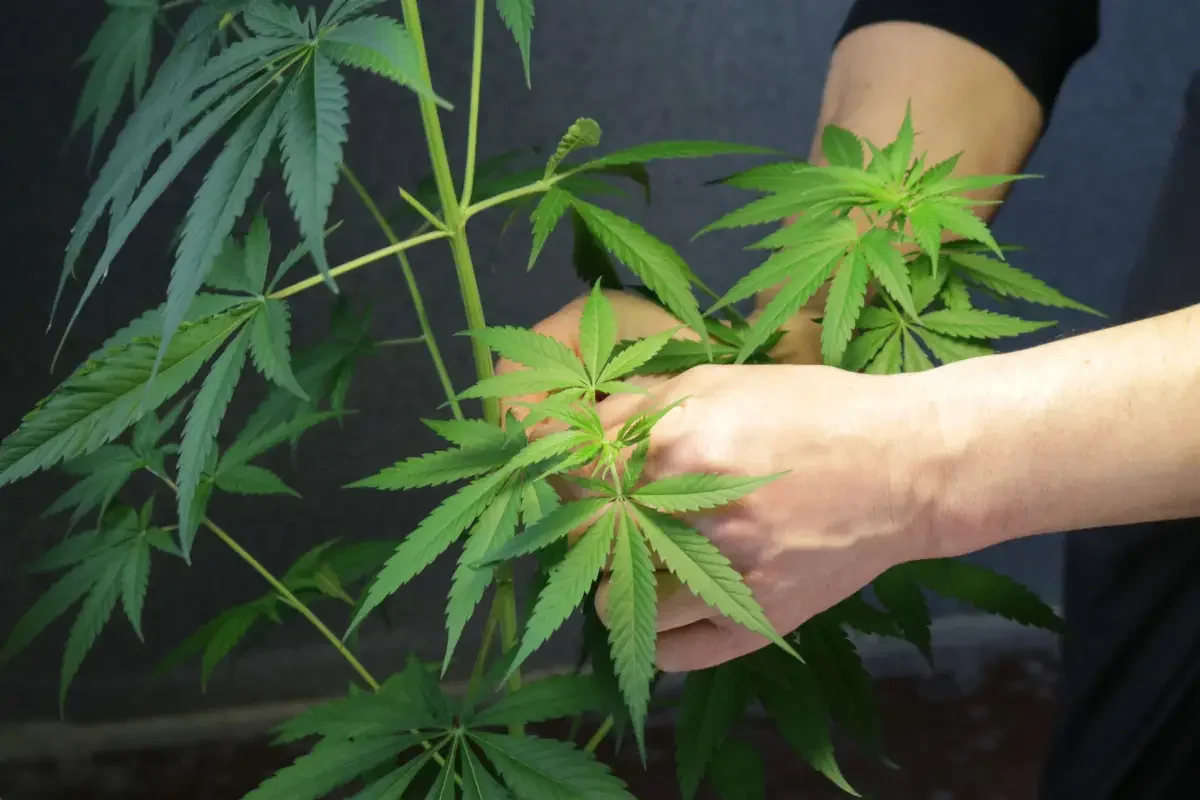
The delicate roots of cannabis cuttings thrive best in warmer temperatures and high humidity. If conditions are not ideal, cuttings may wilt or fail to root after planting.
Since April 1, 2024, cannabis cuttings have been legally available, but their rooting process requires careful attention. Planting cuttings directly in the garden or any substrate can lead to drooping leaves, mushy cut ends, and clones that show no roots even after two weeks. Coconut fiber provides the optimal conditions necessary for cannabis cuttings to root effectively.
Key Points • Rooting typically takes between 7 to 14 days. • Cannabis cuttings have been legal since April 1, 2024. • Private cultivation is limited to a maximum of three cannabis plants. • Unrooted cuttings are not legally considered plants. • Coconut fiber reliably roots hemp cuttings.
Understanding the Legal Framework for Cannabis Cuttings
As of April 1, 2024, the Cannabis Consumption Act (KCanG) governs the private use of cannabis in Germany. Adults aged 18 and over are allowed to cultivate a maximum of three cannabis plants for personal use at their residence. However, there are strict legal guidelines regarding the acquisition of cannabis cuttings.
Sources and Prohibition of Transfer
Cannabis cuttings can be obtained legally through two primary avenues. Cultivation associations, which are non-profit organizations for communal cultivation, are permitted to distribute propagation materials like cuttings and seeds to their members within the legal framework. Additionally, commercial suppliers based in Germany offer cannabis cuttings derived from controlled mother plant selections.
However, transferring cuttings to third parties is prohibited. According to the law, even gifting cuttings can be classified as illegal distribution (i.e., trading, exchanging, or giving away).
💡 Tip: Three-Plant Limit Once a cutting develops roots, it is legally classified as a plant (206 StRR 315/25) and counts towards the three-plant limit. Unrooted cuttings are not included, but possessing a large number of unrooted cuttings may raise suspicions of exceeding the allowable quantity.
Recognizing Quality When Purchasing Cuttings
A reputable delivery of hemp cuttings should arrive moist, free from wilting, and clearly labeled with the strain information. Indicators of good quality include:
- A robust, firm stem without brown discoloration or soft spots
- Vivid green leaves without yellow spots or burn marks
- Visible white root tips or callus formation at the cut (callus is the whitish, swollen tissue from which roots develop)
- Absence of spider mites, powdery mildew, or pesticide residues
- Stable, named genetics with a description of the phenotype (phenotype refers to the plant's observable characteristics, such as height, flowering time, and aroma)
Preparation and Equipment
When cannabis cuttings arrive by mail and appear slightly wilted, they should be placed in a glass of pH-adjusted water. Often, they will recover after a short period.
💡 Tip: Adjusting pH First, measure the pH level of the water using a pH test. If it is too high, add a few drops of pH reducer with a pipette. If it is too low, carefully stir in a pH increaser. Measure again afterward.
Coconut Fiber as a Rooting Substrate
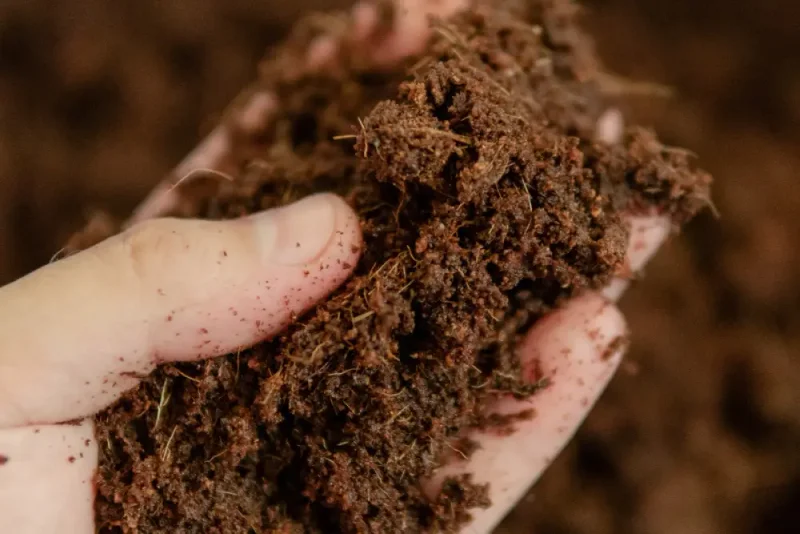
Coconut fiber is made from processed coconut husk fibers and offers several advantages for rooting cannabis cuttings:
- Air Porosity Coconut fiber has a high air porosity (25 to 30%), which means many fine air pockets remain filled with air, allowing young roots to absorb sufficient oxygen. This supports rhizogenesis, the formation of new roots.
- pH Buffering Well-prepared coconut fiber maintains a relatively stable pH in the mildly acidic range of 5.5 to 6.5. A pH of around 5.8 to 6.2 is ideal for cannabis cuttings, as young roots can efficiently absorb nutrients in this range.
- Drainage Properties Due to its high air porosity, coconut fiber allows excess water to drain away, preventing waterlogging and reducing the risk of root issues such as Pythium, a fungal-like pathogen that can damage roots in overly wet substrates.
Conditions for Rooting Cannabis Cuttings
During the first two weeks, cannabis cuttings begin the essential process of root formation. This process is regulated partly by auxins, which are plant hormones that control growth and stimulate new root development. To promote successful rooting, the following cultural parameters should remain as constant as possible during this phase.
| Parameter | Target Values | |-----------------------|---------------------| | pH (substrate) | 5.8 to 6.2 | | EC Value* | under 0.8 mS/cm | | Air Temperature | 22 to 25 °C | | Air Humidity | 70 to 80 % | | PPFD* | 100 to 300 µmol/m²/s| | Light Cycle | 18/6 (18 hours light, 6 hours dark) |
** EC Value =* electrical conductivity of the irrigation water or nutrient solution. This value indicates the concentration of dissolved nutrient salts. It can increase due to minerals in tap water and fertilizers. Young cannabis cuttings require a low EC value as their delicate roots are sensitive to high nutrient concentrations. This is measured with an EC meter. If the value is too high, it can be reduced using rainwater or soft water.
** PPFD =* a measure of the light intensity that actually reaches the plants, expressed in µmol/m²/s. This can be influenced by lamp distance, dimming, and light orientation.
Planting Accessories
Before planting the hemp cutting, ensure all materials are ready. Each minute exposed to air can diminish rooting chances.
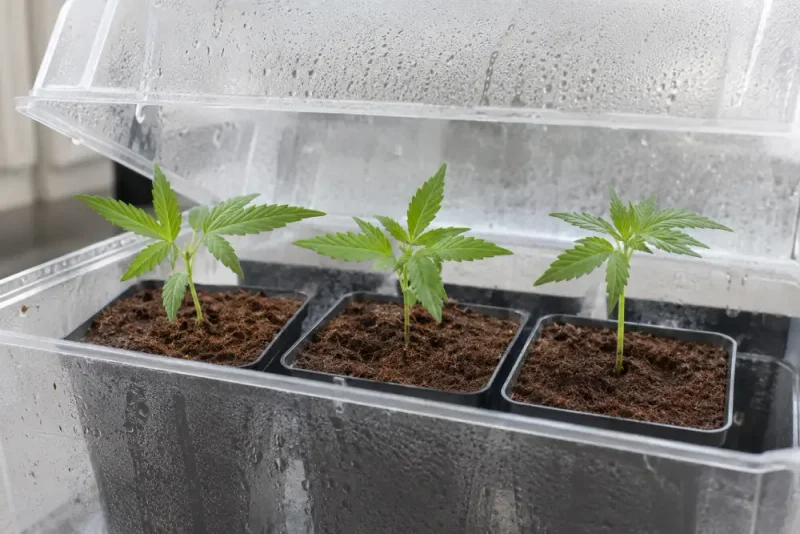
- Mini greenhouse or propagation box with a transparent lid to create a consistently moist environment
- Sharp knife (not garden shears, as they crush the plant tissue and delay root formation)
- Optional: Rooting hormone in gel, powder, or liquid form
- Spray bottle with low-calcium, pH-adjusted water
- pH/EC meter
- Plant pot (3–5 liters)
Step-by-Step Guide to Planting Cannabis Cuttings
Step 1: Prepare the Propagation Box
Loosely fill the propagation box with coconut fiber, avoiding compacting it to maintain air porosity. Then, moisten the coconut fiber with low-calcium, pH-optimized water, targeting a pH of 5.8 to 6.2. The substrate should feel moist but not release water when pressed. A propagation box with integrated lighting is ideal.
Step 2: Prepare the Cannabis Cutting
If the cutting has been taken from a plant, the bottom inch should be freshly cut at a 45-degree angle with a sharp knife. This angled cut increases the surface area for root formation and enhances nutrient uptake. If the cutting is already in a propagation cube with root tips, roughen the cube before planting.
💡 Tip: Rooting Hormone The hemp cutting can be treated with rooting hormone to boost root growth, though this is not strictly necessary. Cannabis can root effectively under good conditions without additives.
Step 3: Insert the Cutting into Coconut Fiber
Using a stick or finger, create a hole about 2 cm deep in the prepared coconut fiber. Place the cutting into the hole and gently press the substrate around it to ensure stability. Close the mini greenhouse and position it in a bright location away from direct sunlight. A consistent room temperature of 22 to 25 °C is ideal.
💡 Tip: Maintain Constant Temperature If the temperature drops below 20 °C, cell division at the cut site slows down. A heating mat for plants under the greenhouse can help maintain stable temperatures in cooler rooms.
Caring for Cannabis Cuttings Until Rooting
Watering Hemp Cuttings
Freshly cuttings do not yet have roots or only very delicate root tips. Therefore, water uptake is regulated through the leaves during the first few days. This means that the cuttings should not be watered but lightly misted with low-calcium water every 3 to 4 days to keep the leaves firm and prevent wilting.
Hardening Off and Root Monitoring from Day Four
Starting from day four, the ventilation openings can be gradually opened. Skipping this step or opening too abruptly risks losing already rooted cuttings. After about a week, the lid can be completely removed.
Transplanting Cannabis Cuttings After Rooting
By approximately day seven, it becomes apparent whether the cannabis cutting has developed initial roots. Gently tugging on the cutting will reveal if there is slight resistance, indicating root formation. It is crucial not to pull the cutting out of the substrate, as young roots are very sensitive.
- Once the hemp cutting is securely rooted, it can be placed in a small plant pot. Prepare the pot with loose coconut fiber. The cutting, along with its old propagation substrate, should be transferred into the new soil to minimize disturbance to the fine roots. Then, gently press the substrate and water lightly.
- From this point, a very mild nutrient supply begins. A mild calcium-magnesium supplement combined with a lightly dosed base nutrient is advisable. The EC value should start at around 0.6 to 0.8 mS/cm to prevent over-fertilization of the young cutting.
- After another 2 to 4 weeks in the vegetative phase, the next transplant will occur. Depending on the planned cultivation, the cannabis cutting will either be placed in a 10 to 15-liter pot or directly planted outdoors after the last frost.