Planting, Caring for, and Winterizing Yews
Discover the yew (_Taxus baccata_), an evergreen shrub that thrives in various conditions, is easy to maintain, and offers unique benefits for your garden. Learn how to plant, care for, and winterize this resilient plant.
Evergreen throughout the year, highly adaptable in shape, and remarkably durable, the yew (Taxus baccata) is a staple of many gardens. While planting and maintenance require only a few simple steps, winter can present unique challenges, particularly due to sunlight exposure rather than frost.
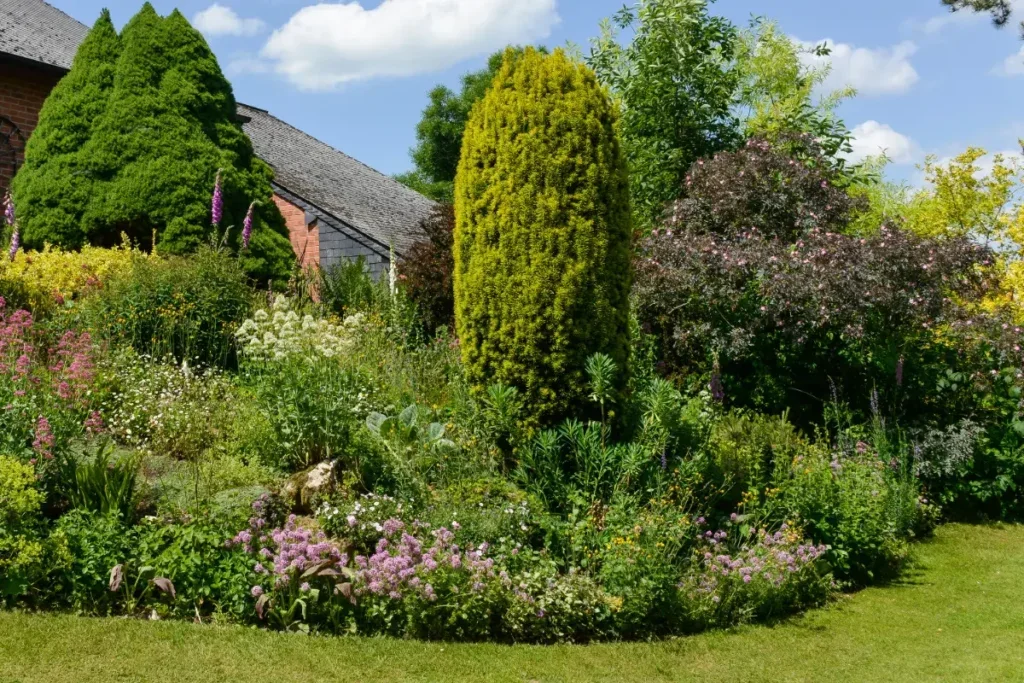
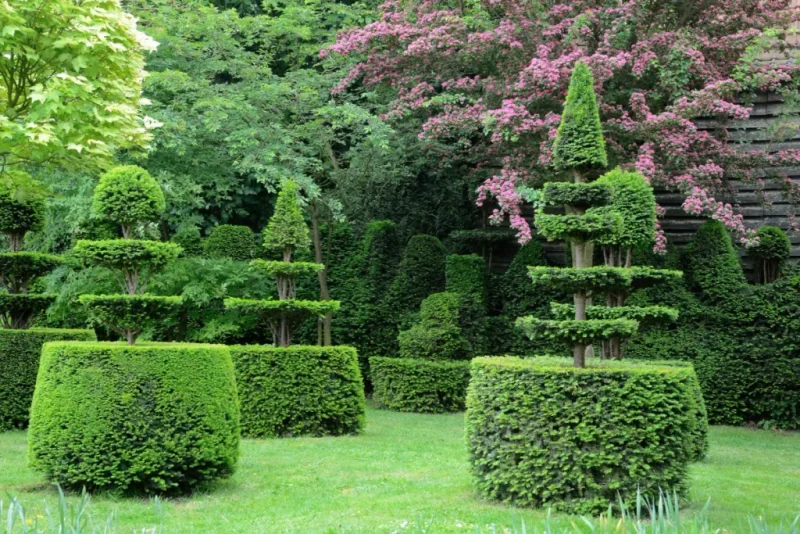
The yew is a defining feature in many historic gardens, often found in monastery grounds, near churches, and in baroque landscapes, where it has been cultivated for generations into cones, spheres, and dense hedges. Its reputation as a low-maintenance ornamental plant comes from its exceptional tolerance to pruning, a trait that surpasses that of other common conifers like thuja and cherry laurel. Notably, yews maintain their foliage even in shady conditions, preventing the interior from becoming sparse.
Overview of the Yew
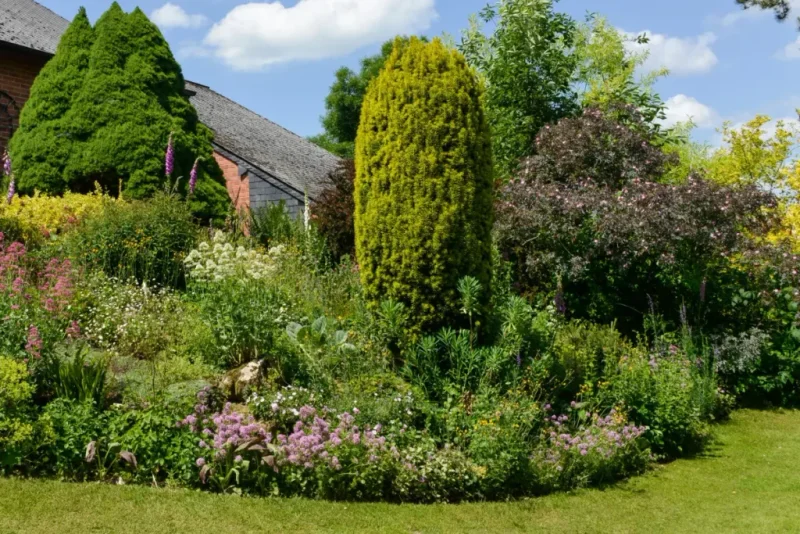
The common yew grows in a bushy, upright manner with dense branching, taking on the form of a shrub, hedge, or multi-stemmed tree depending on its pruning. Its soft needles are arranged in two lines along the stem, appearing almost black-green in dense plantings. Unlike other conifers, yews do not produce cones. Additionally, their needle retention means that there is no need to rake up fallen needles.
Yew (Taxus baccata)
- Growth Rate: 20 to 30 cm per year
- Height: 10 to 15 m when unpruned
- Width: 70 to 800 cm, depending on pruning
- Root System: Deep-reaching heart roots
- Location: From full sun to shade
- Soil: Undemanding, tolerates clayey-loamy conditions
Female yews produce bright red, cup-shaped seed coverings in late summer, each enclosing a single seed. However, since yews are dioecious, meaning there are separate male and female plants, both sexes must be present for fruit production. Birds eagerly consume the fruits (arils) in autumn, aiding in seed dispersal throughout the garden.
💡 Tip: In addition to the highly recommended wild type, you will find varieties with specific growth habits available in nurseries. The columnar yew ‘Fastigiata’ grows upright and requires minimal pruning, with its needles spirally arranged instead of in two rows. ‘Repandens’ remains low and spreads out flat, making it suitable as a ground cover under other plants. Many gardeners opt for the hybrid ‘Taxus × media Hicksii’ for hedges, which naturally grows in a columnar shape.
Plant Family and Origin
The yew belongs to the Taxaceae family, a small group in which only Taxus baccata is native to Central Europe. It has thrived in our forests for millennia, growing as an understory plant beneath the canopy of larger deciduous trees. This allows it to flourish in low light and amidst strong root competition, similar to the holly.
Due to its slow growth in thickness, yew wood is exceptionally hard and tough. In the Middle Ages, it was highly sought after for bows, crossbows, and gunstocks, leading to a significant decline in yew populations in Germany. Today, high-quality sport bows are still crafted from yew wood. The plant is long-lived, with the oldest yew in Germany located in Balderschwang in the Allgäu region, estimated to be between 2000 and 4000 years old. Thus, planting a yew brings a piece of resilient native forest flora into your garden.
Location
Yews thrive in a variety of conditions, from full sun to shade.
💡 Tip: Avoid two specific situations: open areas that receive full sunlight in winter with unimpeded east winds, and strips along salted walkways or driveways, as yews are sensitive to salt.
Soil
Yews exhibit remarkable tolerance when it comes to soil types. They can thrive in standard garden soil, clayey-loamy soil, and even calcareous conditions. Their root system aids in this adaptability. As heart-rooted plants, yews develop a deep and dense root system that can penetrate compacted layers.
💡 Tip: Yews do not tolerate waterlogging. Therefore, it is advisable to loosen heavily compacted soils with sand or drainage material before planting. Once established, they can easily grow into deeper, compacted soil layers.
Step-by-Step Planting Instructions
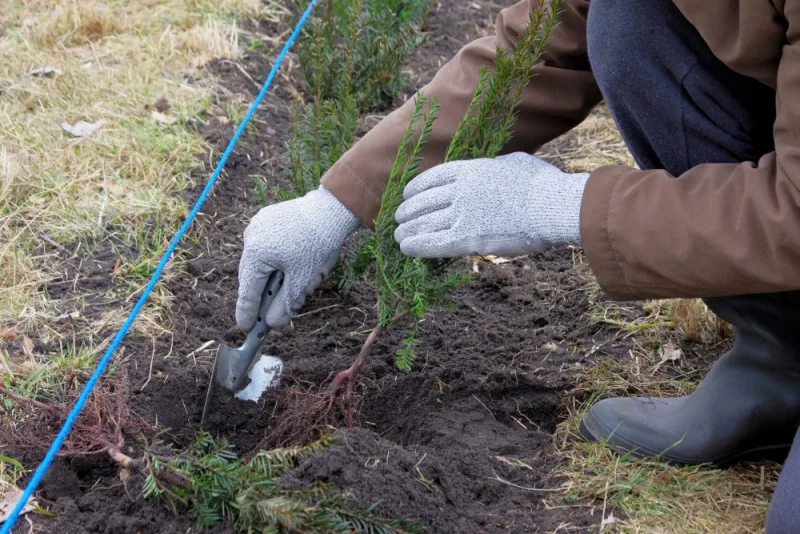
Container-grown yews can be planted year-round as long as the ground is not frozen, while bare-root stock is best planted in autumn or early spring. October is ideal, as the soil remains warm, allowing the yew to develop fibrous roots before winter, ensuring a strong start in spring.
- Soak the root ball before planting until no air bubbles rise.
- Dig a hole twice as wide and deep as the root ball, loosening the soil thoroughly.
- Enrich the excavated soil with compost, horn shavings, or acidic potting soil.
- Plant the yew so that the top of the root ball is level with the ground.
- For a yew hedge, instead of individual holes, create a continuous trench and plant three yews of 80 cm size per linear meter; for yews under 60 cm, use five to eight plants.
- Firm the soil around the plant and create a watering rim.
- Water thoroughly to eliminate air pockets around the roots.
💡 Tip for Quick Privacy When purchasing yews, opt for larger sizes. With a growth rate of 20 to 30 cm per year, skipping a size means losing a year in your garden. Yews starting at 80 cm will quickly provide privacy, are manageable for two people to carry, and are significantly cheaper than taller specimens.
Companions for Yews
As yews develop deep roots, they also spread fine fibrous roots throughout the upper soil. This makes them less compatible with weaker shrubs like witch hazel or flowering dogwood. However, robust perennials and bulb flowers thrive alongside them. Hostas, epimediums, and rock cranesbills can successfully grow in the vicinity of a solitary yew, and a trimmed yew hedge provides an excellent backdrop for perennial beds, as its dark foliage enhances the vibrancy of blooming colors.
Caring for Yews
Watering
In the first two years after planting, yews require regular watering. Signs of distress are often delayed, as their needles remain green for a long time even when the root ball is dry. After this period, yews can manage on their own, except during prolonged droughts.
Fertilizing
Yews should be fertilized sparingly and only when necessary. A single application at planting, mixing mature compost into the soil, helps accelerate rooting. Afterward, apply compost or an organic slow-release fertilizer annually in early spring, just before new growth begins. Do not fertilize after September, as this can lead to soft growth that is vulnerable to frost damage.
💡 Tip: Mineral fertilizers like blue grain or Epsom salt can be harmful, as yews do not tolerate nutrient spikes well.
Pruning
Formative pruning is best done during the growth period from March to September and can be performed year-round. However, heavy pruning should be completed by the end of February, as the Federal Nature Conservation Act protects nesting birds after this time. Detailed guidance on what type of pruning is needed and how to achieve the trapezoidal shape of a yew hedge can be found in the section on “Pruning Yews.”
💡 Tip: Yews can sprout new growth from seemingly dead, bare branches. Dormant buds in older wood can be activated by pruning. Even an overgrown yew can be rejuvenated dramatically.
Winterizing Yews
As a native plant, yews are naturally well-adapted to Central European winters and generally do not require winter protection.
However, a winter with little snow, bitter cold, and abundant sunshine combined with dry east winds can pose challenges. Since yews retain their needles, they continue to lose water during such conditions. If the ground is frozen, the roots cannot absorb water, leading to frost desiccation (winter drought), which primarily affects newly planted yews, those in sunny, windy winter locations, and container-grown yews. Watering on frost-free, mild days can help prevent this. Container yews should be placed against a sheltered wall, set on an insulating base, and shaded with breathable winter fleece if possible.
Toxicity of Yews
Except for the red seed coverings, all parts of the yew are highly toxic: the needles, bark, wood, and especially the hard seed within the berry. Nevertheless, the benefits of yews should not be overlooked, as many garden plants are toxic. Dense yews provide nesting sites and food for various birds, as well as squirrels, dormice, hares, and deer, which consume their fruits or other plant parts. Caution is always advised around children and pets.
Personal Experience: Planting Yews
The yew is a robust native conifer that is also suitable for novice gardeners. It tolerates shade, withstands pruning, forgives mistakes, and has minimal soil requirements, provided it is not consistently wet, overly acidic, or completely dry. By allowing it two years to establish roots, adhering to pruning guidelines, and considering its toxicity when selecting a location, gardeners can enjoy one of the most durable and versatile shrubs nature has to offer.