Identifying and Managing the Threat of Processionary Caterpillars
Learn about the processionary caterpillar: its characteristics, health risks, life cycle, and effective treatment methods to protect your family and trees.
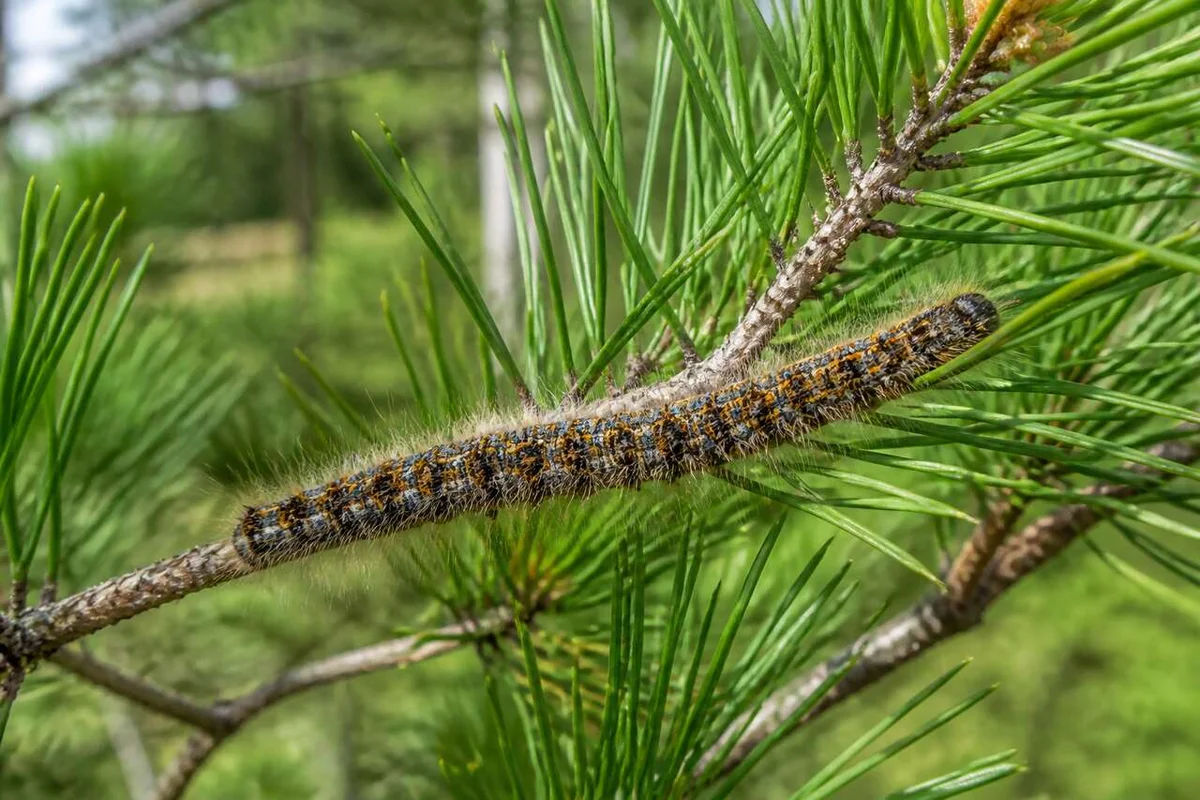
A silky nest hanging from a pine branch, a line of caterpillars crossing a lawn, and a dog suddenly drooling and rubbing its snout are all signs of the processionary caterpillar's presence. This pest has been classified as a "health hazard" since April 2022. Quickly identifying the species involved, understanding the actual risks to human skin, eyes, and respiratory systems, as well as the health of pets, is crucial. This guide provides clear information on what to do in case of a nest or invasion, emphasizing safety and actionable steps for home, school, or forest environments.
Key Takeaways
- Two problematic species in France: the pine processionary caterpillar (Thaumetopoea pityocampa) and the oak processionary caterpillar (Thaumetopoea processionea), both classified as health hazards since 2022.
- Urgent contact with a veterinarian is essential if pets ingest or come into contact with these caterpillars, as it can lead to severe tongue necrosis within hours.
- Effective management relies on prevention (using pheromone traps, eco-traps, and Bacillus thuringiensis) and professional intervention for existing nests.
Understanding the Processionary Caterpillar
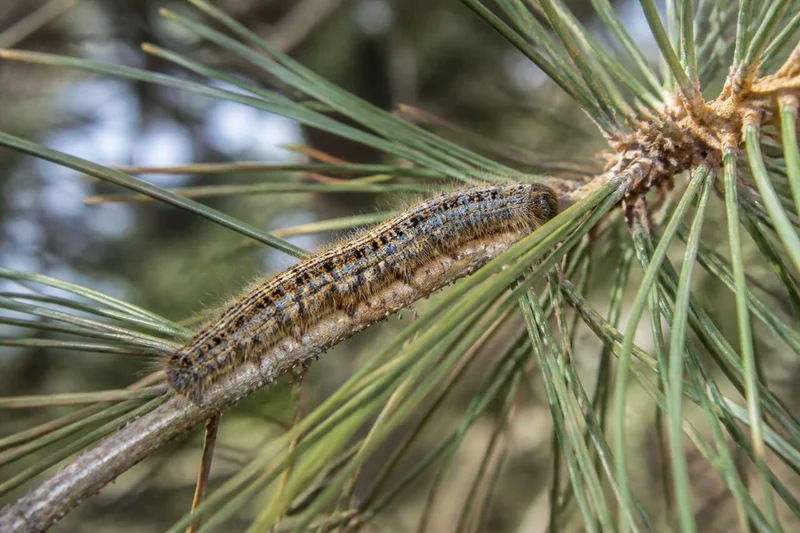
The processionary caterpillar is the larval stage of a discreet moth that only lives for a few days as an adult. It is during this larval stage, prior to metamorphosis, that it becomes a public health concern. Two species are prevalent in France: the pine processionary caterpillar and the oak processionary caterpillar.
Species Overview
The oak processionary caterpillar has been established in Western Europe since the late 18th century, with its range extending to Turkey. In France, it is now found almost everywhere, thriving in urban heat and the abundant oak trees found in forests, parks, and city tree alignments. Conversely, the pine processionary caterpillar was historically limited to southern France but has gradually moved northward due to climate change, invading areas where it was absent just two decades ago.
Proximity to Urban Areas
Both species favor tree types common in urban and peri-urban green spaces: pines and cedars for one, oaks for the other. This closeness to populated areas, schools, public parks, and private gardens increases the chances of human contact, prompting heightened vigilance among municipalities and health services. The core question for many residents is: why are processionary caterpillars harmful? The answer lies in their urticating hairs, which can cause severe allergic reactions in both humans and animals. Understanding when this risk peaks requires knowledge of the insect's life cycle.
Seasonal Patterns and Life Cycle
The timing of the processionary caterpillars varies between species, but their periods of danger largely overlap from spring to early summer.
Life Cycle of the Pine Processionary Caterpillar
Moths lay their eggs between June and September, with hatching occurring from late July to early November. The caterpillars go through five larval stages from October to February, creating their distinctive white spindle-shaped nests at the ends of branches. Starting in March, they leave the tree in a procession to burrow into the ground for pupation. This descent, which poses the highest risk to the public, occurs from January to May, peaking in February-March in Mediterranean areas and March-April in northern France. Encounters are most likely in pine forests during this period.
Life Cycle of the Oak Processionary Caterpillar
Eggs are laid in late summer and hatch typically in April. The caterpillars live in colonies and build silky nests that grow larger over the weeks, located on the trunk or beneath the branches of oaks. They come out in the evening to feed on leaves. Unlike their pine counterparts, oak caterpillars do not burrow into the ground but instead feed and pupate directly on the tree. Encounters are most common in oak forests from April to July.
Peak Danger: The Third Larval Stage
A critical similarity between the two species is the emergence of urticating hairs during the third larval stage, which occurs from late April to early May. At this stage, the health risk escalates; prior to this, young caterpillars are relatively harmless. Afterward, any direct or indirect contact can trigger skin or respiratory reactions. This springtime window, lasting until early summer, sees the majority of reports and medical or veterinary consultations related to processionary caterpillars.
Health Risks: Humans, Children, and Pets
The danger arises not from bites or injected venom, but from microscopic urticating hairs that become present from the third to the fifth larval stage. These hairs contain an irritant and allergenic protein that easily detach and disperse into the air with the slightest disturbance.
Symptoms in Humans
Contact with urticating hairs can lead to a range of symptoms depending on the affected area:
- Skin: hives, intense itching, redness, and skin lesions.
- Eyes: tearing, conjunctivitis, and sometimes eyelid swelling.
- Respiratory System: coughing, discomfort, and in severe cases, respiratory distress.
- General Reactions: widespread swelling and, more rarely, anaphylactic shock requiring immediate medical attention.
Children are particularly vulnerable as they may unknowingly touch the caterpillars or fallen nests. The reaction time between contact and symptom onset can be very short, from a few minutes to several hours, necessitating close monitoring after any suspected exposure.
Urgent Veterinary Care for Pets
Dogs are at the highest risk as they may sniff, lick, or nibble on the caterpillars out of curiosity. Ingestion or even mouth contact can lead to tongue and lip damage, potentially resulting in necrosis that prevents the animal from eating. This condition can worsen through scratching and licking, spreading hairs to other body areas. Although cats are less frequently affected due to their more cautious behavior, they can exhibit similar symptoms if they come into contact. Signs such as excessive drooling, swollen tongue, vomiting, or lethargy require immediate veterinary intervention, as prompt action is crucial for preserving the animal's tongue.
Identifying an Infestation
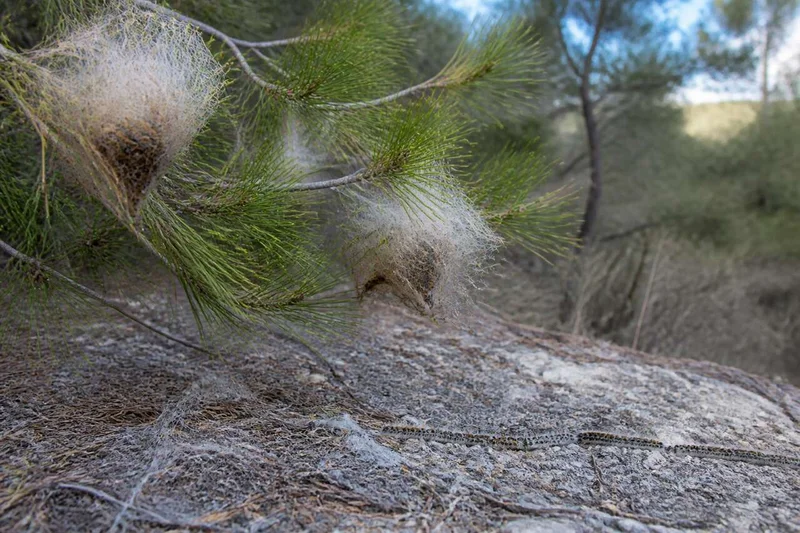
Both species leave distinct visual cues, which should be observed from a safe distance without touching anything.
Nests: Distinct Shapes
| Criteria | Pine Processionary Caterpillar | Oak Processionary Caterpillar | |-----------------------------|-------------------------------------|--------------------------------------| | Nest Shape | White, silky spindle | Flat, silky mass | | Location | Ends of branches | On the trunk or under branches | | Affected Trees | Pines, cedars | Oaks | | Presence Period | October to May | April to July |
Processions and Caterpillars on the Ground
The pine processionary caterpillar descends in an organized line along the trunk and then on the ground to burrow and pupate. This scenario is the most visible and dangerous for passersby and pets, as the caterpillars on the ground can still project their hairs. In contrast, the oak processionary caterpillar only accidentally moves to the ground, with its procession occurring directly on the tree in the evening to feed. Misunderstanding these behaviors might lead to underestimating the risk, especially thinking that a lack of caterpillars on the ground under an infested oak means there is no danger.
Safe Inspection Practices
Visual inspections should be conducted from a distance, ideally using binoculars for high nests, avoiding any passage under the tree during windy conditions. Signs to look for include:
- Presence of one or more silky nests, even if empty, as the hairs remain active for up to 2-3 years.
- Shed skins or silk threads on the trunk.
- Caterpillars in procession or isolated on the ground, bark, or pathways.
- Sparse or browsed foliage on affected oaks.
Once an infestation is confirmed, the next step is determining the immediate actions to protect people and animals nearby.
Immediate Actions for Nests or Caterpillars on the Ground
The approach varies depending on the location, but one principle remains constant: never touch the nests, caterpillars, or the ground directly beneath an infested tree.
In a Private Garden
Homeowners should secure the area by restricting access to children and keeping pets at a distance, even using short leashes for dogs during walks. It is advisable to close windows facing the affected trees during windy conditions, as urticating hairs can easily travel through the air.
At School or in a Public Park
In places frequented by children, adult supervision is crucial. Any sighting of a nest or procession should be reported immediately to the institution's management or the local municipality, marking the area if possible, and avoiding any play or picnics under the suspect trees until intervention occurs.
In the Forest
During hikes, it is essential to prevent dogs from roaming freely under pines or oaks during peak risk seasons, particularly from January to May for pines and from April to July for oaks. Any animal showing skin or mouth reactions after a forest outing should be taken to a veterinarian promptly, as reaction time plays a significant role in the severity of outcomes.
Who to Contact
- The local municipality, often responsible for reporting and sometimes intervention on public land.
- A specialized pest control company for nests on private property.
- A doctor for persistent skin, eye, or respiratory symptoms.