How to Plant and Care for Staphylea pinnata, the False Pistachio
Learn how to plant and care for Staphylea pinnata, the false pistachio, including tips on location, soil type, maintenance, and harvesting.
How to Plant and Care for Staphylea pinnata, the False Pistachio
Staphylea pinnata, commonly known as the false pistachio or pennate staphylea, is a charming addition to any garden. This shrub, native to the understory of Central and Eastern Europe, is not only resilient to harsh winters but also offers delicate foliage and unique fruit reminiscent of pistachios. This article provides practical advice on its cultivation, pruning, harvesting, and the best plant associations.
Choosing the Right Location for the False Pistachio
The false pistachio thrives in sunny to partially shaded areas and can tolerate light shade without losing vigor. A location sheltered from cold winds will enhance its flowering and fruiting capabilities.
The soil should remain moist yet well-drained to prevent water from pooling around the collar. If the soil is overly clayey, it may be beneficial to lighten it with coarse sand or well-rotted compost.
What Type of Soil and Exposure Does Staphylea pinnata Prefer?
This shrub adapts well to a variety of soils, provided they maintain consistent moisture at depth. A soil that is slightly acidic to neutral is ideal.
Younger plants prefer shaded conditions during the intense summer heat, while established specimens can endure full sun. Avoid waterlogged soils, as they can harm the roots.
When to Sow, Take Cuttings, and Plant Staphylea pinnata
Germination often requires a prior cold period if the seeds have not been stratified. Sowing seeds in pots under cold frames in the fall yields good results for those looking to propagate the species.
Herbaceous cuttings taken in spring or semi-ripe cuttings in summer can produce clones of the parent plant. Ideally, plant in the garden during spring or autumn when the soil is temperate.
Caring for the Pennate Staphylea in the Garden
Applying organic mulch helps keep the soil cool and reduces the need for watering during the summer months. Moderate applications of compost in spring encourage vigor without promoting excessive growth.
Pruning usually involves removing dead branches and thinning out after flowering. Shaping the shrub to promote an airy structure for each specimen is also beneficial.
Harvesting and Preparing the False Pistachio Nuts
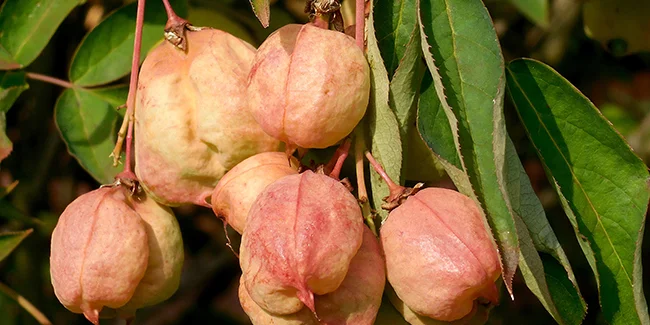
The capsules become opaque and dry in the autumn when the nuts inside are ripe. Harvesting typically occurs between September and October, depending on the climate.
Once extracted, the nuts can be roasted and enjoyed similarly to pistachios, though they have a slightly more bitter flavor. Sorting and moderate drying can enhance their preservation.
Known Pests and Problems
The false pistachio is generally resistant to major diseases and shows resilience against common pests. Infestations are rare if the shrub is cultivated under optimal conditions.
Regular monitoring is sufficient to catch any anomalies early. Maintaining a well-drained soil and appropriate care remains the best form of prevention.
How to Integrate Staphylea pinnata into Your Garden
The pennate staphylea fits well in mixed groves alongside shrubs like hazel, elderberry, or lilac, creating natural transitions. It is also suitable for informal hedges when a less constraining growth habit is desired.
For a light shade garden, opt for plants that share the need for moist soil. This allows for the creation of a rich forest scene filled with spring blooms and diverse foliage textures.
Noteworthy Related Species and Varieties
The genus includes around ten interesting species for gardens, valued for their flowers and fruits. Among them, Staphylea trifolia stands out for its nectar-rich clusters and edible oily seeds.
Other varieties, such as Staphylea colchica or Staphylea holocarpa, offer different floral hues and varied geographic origins. Your choice will depend on aesthetic preferences and local climate conditions.
Characteristics
| Feature | Information | |-----------------------------|--------------------------------------| | Family | Staphyléacées | | Type | Deciduous shrub | | Origin | Central and Eastern Europe | | Blooming | May, fragrant white flowers | | Height | 4 to 5 meters | | Propagation | Stratified seeds, herbaceous or semi-ripe cuttings | | Harvest | Autumn, edible nuts after roasting |
- Practical planting tip: space plants 4 meters apart to allow for their development.
- Cooking tip: roast nuts over low heat to enhance their flavor without overwhelming bitterness.