How to Cultivate Cooper's Ice Plant (Delosperma cooperi), a Low-Maintenance Ground Cover
Discover how to cultivate Delosperma cooperi, known as Cooper's Ice Plant, a low-maintenance succulent that thrives in sunny, well-drained environments. Learn about its care, propagation, and ideal growing conditions.
How to Cultivate Cooper's Ice Plant (Delosperma cooperi), a Low-Maintenance Ground Cover
August 3, 2026
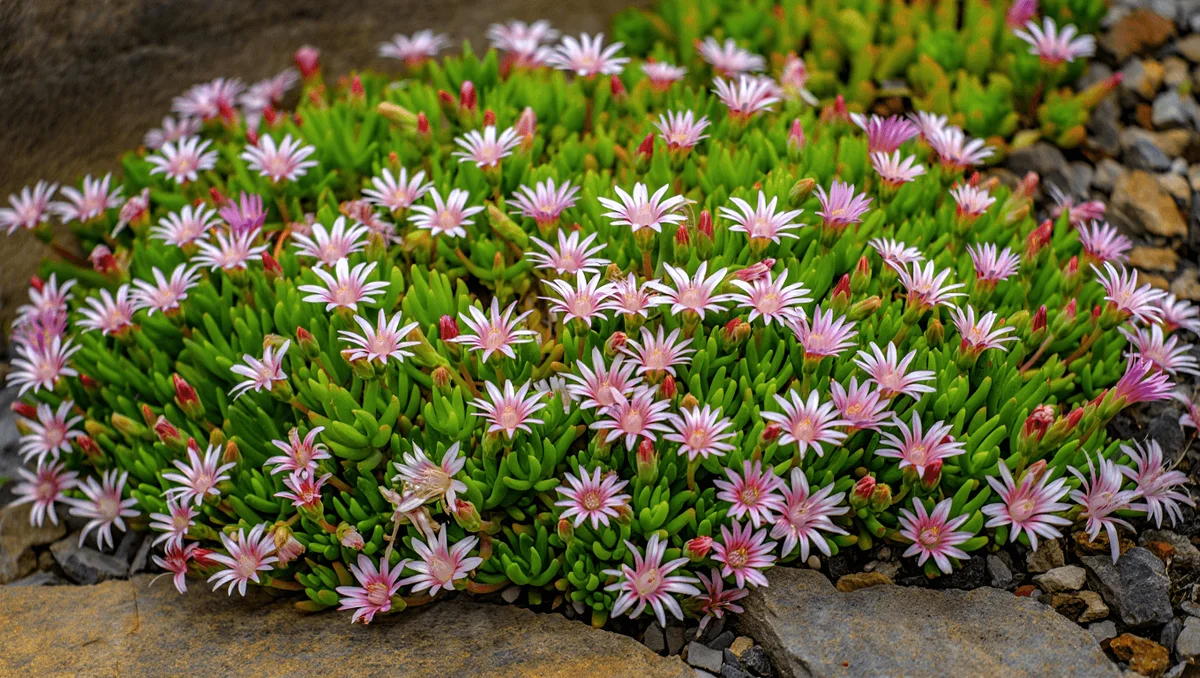
Cooper's Ice Plant, scientifically known as Delosperma cooperi, is renowned for its vibrant floral display while requiring minimal upkeep. Native to South Africa, this succulent thrives in rock gardens, dry borders, and sunny containers. Its bright blooms not only catch the eye but also provide resilience during dry spells, making it an excellent choice for low-water gardens.
Essential Characteristics of Cooper's Ice Plant
Delosperma cooperi features fleshy, evergreen leaves that range from pale green to bluish-green. Typically measuring between 3 to 5 cm, these leaves form low cushions through sprawling stems that spread the plant without overwhelming the space. From June to September, it produces flower heads measuring 3 to 6 cm, often in shades of violet to magenta, creating a dazzling carpet effect in rockeries.
The plant belongs to the Aizoaceae family, maintaining a compact height of 5 to 15 cm and can spread up to 0.6 to 1 m. It withstands moderate winter temperatures, tolerating around -8°C when kept dry. Its hardiness and low water requirements make it an ideal option for coastal gardens and arid areas.
Ideal Soil and Sun Exposure for Success
For optimal growth, Delosperma cooperi requires full sun to encourage abundant flowering and vivid colors. A light, well-draining, and relatively poor soil is preferable over rich, moist potting mixes. Heavy or consistently wet soils can lead to root rot.
This succulent can be planted on slopes, in rockeries, or on walls where water drains naturally. Locations exposed to dry winds are beneficial as they help reduce humidity around the foliage. In humid climates, sandy or gravelly substrates should be preferred, and slightly elevated planting beds can aid drainage.
For gardeners with limited time, pot cultivation allows for better drainage control. A mixture of garden soil, sand, and a bit of grit ensures rapid water flow. When potted, place the plant in a very sunny spot and avoid overwatering.
How and When to Propagate Delosperma cooperi
Propagation via seeds is possible but requires patience and warm conditions for consistent germination. The best time to start seeds is in spring, using a light mix kept around 21°C. While this method yields interesting young plants, it is slower than cuttings.
The simplest and most reliable way to multiply Cooper's Ice Plant is through summer cuttings. Take healthy stem fragments, allow them to callus for a day, and then place them in a draining substrate; roots establish quickly under warm temperatures with minimal watering. This method preserves the characteristics of the parent plant and facilitates rapid establishment of green carpets.
Transplanting into the ground should occur in spring or early summer to take advantage of the warm months for settling. Space plants between 30 and 50 cm apart, depending on the desired ground cover effect. A light application of compost at planting can aid establishment without compacting the soil.
Daily and Seasonal Care
During the growing season, Delosperma cooperi requires minimal intervention. Allowing the soil to dry between waterings helps prevent moisture-related issues. In full sun and well-draining substrate, the plant often thrives on natural rainfall alone.
Regular removal of spent flowers encourages prolonged and tidy blooming. At the end of summer, a moderate trim of unsightly stems promotes fresh growth in the following spring. Nutritional inputs should be kept limited; a little compost at the base every two to three years is sufficient.
- Quick care tips: spaced watering, sunny exposure, perfect drainage, and removal of spent flowers.
Potential Diseases and Pests to Watch For
The primary threat to Delosperma cooperi comes from excess moisture. Roots may rot if the soil remains wet for extended periods. Prevention involves ensuring good drainage and measured watering during wet seasons.
Insect infestations are rare for this succulent, but prolonged humidity can attract fungi or cause foliar spots. Monitor the plants after heavy rains and remove affected parts to limit spread.
Ideal Locations for Delosperma cooperi and Companion Plants
Delosperma cooperi serves well as a ground cover in rockeries, on slopes, walls, or sunny borders. It is suitable for both dry gardens and sunny containers on balconies. Its compact nature allows it to quickly cover small areas with minimal maintenance.
For harmonious plant associations, select drought-tolerant and sun-loving species like sedums, compact lavenders, or low-growing yarrow. These companions share similar drainage needs and enhance the floral contrast. You can create enduring and visually striking scenes where each species complements the other.
Noteworthy Varieties of Delosperma
The Delosperma genus includes nearly 150 species and numerous horticultural cultivars. Cooper's Ice Plant is available in various forms, offering a spectrum of colors from white to red, including diverse shades of pink and purple. These cultivars add significant aesthetic variety to the garden.
Among alternatives, Delosperma aberdeenense features purple-red flowers, while Delosperma velutinum displays small white blooms. Some species are more frost-sensitive and are better suited for cultivation in cold greenhouses during winter. Choose the variety based on your climate and desired color effect.
| Attribute | Detail | |------------------|-------------------------------| | Family | Aizoaceae | | Type | Perennial succulent | | Blooming | June to September | | Height | 5 to 15 cm | | Spread | 0.6 to 1 m | | Hardiness | Down to about -8°C if dry| | Propagation | Spring sowing, summer cuttings| | Exposure | Full sun, very bright location| | Soil | Sandy, very well-draining |