How to Assess the Condition of a Roof Structure Before Renovation
Learn how to assess the condition of a roof structure before renovation, including signs of damage, inspection techniques, and when to repair or renovate.
How to Assess the Condition of a Roof Structure Before Renovation
July 24, 2026
The roof structure plays a crucial role in supporting your roof and directly impacts the safety and longevity of your home. Identifying risks associated with moisture, insects, or structural stress at the first signs of trouble is essential. This article provides practical guidance on how to recognize signs of a weakened roof structure, conduct a thorough inspection, and decide whether to pursue targeted repairs or a complete renovation. You will find actionable advice, technical details, and a summary table to help inform your decisions.
What Signs Should Alert You to the Condition of the Roof Structure?
Cracks in load-bearing walls and sagging ceilings are serious indicators of structural issues. Persistent moisture stains or musty odors often signal water infiltration or poor ventilation. Misaligned tiles or shifting slates may indicate roof movement and excessive stress on wooden components.
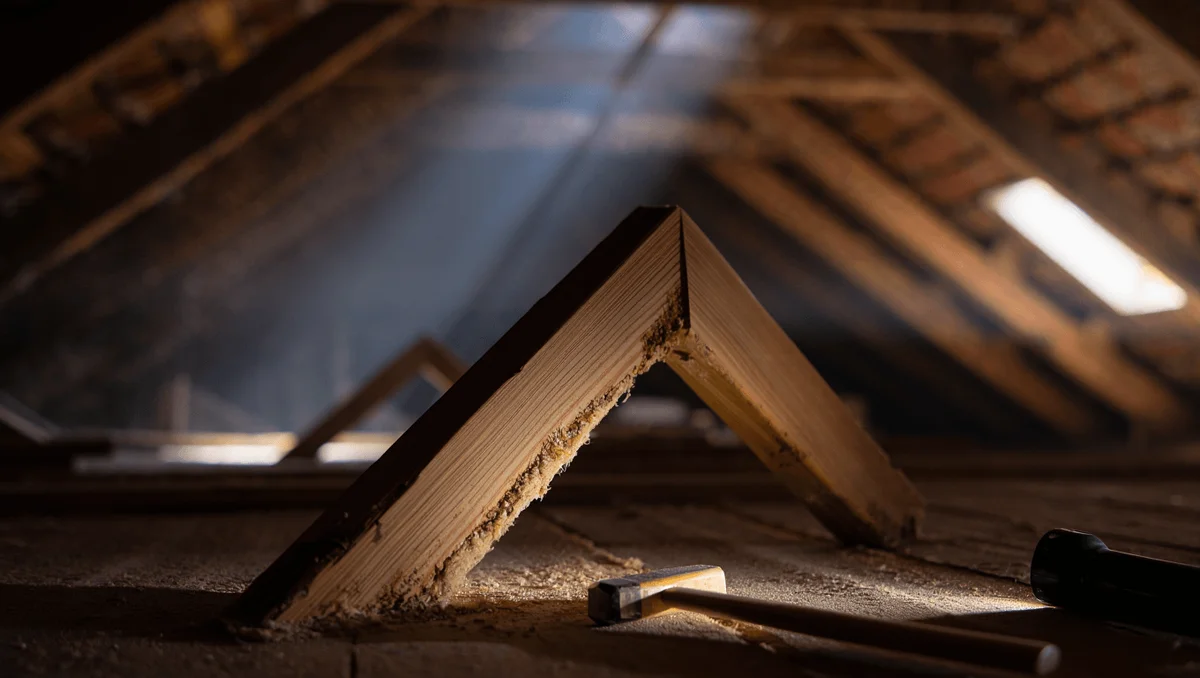
The presence of fine sawdust or visible galleries in the wood suggests the activity of wood-boring insects and requires immediate action. Soft spots or hollow areas upon probing indicate fungal attacks or advanced rot. Corroded joints, bent nails, or weakened tenons increase the risk of overall collapse.
It is important to inspect all structural elements, including purlins, rafters, and struts, to assess any deformations and loss of material. A visual diagnosis combined with moisture measurements provides a reliable overview of priorities. If in doubt, consulting an experienced carpenter is the best way to obtain an accurate assessment.
How to Conduct a Comprehensive Inspection of the Roof Structure?
Begin with an external inspection to identify displaced tiles, cracked ridges, and blocked gutters. Neglected roofs can lead to water infiltration that damages the wood from the inside. Take photographs of suspicious areas to monitor changes over time or to easily share findings with a professional.
Next, access the attic if possible and examine the condition of the wooden components, joints, and supports. Adequate lighting will help reveal darkened areas, signs of saprophytes, or sawdust residues. If necessary, measure the moisture content of the wood with a moisture meter and record the values for comparison.
Essential tools and actions include listening for creaking under load, probing with a screwdriver, and checking bolts and brackets. Consider using the following checklist before calling in a specialist:
- Check for moisture stains and their locations
- Assess the integrity of connections and corrosion of fasteners
- Test the hardness of the wood through localized probing
- Measure moisture levels and note discrepancies
Finally, synthesizing these observations allows you to prioritize interventions and establish a reliable estimate. A skilled artisan will interpret this data to recommend targeted reinforcements or partial replacements.
When Should You Opt for Partial Repairs or a Complete Renovation?
Partial repairs are advisable when damage is confined to limited areas and most components maintain sufficient material integrity. Reinforcements using support pieces, localized repairs of rafters, or targeted insect treatments may be adequate. This option minimizes costs and project duration while extending the life of the roof structure.
Conversely, a complete renovation becomes necessary if damage is widespread, if the wood shows extensive rot, or if deformations compromise the roof's geometry. In such cases, replacing the structure ensures long-term safety and allows for the integration of insulation or energy efficiency improvements. A technical diagnosis will provide the decision criteria and associated cost estimates.
What Steps Are Needed for a Successful Sustainable Renovation in the Vaud Region?
Planning begins with a formal assessment and a work plan that complies with Swiss construction regulations. The selection of wood species, preventive treatments, and assembly systems must consider the local climate and ambient humidity. Quality interventions rely on suitable materials and certified expertise.
During the renovation, common operations include removing affected components, strengthening weak points, and installing new parts according to required loads. Continuous monitoring of moisture and connections ensures the durability of the structure. This way, you achieve a restored roof structure that resumes its load-bearing function and better withstands future challenges.
The table below summarizes common scenarios and recommended actions to clarify your choices and priorities.
| Symptom | Probable Cause | Recommended Action | |-------------------------------|---------------------------------------|-------------------------------------------------| | Localized moisture stains | Roof leak or blocked gutter | Repair waterproofing and treat affected wood | | Softened wood sections | Fungal attack | Replace affected parts and apply fungicide | | Presence of sawdust and galleries | Wood-boring insects | Insect treatment and localized reinforcement | | Generalized deformations | Overload or loss of resistance | Complete renovation with structural recalculation|