Heat-Tolerant Summer Plants for Your Garden
Explore the importance of heat-tolerant summer plants for your garden. Discover resilient perennials that thrive in dry conditions, require less maintenance, and attract beneficial insects.
As summers become increasingly hotter and drier in many areas, gardeners are faced with the challenge of maintaining vibrant outdoor spaces. Prolonged periods without rain and relentless sun can leave traditional plants struggling, often wilting by midday. However, with the right selection of heat-tolerant summer plants, your garden can thrive even during extended dry spells.
Many perennials are native to steppes, rocky mountain regions, or the Mediterranean, where they have adapted over thousands of years to withstand intense sunlight and low precipitation. These characteristics make them ideal for today’s gardens, as they require significantly less water than conventional garden plants, remain healthy, and often bloom profusely for weeks.
Another benefit of drought-resistant perennials is their lower maintenance needs. For gardeners aiming to create a natural landscape while conserving water, these plants are an excellent choice. Furthermore, many varieties attract bees, butterflies, and other beneficial insects, contributing positively to biodiversity.
The Growing Importance of Heat-Tolerant Summer Plants
Amateur gardeners are increasingly noticing that plants that once thrived are now more susceptible to drought stress. Shallow-rooted species, in particular, require more water during hot summers, leading to increased time and resource consumption.
Heat-tolerant perennials provide a sustainable solution. They employ various strategies to endure prolonged dry periods. Some develop deep roots that tap into moisture reserves in deeper soil layers, while others have small or silvery hairy leaves that significantly reduce evaporation. Additionally, some plants can store water in their leaves or stems, allowing them to survive longer without rainfall.
Characteristics of Drought-Resistant Perennials
Not all sun-loving plants can endure extended dry spells. The combination of specific traits is what truly makes a perennial heat-resistant.
Deep Roots Access Water Reserves
Many drought-resistant perennials develop robust tap or deep roots that reach far into the soil, providing moisture even when the upper layers have dried out. Notable examples include the Purple Coneflower, Yarrow, and Globe Thistle. Once established, these plants often require minimal additional watering even during prolonged dry periods.
Leaves Protect Against Evaporation
Another common feature of these plants is their small, narrow, or silvery hairy leaves, which significantly reduce evaporation and prevent excessive water loss. This is particularly evident in Lavender and Woolly Thyme, where fine hairs reflect some sunlight, acting like a natural air conditioner, keeping the plants surprisingly vigorous even on hot days.
Water Storage as a Natural Reserve
Some perennials take it a step further by storing water directly in their leaves or stems. These reserves enable them to endure several weeks without rainfall. A classic example is Sedum, whose fleshy leaves contain enough moisture to withstand extended dry spells, making it a popular choice for sunny borders, rock gardens, and green roofs.
Choosing the Right Location for Success
Even the hardiest perennial can only thrive if planted in the right location. Many heat-tolerant summer plants prefer full sun, requiring at least six hours of direct sunlight daily.
Soil quality is also crucial. Loose, well-draining soil helps prevent waterlogging, which can be more detrimental to drought-loving plants than water scarcity. Heavy clay soils can be improved with sand, fine gravel, or grit, allowing more oxygen to reach the roots and enabling excess water to drain more quickly.
When redesigning your garden, it’s also important to maintain adequate spacing between plants. Perennials develop healthier when air can circulate between them, and they compete less for water and nutrients.
The Importance of Well-Draining Soil
Many drought-tolerant perennials originate from regions with stony or sandy soils, where rainwater quickly percolates, preventing roots from sitting in water for extended periods. Conversely, if water remains in the soil for too long, root rot can occur. Plants like Lavender, Blue Sage, or Steppe Sage are particularly sensitive to this issue, underscoring the importance of proper soil preparation before planting.
A layer of gravel or coarse sand in the planting area significantly improves drainage. This also helps the soil warm up faster in spring, benefiting many sun-loving perennials.
Benefits for Your Garden and Nature
Heat-tolerant perennials offer more than just attractive blooms. They make your garden easier to maintain and more resilient against the impacts of dry summers.
Since they require far less watering, you save both water and time. This is especially beneficial in regions where prolonged dry spells have become the norm.
Many of these plants also produce new flowers repeatedly over months. Lavender, Catmint, Coneflower, and Nepeta provide bees, bumblebees, and butterflies with ample nectar and pollen. Additionally, they bring movement and life to your garden.
Visually, drought-resistant perennials are striking. The combination of silvery foliage, delicate grasses, and colorful blooms creates a natural aesthetic that complements modern, nature-inspired, or Mediterranean gardens beautifully.
A Selection of Beautiful Heat-Tolerant Perennials
The variety of drought-resistant perennials is broader than one might think. While some species impress with their vibrant flowers, others showcase silvery foliage or decorative seed heads. What they all have in common is that they require minimal care once established and can withstand long periods of heat remarkably well.
The following overview will assist you in selecting the right plants for your garden.
| Perennial | Blooming Period | Height | Drought Tolerance | Special Features | |-------------------|---------------------|----------------|-------------------|-------------------------------------| | Lavender | June to August | 40–70 cm | Very High | Fragrant, bee-friendly | | Catmint | May to September | 40–80 cm | Very High | Long bloom, low maintenance | | Steppe Sage | May to July | 40–70 cm | Very High | Attractive to insects | | Yarrow | June to September | 50–80 cm | Very High | Native wildflower | | Purple Coneflower | July to September | 80–120 cm | Very High | Long bloom, butterfly magnet | | Globe Thistle | July to September | 80–120 cm | Very High | Striking flower globes | | Sedum | August to October | 30–60 cm | Extremely High | Stores water in leaves | | Torch Lily | June to October | 60–120 cm | High | Delicate, long-lasting blooms | | Nepeta | July to September | 60–120 cm | High | Aromatic scent | | Blue Sage | August to October | 80–120 cm | Very High | Mediterranean character |
Lavender – The Classic for Dry Summers
Why Lavender Thrives in Dry Conditions
Lavender is one of the most renowned heat-tolerant summer plants. Native to the Mediterranean region, it thrives in dry soils and intense sunlight. Its narrow, silvery leaves are covered with fine hairs, which significantly reduce water evaporation compared to many other perennials.
Once established, Lavender can often go weeks without additional watering, easily enduring hot summer days.
Benefits of Lavender
Lavender not only impresses with its resilience but also fills the garden with its characteristic fragrance during bloom, attracting numerous bees, bumblebees, and butterflies. Additionally, its intense aroma helps deter many pests.
A sunny spot with well-draining soil is all it takes for Lavender to flourish for many years.
Catmint – A Floral Abundance Almost All Summer
Catmint is among the most straightforward perennials to grow. The first blue-violet flowers appear in late spring, and with a light pruning, it often continues to produce new blooms until September.
Its deep roots enable it to withstand longer dry spells effectively, while also attracting many wild bees and butterflies.
Catmint looks particularly stunning when paired with roses, ornamental grasses, or lavender, as its airy flower clusters add a sense of lightness to any perennial bed.
Benefits of Catmint
- Extremely low maintenance
- Very long blooming period
- Excellent for insects
- Requires little water
- Hardy and long-lived
Steppe Sage – Colorful Blooms Despite the Heat
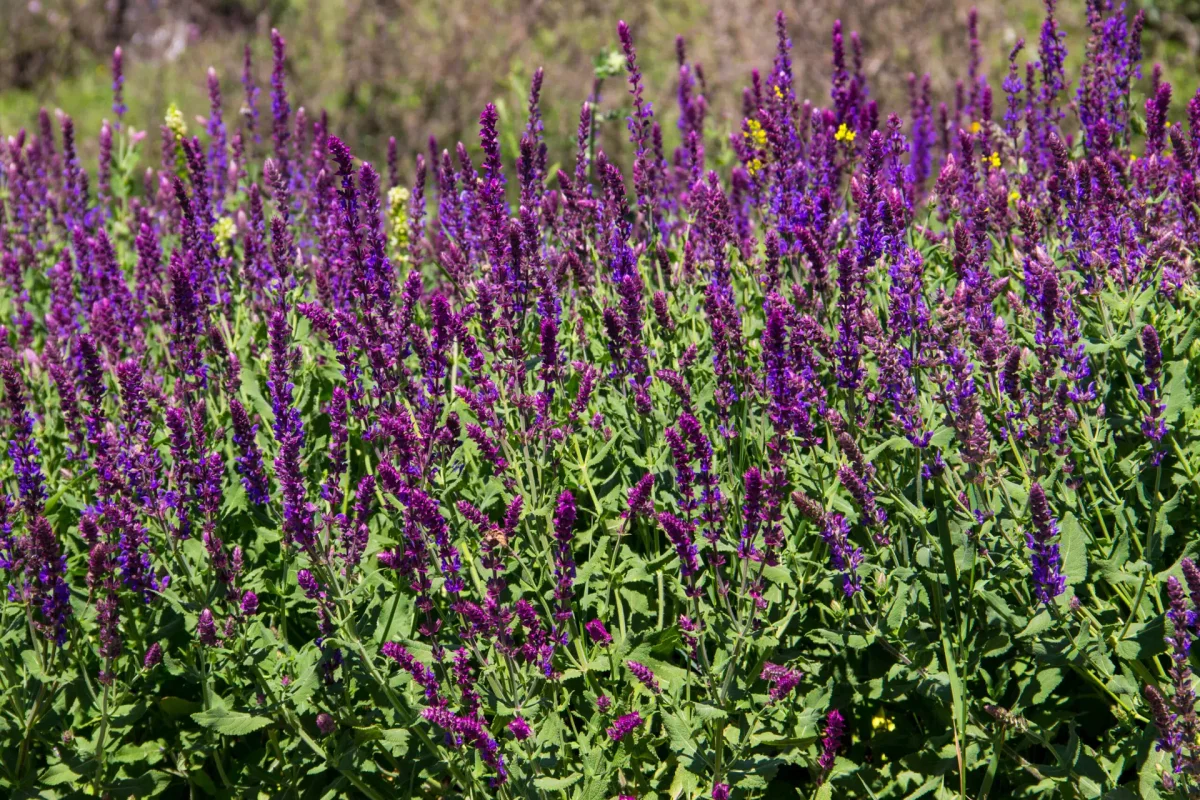
As its name suggests, Steppe Sage thrives in dry, sunny locations. Its vibrant flower spikes add intense blue, violet, or pink accents to the garden.
If you prune the spent blooms after the first flowering, the plant often rewards you with a second bloom in late summer.
Why Steppe Sage is So Resilient
The narrow leaves minimize water loss, and the plant develops a robust root system that finds sufficient moisture even in dry soils. Thus, Steppe Sage is one of those perennials that rarely requires additional watering during hot summers.
Yarrow – A Native Beauty with Remarkable Resilience
Yarrow grows naturally in dry meadows, slopes, and poor grasslands, demonstrating its low-maintenance nature in gardens as well.
Its flat-topped flowers appear in various colors, including white, yellow, pink, or red, providing an attractive focal point for many weeks.
In addition to its long blooming period, Yarrow is known for its high resilience to heat and drought. Even when other perennials appear wilted, it often remains in full bloom.
Benefits of Yarrow
As a native wildflower, it provides nourishment for numerous insects and is also an excellent cut flower, making it a great addition to natural gardens.
Purple Coneflower – Blooming Glory into Fall
Purple Coneflower is one of the most beloved summer perennials. Its large purple flowers typically appear in July and last well into September.
With its strong tap roots, it can access deeper water reserves, enabling it to cope with longer dry periods better than many traditional garden plants.
After blooming, it’s advisable to leave the decorative seed heads in place, as they provide valuable food for birds in autumn and winter while adding structure to the garden.
Why Purple Coneflower is Essential in Every Garden
The Coneflower combines multiple advantages: it blooms for many weeks, is exceptionally robust, winter-hardy, and attracts numerous butterflies and wild bees. Additionally, it pairs beautifully with ornamental grasses, Globe Thistles, or Torch Lilies, creating a stunning garden display.
Conclusion
Integrating heat-tolerant summer plants into your garden not only enhances its beauty but also promotes sustainability and biodiversity. By choosing the right varieties and ensuring proper care, you can create a resilient outdoor space that flourishes even in the heat of summer.