Ground Covers for Shade – 10 Resilient Plants for Your Garden
Explore the potential of shaded areas in your garden with these 10 resilient ground covers. Discover native plants that thrive in low light and support local wildlife.
Shady areas are a common feature in many gardens. Whether it's under old trees, on the north side of a house, or nestled between tall shrubs, these spots often receive minimal sunlight. Many amateur gardeners view these zones as challenges, where grass grows sparsely, flowers struggle, and weeds thrive in the available space.
However, shaded garden areas hold significant potential. By selecting the right ground covers, one can create lush green carpets that protect the soil from drying out, suppress weeds, and provide food for various insects. Some species remain green throughout the year, adding structure to the garden even in winter.
The variety of shade-tolerant ground covers is broader than one might think. In addition to robust classics, there are numerous native plants that thrive in natural gardens and support wildlife such as wild bees, bumblebees, and butterflies. By understanding their needs and choosing the right location, these plants can develop into low-maintenance perennial displays over the years.
Why Ground Covers in Shade are a Smart Choice
Shady areas differ significantly from sunny beds. Under trees, plants compete with roots for water and nutrients, while less rain reaches the ground due to interception by leaves. Conversely, shadows cast by buildings often create dry conditions, while moisture can linger in other garden areas.
Not every perennial can thrive in these conditions. Ground covers, however, have a unique ability to spread across the ground, forming dense colonies over time. This characteristic offers multiple benefits for the garden.
A closed plant cover prevents sunlight from directly reaching the soil, reducing evaporation even in shaded areas. Additionally, this dense growth gives weeds a much harder time establishing themselves. Many ground covers also develop robust root systems that aerate the soil and prevent erosion.
For gardeners, this translates to less work. Once established, these plants significantly reduce the need for weeding compared to open beds.
Why Many Plants Struggle Under Trees and Shrubs
Trees extract substantial amounts of water from the soil. Species like birches, maples, spruces, and beeches have shallow roots that extensively occupy the upper soil layers. Furthermore, the canopy can block rainfall from reaching the ground.
As a result, many traditional garden perennials experience drought stress, even when they are in shaded areas. This is where specially adapted ground covers excel. They can thrive in low light and effectively green difficult locations.
Advantages of Shade-Tolerant Ground Covers
Shade plants serve multiple roles in the garden. They protect the soil, enhance the microclimate, and create valuable habitats for numerous creatures. Additionally, they appear much more natural than large areas of bark mulch.
Other benefits include:
- Significantly less weed growth
- Reduced maintenance requirements
- Protection against drying out
- Year-round attractive garden areas with evergreen species
- Habitat and food sources for insects
- A natural forest floor aesthetic
Ground covers thus become essential design elements, especially in natural gardens.
Understanding the Type of Shade in Your Garden
Not all shade is created equal. Before selecting plants, it’s crucial to observe your location closely. Even a few hours of sunlight each day can determine which species will thrive in the long term.
Light Shade
In light shade, filtered sunlight penetrates through loose tree canopies. Such locations often provide ideal conditions for many flowering ground covers. The soil remains cool but still receives enough light for vigorous growth.
Partial Shade
Partial shade typically means three to five hours of sunlight daily. Many plants tolerate morning or evening sun well, resulting in a particularly broad selection of suitable ground covers.
Deep Shade
In areas under dense conifers or on the north side of tall buildings, direct sunlight is scarce. Only specially adapted plants can thrive here. Many of these species originate from forests and thus thrive under such conditions.
Top Ground Covers for Shade
The following overview highlights reliable species for shaded garden areas. Alongside their height, you'll find the recommended planting density. Depending on soil quality and the desired speed of ground coverage, these values may vary slightly.
| Ground Cover | Flower Color | Evergreen | Height | Plants per m² | Native | Insect-Friendly | |----------------------------|--------------|-----------|-----------|----------------|--------|-----------------| | Creeping Bugle (Ajuga reptans) | Blue | Partially | 10–20 cm | 8–10 | Yes | Very High | | Yellow Archangel (Lamium galeobdolon) | Yellow | Partially | 20–30 cm | 8–10 | Yes | Very High | | Ivy (Hedera helix) | Greenish Yellow | Yes | 15–25 cm | 8–12 | Yes | Very High | | Woodruff (Galium odoratum) | White | No | 15–20 cm | 10–12 | Yes | High | | Wild Ginger (Asarum europaeum) | Unremarkable | Yes | 10–15 cm | 10–12 | Yes | Medium | | Waldsteinia (Waldsteinia ternata) | Yellow | Yes | 10–15 cm | 8–10 | No | High | | Bishop's Hat (Epimedium) | White, Pink, Yellow | Partially | 20–30 cm | 8–10 | No | High | | Lesser Periwinkle (Vinca minor) | Blue | Yes | 10–20 cm | 8–10 | No | Medium | | Foamflower (Tiarella cordifolia) | White | Partially | 15–25 cm | 8–10 | No | High | | Pachysandra (Pachysandra terminalis) | White | Yes | 20–30 cm | 6–8 | No | Low | | Golden Strawberry (Waldsteinia geoides) | Yellow | Yes | 15–20 cm | 8–10 | No | Good |
Native Ground Covers for Shade
For those looking to create a natural garden, prioritizing native species is advisable. These plants have co-evolved with local wildlife over millennia and are therefore utilized by numerous insects. Additionally, they are well-adapted to the Central European climate and typically require minimal maintenance.
Creeping Bugle – A Magnet for Wild Bees
Creeping Bugle is one of the most beautiful native ground covers for semi-shady to shady areas. Its vibrant blue flower spikes appear in spring, attracting various wild bees, bumblebees, and hoverflies. Through its above-ground runners, this plant gradually spreads to form dense mats without displacing other perennials.
In addition to its prolonged blooming period, the Bugle is known for its hardiness. It reliably grows even under shrubs and remains surprisingly resilient during dry summers.
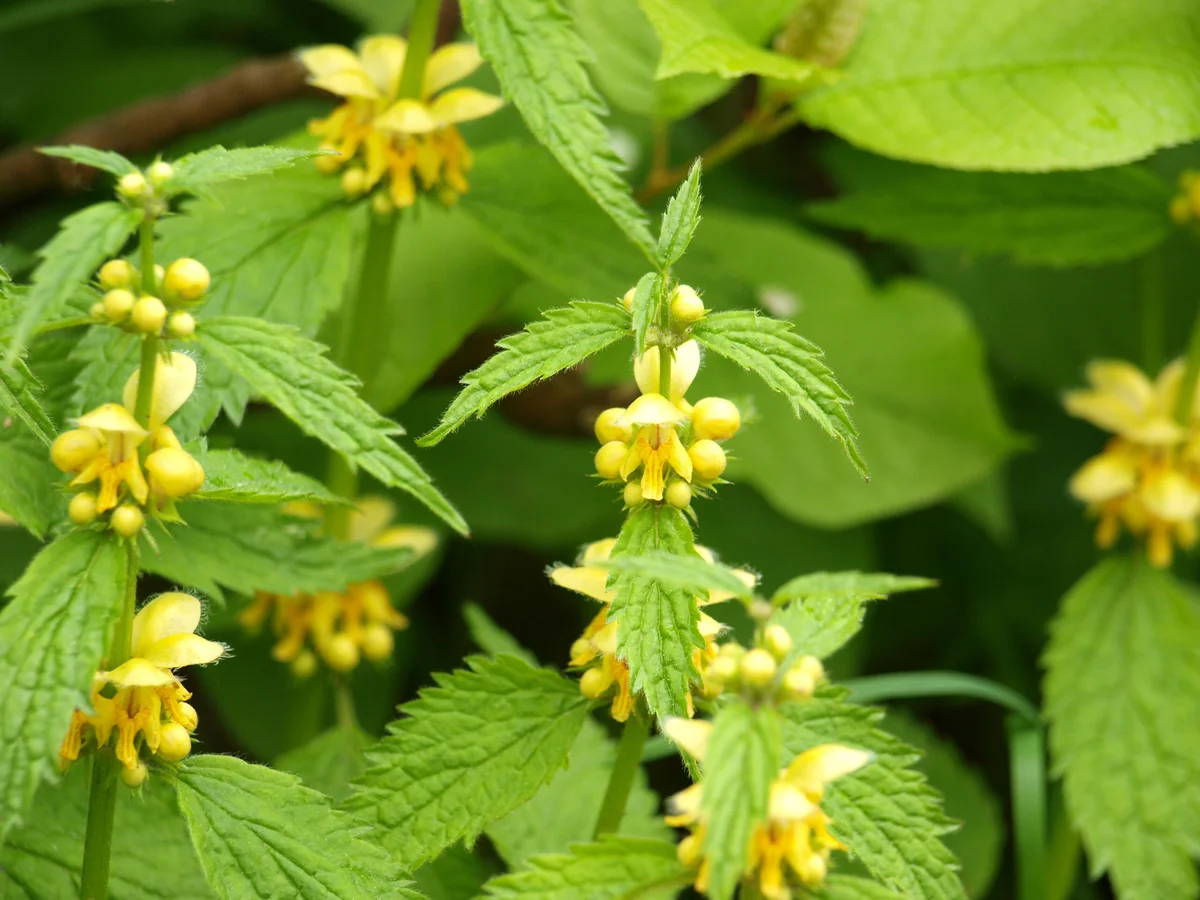
Yellow Archangel – A Valuable Ground Cover for Natural Gardens
Yellow Archangel is a native plant that typically grows in deciduous forests. There, it forms loose colonies and provides colorful accents in spring with its bright yellow flowers. In gardens, it becomes a dependable ground cover that thrives in challenging shaded locations.
Particularly bumblebees and wild bees appreciate its early nectar. Additionally, Yellow Archangel spreads through runners, filling bare soil areas within a few years. It grows most abundantly in rich, slightly moist soils.
Given its more vigorous growth compared to other species, it’s advisable to provide it with ample space or occasionally limit its spread with a spade.
Woodruff – More than Just a Fragrant Plant
Many people know Woodruff primarily as an ingredient for May punch or syrup. However, it is also one of the most attractive ground covers for shady gardens. Its star-shaped leaves create a light green carpet adorned with numerous white flowers in spring.
Woodruff thrives particularly well under deciduous trees, where conditions resemble its natural habitat. During blooming, it attracts small wild bees and hoverflies. After a few years, it establishes a dense colony that effectively suppresses weeds.
Wild Ginger – Evergreen and Remarkably Long-Lived
Wild Ginger is one of the more understated plants, often overlooked for its modest appearance. Yet, its glossy, heart-shaped leaves persist throughout winter, giving shaded areas a maintained appearance even in cold months.
Its flowers are nestled close to the ground and are not particularly noticeable. However, they are still of interest to various insect species. Due to its slow growth, patience is required. Once established, it often remains in the same location for decades.
Particularly Insect-Friendly Ground Covers for Shade
Not all ground covers provide the same benefits for insects. Some species have been cultivated primarily for their dense growth and produce minimal nectar or pollen. To promote a natural garden, it is advisable to prefer flowering species.
Flowering ground covers are especially important in spring. While sunny areas already offer ample food, the supply under trees is often significantly lower. Blooming ground covers fill this gap and assist many insects in starting the new season.
Highly recommended options include:
- Creeping Bugle
- Yellow Archangel
- Woodruff
- Foamflower
- Bishop's Hat
- Waldsteinia
Together, they ensure that new flowers appear from spring into early summer, creating a lively and diverse display that is more vibrant than mere green patches.
Why Native Species are Often the Better Choice
Native plants have evolved alongside our wildlife for thousands of years. Many wild bees rely on specific plant families and find little nourishment from exotic species.
This does not mean that foreign ground covers are inherently unsuitable. Species like Bishop's Hat or Waldsteinia are also frequently visited. However, native plants generally contribute more to biodiversity.
If there is sufficient space, combining native and well-established non-native ground covers can be beneficial.
Evergreen Ground Covers for Shade
Evergreen plants make a significant difference, especially in winter. While many perennials die back completely, these species retain their foliage, ensuring that shaded garden areas do not appear barren.
The following have proven particularly effective:
- Wild Ginger
- Lesser Periwinkle
- Waldsteinia
- Pachysandra
- Creeping Spindle (for semi-shaded areas)
Evergreen ground covers also protect the soil from extreme temperature fluctuations. Rain does not directly hit the earth, reducing soil erosion. At the same time, moisture is retained longer, which is especially noticeable on slopes or under shrubs.
Ground Covers Against Weeds in Shade
Many gardeners seek ground covers primarily for one reason: to reduce weeding. Indeed, densely growing species are among the most effective natural methods for permanently greening bare soil areas.
However, a bit of patience is necessary. In the first year, gaps between plants often remain. Only when they have fully grown together will little to no light reach the ground, making it difficult for many weeds to germinate.
Particularly effective options include:
- Pachysandra
- Waldsteinia
- Creeping Bugle
- Lesser Periwinkle
- Yellow Archangel
The closer you plant them from the outset, the quicker the area will close up.
How Long Does It Take to Achieve a Closed Plant Cover?
Most ground covers require two to three years to form a complete cover. During this time, care and maintenance are essential to ensure they establish themselves well and outcompete weeds effectively.