Fascinating World of Snails – 10 Intriguing Facts
Explore the fascinating world of snails with ten intriguing facts about their biology, behavior, and surprising uses in cosmetics.
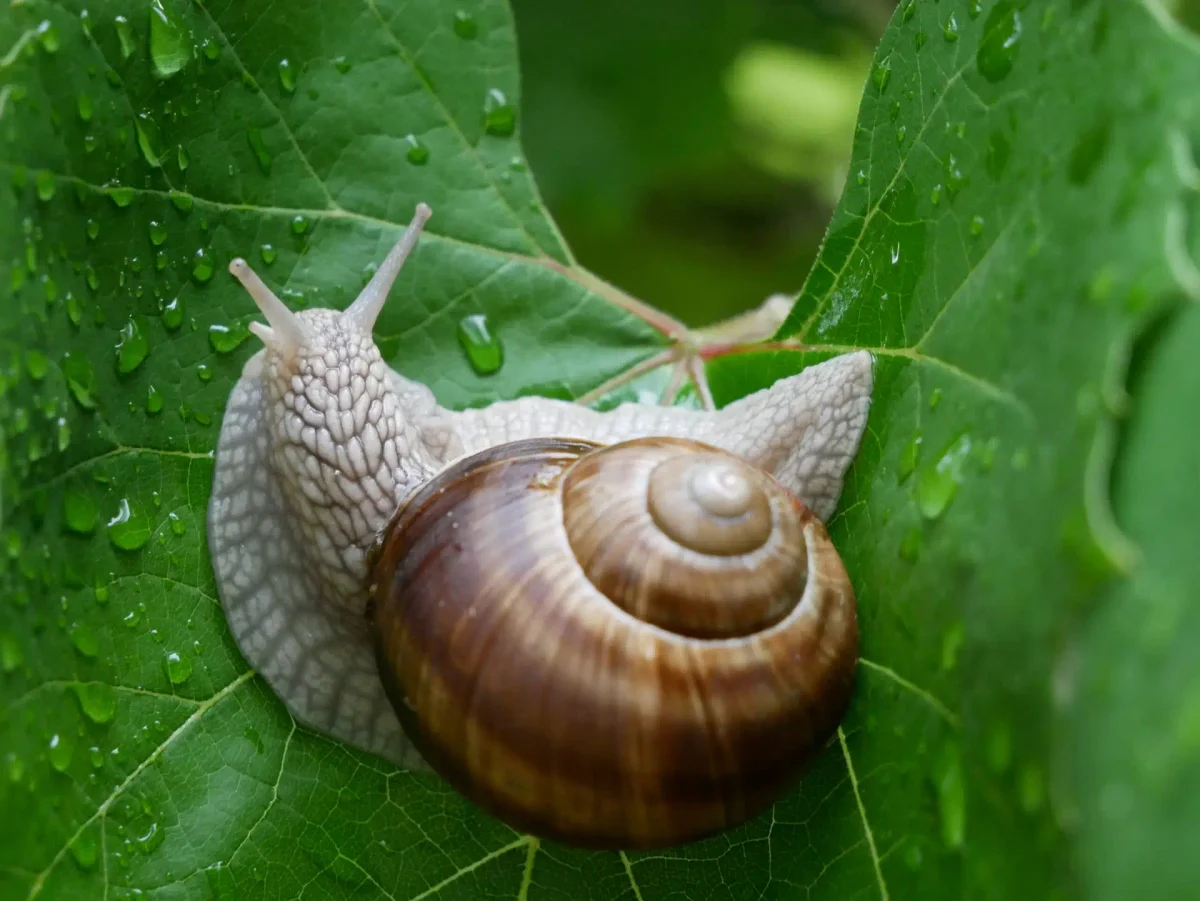
When the topic of snails arises, many gardeners instinctively react with alarm. This is understandable, as snails are often unwelcome guests in flower and vegetable gardens alike. Their voracious appetites can lead to significant damage, with certain plants being completely devoured overnight.
Vegetable favorites include lettuce, zucchini, cucumbers, pumpkins, young cabbage plants, and radishes. In flower beds, they particularly enjoy marigolds, dahlias, calendulas, coneflowers, and young sunflowers. However, not every snail is responsible for this destruction; the Spanish slug, a type of naked snail, is particularly notorious for its garden raids.
Yet, snails are capable of much more than just ruining a salad. Some species possess thousands of tiny teeth, while others can regenerate parts of their tentacles, including their eyes. Here are ten fascinating facts about snails that you might not know.
10 Facts About Snails
Fact 1: Snail Eyes Are Located on Their Tentacles
Snails have tentacles, often referred to as feelers. This nomenclature is fitting, as two of the four tentacles are long, while the other two are short and primarily serve a tactile function. As snails navigate through gardens, you may observe them retracting these tentacles quickly when touched.
The long tentacles, on the other hand, serve a different purpose: their tips house the eyes. These eyes are simple in structure and comparable to lens eyes, but they do not provide sharp vision. Snails can detect light, darkness, movement, and rough shapes, but not fine details or colors.
If a tentacle is injured or lost, certain snail species can regenerate it, including the eye. The elevated position of their eyes helps snails perceive obstacles, light sources, and movements above ground.
Fact 2: Snails Do Not Have a Uniform Gender
Most land snails and many aquatic snails are hermaphrodites, meaning they possess both sperm and eggs. Despite this, they typically require a partner for reproduction. During mating, they exchange sperm, after which both snails can lay fertilized eggs.
Interestingly, many snail species exhibit complex courtship behaviors that involve slime trails, pheromones, and the famous “love dart.” In the case of the garden snail, this is a calcareous spike used during mating to transfer specific substances.
Some species, like certain giant African snails, can even self-fertilize in the absence of a partner, although this is genetically less favorable. Additionally, there are separate-sex snails, including many marine species like cone snails and limpets.
Fact 3: Snails Have Up to 25,000 Tiny Teeth
The mouth of a snail is located just beneath the tentacles and is usually difficult to spot. Even less visible is the radula, a unique rasping tongue that contains between 1,000 and 25,000 microscopic teeth.
These teeth are arranged in rows and vary in number, shape, and arrangement depending on the snail species and its diet. You can think of the radula as a tiny sanding belt or file. It allows snails to scrape their food, which can include plants, algae, carrion, and even other snails. As the tiny teeth wear down over time, they are continuously replaced, with new teeth forming at the back and moving forward, much like a conveyor belt.
Fact 4: Snails Have Impressive Navigation Skills
In addition to their tentacles and eyes, snails employ various methods to orient themselves in their environment:
- Chemical Orientation through Smell and Taste: Snails have highly sensitive sensory cells on their lower tentacles that allow them to detect odors and chemical trails in the soil, on plants, and even in the slime trails of other snails. This helps them locate food, partners, and suitable egg-laying spots.
- Touch and Ground Contact: The entire body of a snail, especially the head and foot, is sensitive to obstacles, surface textures, and ground vibrations, enabling them to feel their way through their surroundings.
- Slime Trail as Memory: Snails can recognize and follow their own slime trails, with some species able to navigate back along them—almost like an inbuilt navigation system.
- Learning and Memory: Snails possess a basic memory, allowing them to remember where food is located or where dangers lurk, sometimes for several days.
Fact 5: Some Snails Have Gills
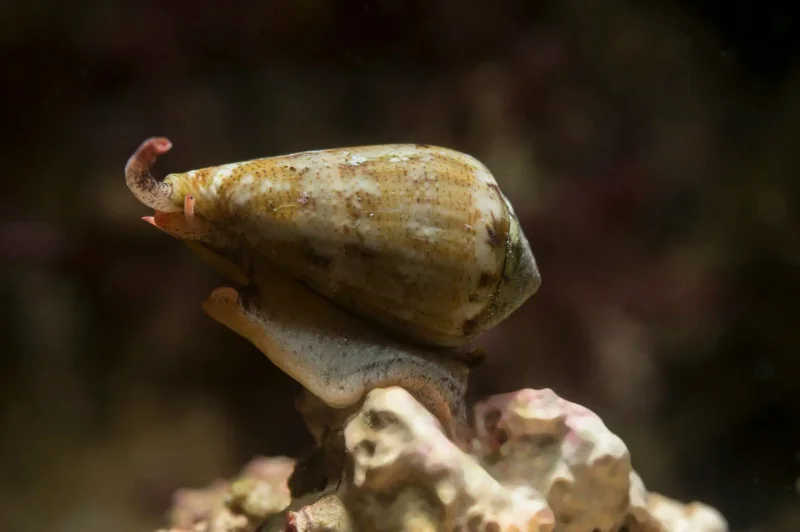
Gills are primarily found in aquatic snails, such as marine snails and various freshwater species. This group includes turret snails, pond snails, limpets, cone snails, and whelks.
The gills are typically located in the mantle cavity, a chamber beneath the shell. Water flows through this cavity, and the gills extract oxygen from it, functioning similarly to fish gills: water moves over the gill filaments, oxygen enters the bloodstream, and waste is expelled into the water.
Interestingly, some freshwater snails possess both a primitive lung and the ability to extract oxygen underwater, allowing them to live submerged while also surfacing for air.
Fact 6: Naked Snails Smell Through Their Skin
Snails with shells can retreat into their homes when threatened, but naked snails lack this protection, making their skin especially vital. Their skin contains chemoreceptors—sensory cells that allow them to perceive chemical substances in their surroundings. These include odors and signals from food sources like decaying plants and fungi, other snails, potential predators, or harmful substances, as well as clues about moist or dry areas.
While the lower tentacles are crucial for the sense of smell, the skin also provides additional environmental information, which is particularly useful if the tentacles are damaged.
Fact 7: Some Snails Are Cannibals
Cannibalism is not uncommon among snails. Certain species consume their fellow snails, their eggs, and weakened or dead individuals. The tiger slug, well-known among gardeners, feeds on mushrooms and decaying plant material but occasionally preys on other naked snails or their eggs, earning it a reputation as a beneficial garden inhabitant.
A notably predatory species is the North American wolf snail. Additionally, giant African snails may eat eggs or young snails when food is scarce. Many marine snails also exhibit predatory behavior, hunting other mollusks or even their own kind.
Fact 8: Snails Enter Hibernation or Summer Dormancy
The winter dormancy of many snails is well-known. Shell snails retreat into their shells during cold weather and can seal the opening with a calcified mucus layer. During this time, their metabolism slows significantly, and they cease feeding, moving very little while their heart rate and respiration decrease markedly. The garden snail is a common example.
Naked snails can also enter a state of hibernation, but they are less protected. Species like the tiger slug or the reddish-brown slug bury themselves deep in the soil or seek shelter under stones, leaves, and dead wood. Unfortunately, many snails do not survive harsh winters.
However, it’s not just cold that prompts snails to pause. In hot and dry summer conditions, they may enter summer dormancy. Shell snails retreat into their shells, while other species seek out moist burrows and sheltered spots. Their metabolism slows down to minimize water loss.
Fact 9: Snails Can Crawl Backwards
Though rare, snails can actually crawl backwards when necessary. They move using their creeping foot, generating wave-like movements that allow them to glide along their slime trail.
If a snail encounters an obstacle or needs to backtrack briefly, it can change direction and crawl backwards. This movement is significantly slower than their usual forward motion and is therefore used only as a last resort.
Fact 10: Snail Slime Is Used in Cosmetics
Snail slime may not be the first thing you think of for skincare, but it has been used in numerous cosmetic products for years. It contains various natural components valued in skincare:
- Allantoin: supports skin regeneration and has a soothing effect.
- Collagen and Elastin: associated with skin elasticity and moisture.
- Glycolic Acid: helps remove dead skin cells and is commonly used in skincare.
- Vitamins A, C, and E: known for their antioxidant properties.
- Hyaluronic Acid: retains moisture.
- Antimicrobial Peptides: can inhibit the growth of certain microorganisms.
As a result, snail slime is found in anti-aging creams, moisturizing serums, acne treatments, scar care products, and various skin gels. Such products are particularly popular in countries like South Korea and Japan, but they are increasingly available in Europe and the United States as well.
Interestingly, the use of snail slime is not a modern invention; it has been utilized since ancient times for skin ailments.