Exploring Medicinal and Wild Plants in Germany
Discover the rich world of medicinal and wild plants in Germany, from their historical uses to modern culinary applications.

Medicinal plants are all around us, often unnoticed in our daily lives. These wild plants, thriving in the cracks of sidewalks, meadows, and overlooked corners, were once integral to everyday life. Today, they frequently go unnoticed or are removed altogether. However, they hold more value than one might initially think: flavor, health benefits, and a wealth of knowledge passed down through generations. Many of these plants not only offer healing properties but are also edible, creating a bridge between nature and culinary practices.
This shift in perception occurs when you take the time to look closer.
In my booklet, you can rediscover 28 forgotten native plants and their magical properties. Download it now.
Medicinal Plants in Germany: Rediscovering Forgotten Knowledge
Germany boasts an impressive variety of medicinal plants. Many of these species are hardy and adaptable, thriving even in small gardens or along roadsides. Historically, they played a significant role in daily life, utilized as teas, food, or simple home remedies. Today, this knowledge seems almost lost, despite its continued existence.
You will soon realize that the goal is not to learn everything anew but rather to recognize what has always been present.
Edible Wild Plants: More Than Just Weeds
Numerous wild plants also serve as edible flowers or provide aromatic leaves suitable for culinary use. What is often deemed a nuisance can actually enhance our meals. Especially in spring, these plants can be transformed into simple, fresh dishes straight from nature. A prime example is the stinging nettle, which grows abundantly and is frequently avoided, despite being one of the most nutrient-rich plants. Its young leaves can be used similarly to spinach and are packed with valuable minerals. Additionally, chickweed, commonly found in gardens, makes for a mild and fresh salad ingredient, showcasing how easily edible wild plants can become a part of our daily lives when recognized.
If you're interested in edible plants, the article on dandelion is also a great fit. It illustrates the versatility of a single plant.
Edible Flowers: Small Details with Big Impact
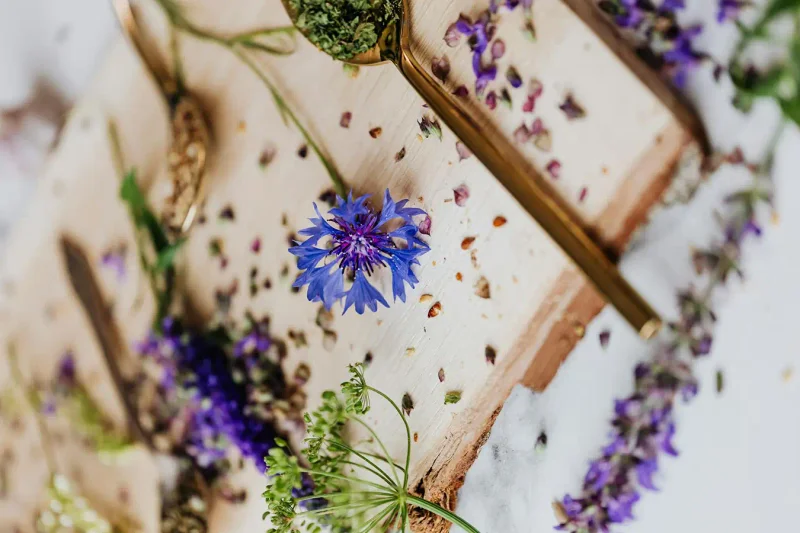
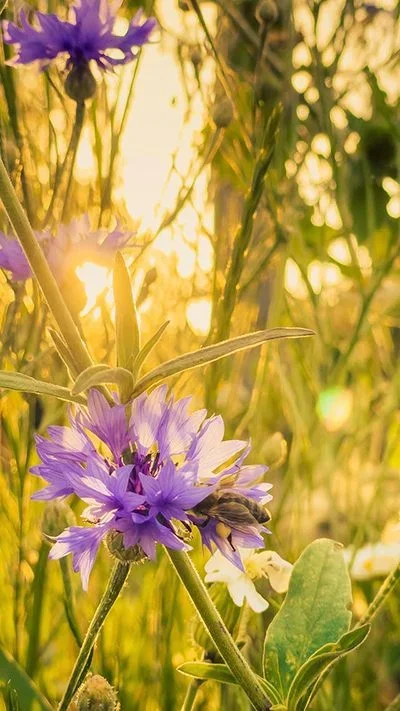
Beyond leaves, edible flowers play a significant role as well. Many blossoms are not only visually appealing but also add delicate flavors to dishes. The cornflower, for instance, is a traditional edible flower that serves beautifully as a natural decoration. The wild mallow, on the other hand, has been used for teas for ages and is known for its soothing effects on mucous membranes. These plants combine aesthetics and health benefits in a subtle manner, and therein lies their uniqueness.
Plantain: One of the Easiest Medicinal Plants
One plant that nearly everyone has seen is plantain. It thrives along paths, in meadows, and even between stones. Traditionally, its leaves are used for minor skin irritations or insect bites. When gently crushed, the plant's sap is released, providing a cooling and soothing effect. Plantain is also brewed as a tea, particularly for coughs or respiratory irritations. This is one of those plants that asks for little attention but gives back much.
The Renewed Importance of Medicinal Plants
In an era where convenience is key, many people are feeling a growing desire to return to simplicity. Medicinal plants epitomize this notion. They are uncomplicated, natural, and readily available, growing right where you are. A scientific overview from the National Library of Medicine indicates that many traditional medicinal plants contain bioactive compounds that can have anti-inflammatory or antioxidant effects. This finding helps explain why such knowledge has persisted—not as a trend, but as lived experience.
If you wish to delve deeper into this topic, I highly recommend the book "The Great Encyclopedia of Medicinal Plants: 550 Plants and Their Uses."
The First Step: Looking Again
You don't need to know everything to start. Often, it suffices to slow down during your next walk and observe more closely.
Perhaps you will suddenly recognize a plant. Maybe a scent will jog your memory. Or you might discover something that had previously gone unnoticed.
And that is where it all begins.
What medicinal plants grow in Germany?
Many, including nettle, plantain, chamomile, and yarrow.
Are wild plants edible?
Many are edible, but not all. Identification is crucial.
What are edible flowers?
Flowers like cornflower or mallow that can be used in cooking.
Are medicinal plants scientifically proven?
Some compounds and effects have been studied, while much is based on traditional knowledge.
Mina
I live in the wild north of Spain, where nature, tradition, and ancient Celtic knowledge shape daily life. Here, I write about wild herbs, gardening moments, good food, and everything that contributes to a quieter life. Morriña is my space for stories about things that grow, fade, and endure—aimed at those curious about a life with more nature, more craftsmanship, and less noise.