Effective and Natural Methods to Eliminate Moles from Your Garden
Explore effective and natural methods for managing moles in your garden. Understand their attraction, differentiate between moles and voles, and learn various repellent strategies.
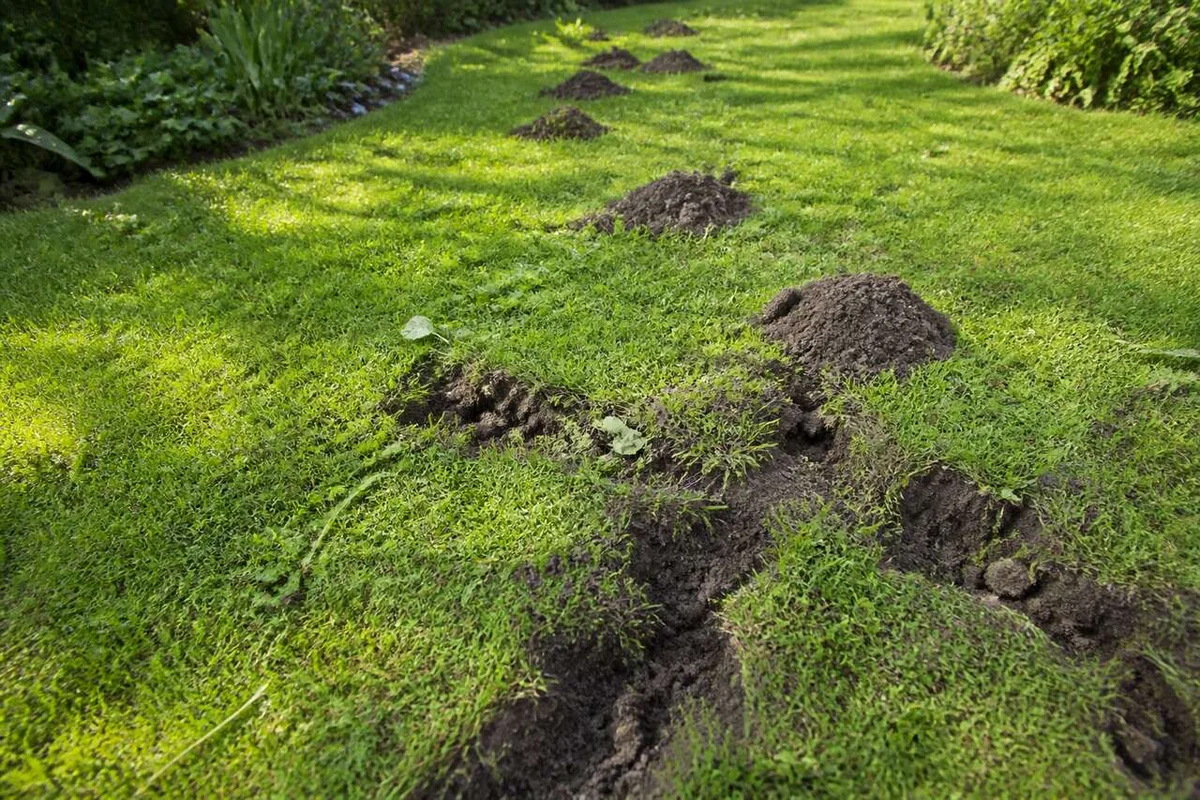
A garden marred by soil mounds, raised flower beds, and disrupted vegetable roots can be a frustrating sight for any gardener. The European mole (Talpa europaea) can quickly take residence, leaving visible signs of its presence within days. Before resorting to quick fixes, it is essential to understand why these creatures are attracted to your property, assess the extent of the damage, and then implement a methodical approach that ranges from gentle interventions to more drastic measures, all while adhering to legal and animal welfare standards.
Key Takeaways
- The presence of moles often indicates soil rich in earthworms and larvae rather than bad luck.
- Confusing molehills with those made by voles can lead to ineffective treatments, as the indicators differ significantly.
- Natural methods (such as odors, repellent plants, and vibrations) are primarily preventive rather than guaranteed eradication solutions.
- Mechanical trapping remains the most reliable and legal radical solution; poisons and fumigants must be handled with care.
- A 48-hour, 7-day, and 30-day action plan allows for adjusting the intensity of the response based on the severity of the invasion.
Understanding What Attracts Moles to Your Garden
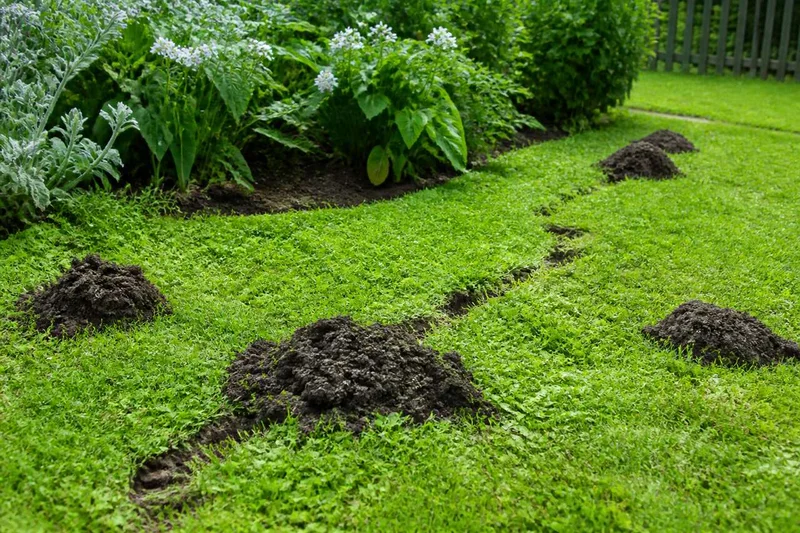
Molehills do not appear by chance. The European mole is a subterranean mammal that spends most of its life underground, digging a network of tunnels for movement and hunting. The visible mounds on the surface are merely the expelled soil from this continuous excavation. If your garden has numerous mounds, it signifies a soil environment that provides ideal conditions: adequate moisture, loose texture, and, most importantly, abundant food sources.
A Soil Rich in Prey
Moles are carnivorous creatures that primarily feed on earthworms, as well as insect larvae found in the upper layers of soil. Therefore, a well-aerated garden with high biological activity serves as an ideal pantry for them. Ironically, a healthy ecological garden is more likely to attract moles than a poor, compacted soil.
Seasonal Considerations
The activity of digging peaks in spring and autumn, times when earthworms rise to the surface due to moisture. This also coincides with their breeding season, explaining the apparent increase in molehills over a few weeks. In summer, during drought conditions, moles dig deeper tunnels to follow residual moisture, resulting in fewer hills but potentially more severe root damage.
Before taking action, it is crucial to determine whether the influx of moles corresponds to a normal seasonal peak or indicates a more permanent establishment, which would necessitate a different strategy. It is also essential to confirm that it is indeed moles and not another underground visitor.
Mole or Vole: Don’t Mistake Your Enemy
Many gardeners implement anti-mole solutions while the actual culprit behind the damage is a vole. This confusion can lead to ineffective treatments and a significant waste of time.
Distinguishing Between the Two Animals
- A molehill forms a distinct conical mound, often isolated, with an invisible entrance hole on the surface.
- Vole tunnels leave broader traces, with visible holes on the surface and paths of chewed grass between entrances.
- Moles do not consume vegetation; chewed roots and bulbs typically indicate vole activity.
- Molehills are generally more uniform in shape and volume compared to the rougher piles created by voles.
Why This Distinction Matters
A scent-based repellent works differently depending on the species targeted, and a mole trap will have no effect on a vole, as their feeding behaviors and pathways differ. Observing the mounds, lightly scratching the soil to identify the structure of the tunnels, and monitoring damage to plants can help diagnose the issue in just a few minutes. Once the identity of the intruder is confirmed, the next question arises: is intervention truly necessary, or can the presence of moles be tolerated?
Should You Really Chase Them Away and What Are the Risks for the Garden?
Moles often have a bad reputation, but their ecological role should be considered before making any drastic decisions.
Actual Nuisances
The mounds of soil can make a lawn less aesthetically pleasing and can seriously hinder mowing, as the mower blade may catch on the disturbed earth. In the vegetable garden, the tunnels disrupt soil structure and can damage the roots of crops, especially those with shallow roots like lettuce or strawberries.
Often Overlooked Benefits
Conversely, moles contribute to soil aeration through their tunnel networks, promoting water infiltration and air circulation in deeper soil layers. As predators, they also help regulate pests like slugs and certain scale insects, which can relieve pressure on other sensitive crops.
Tailoring the Response to Land Use
Tolerance should not be uniform across the entire plot:
- In a decorative lawn, a few molehills can be managed with regular leveling.
- In a vegetable garden or sports field, the impact on roots and soil stability justifies a firmer intervention.
- Near fragile bulb beds, preventive measures can limit damage before it occurs.
Once this assessment is made, the most reasonable approach is to start with the least aggressive methods, focusing on disturbance rather than elimination.
Natural Methods to Drive Them Away: Disturbing Without Toxicity or Myths
Numerous natural tricks circulate, with about ten methods identified in the most recent surveys published in early 2025, but not all exhibit the same level of reliability. The goal remains to disrupt the underground habitat without harming the garden's biodiversity.
Odors and Disturbing Substances
White vinegar, poured into identified tunnels, emits a strong odor intended to disturb the animal, which is sensitive to olfactory stimuli in its confined environment. Baking soda operates on the same principle, altering the atmosphere in the tunnels without physically destroying them. While these solutions are economical, their effects are temporary; moles simply dig new bypass tunnels.
Castor Cake: A Double Function
Castor cake, often used as a nitrogen-rich organic fertilizer, also serves as a repellent against moles, voles, and certain soil insects. It can be spread on the surface or lightly incorporated into the soil near active areas. However, caution is advised: the ricin it contains is toxic, making its use inadvisable in the presence of pets like dogs and cats, as well as nearby non-target species such as hedgehogs, which might accidentally ingest it.
Common Mistakes to Avoid
- Overdosing a natural repellent in hopes of quicker results: this increases risks for non-target wildlife without improving effectiveness.
- Spreading the product only on visible molehills, while the tunnel network extends far beyond.
- Expecting immediate results: these methods often require several days of repeated application to encourage the mole to leave the area.
These olfactory disturbance approaches work well in conjunction with plants and devices specifically designed to repel the animal over time.
Repellents and Devices: What Works, What Disappoints, and How to Test
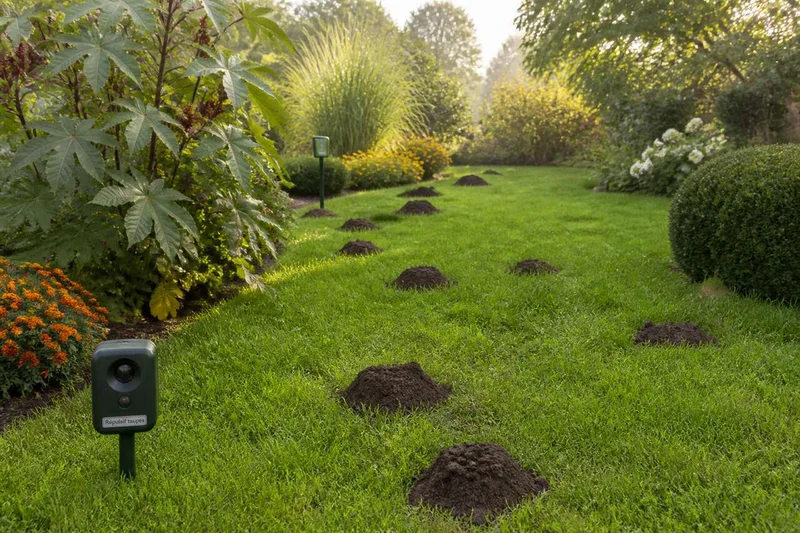
With a wide array of options, including repellent plants, ultrasonic devices, and vibrations, not all solutions are equal, and a simple testing protocol can help evaluate their actual effectiveness on your property before making further investments.
Preferred Repellent Plants
Five plants are frequently cited as effective repellents: elderberry, castor, spurge, imperial fritillary, and incarvillea. Spurge, nicknamed "mole herb," is considered particularly effective, but its white latex is toxic and irritating to skin and eyes, necessitating the use of thick gloves and protective eyewear during handling. The imperial fritillary (Fritillaria imperialis), with its strong and unpleasant odor, acts as a repellent through its bulbs; this principle can also be applied to onion, daffodil, or hyacinth bulbs planted around sensitive areas.
Elderberry and Its Purine
Planting elderberry branches directly into the soil around molehills or near active tunnels creates a recognized repellent effect. A more concentrated version involves preparing an elderberry purine: one kilogram of leaves for ten liters of water, left to ferment for a few days, then poured into molehills and around affected areas.
Garlic and Dog Hair
Placing two cloves of garlic per tunnel, pushed deep into the ground, can disperse a powerful odor throughout the entire underground network. Dog hair, positioned at the entrances of tunnels, is also mentioned as a natural repellent, as the canine scent signals danger to the mole.
Ultrasonic Devices and Vibrations: Verify the Effect Yourself
Ultrasonic or vibration repellent devices, planted in the ground, emit signals that are supposed to be intolerable for the animal. Their effectiveness varies significantly depending on soil type and the density of the tunnel network.
- Solar Mole Repellent - Solar Powered Repellent for Moles, Set of 4 Repellent for Voles - Ultrasonic Repellent - Solar Mole Repellent
【Repel moles and spermophiles】The solar mole repellent is powered by solar panels. Simply place it in sunlight for 4 hours to charge, and it will function for 4 days without needing to replace batteries. Note: Place the solar mole repellent in sunlight for at least 2 days before installation. 【Effective Protection】The mole repellent spikes work in a circular pattern, and each outdoor vole repellent has an effective range of up to 7000 square feet. It is recommended to install the mole repellent every 20 meters across your lawn for optimal performance. The best placement is where moles frequently visit. 【Children and Pets】The solar mole repellent emits low-frequency pulses for 3-4 seconds every 20 seconds, penetrating the soil and driving moles from your yard. It repels moles humanely, preventing them from digging tunnels and causing damage to lawns, vegetable gardens, flowers, and seedling roots. 【Waterproof】The mole repellent is made of high-quality ABS plastic. A dirty panel will reduce the amount of sunlight available to charge the unit's batteries. Keep the solar panel clean by regularly wiping it with a damp cloth. 【Easy to Install】Use a wooden or steel rod to make a pilot hole. Insert the solar mole repellent into the ground and...