Creating a Stunning Winter Garden: Practical Guide and Expert Tips
Discover how to create a stunning winter garden that thrives through the cold months. Explore expert tips on plant selection, indoor conditions, and outdoor considerations.
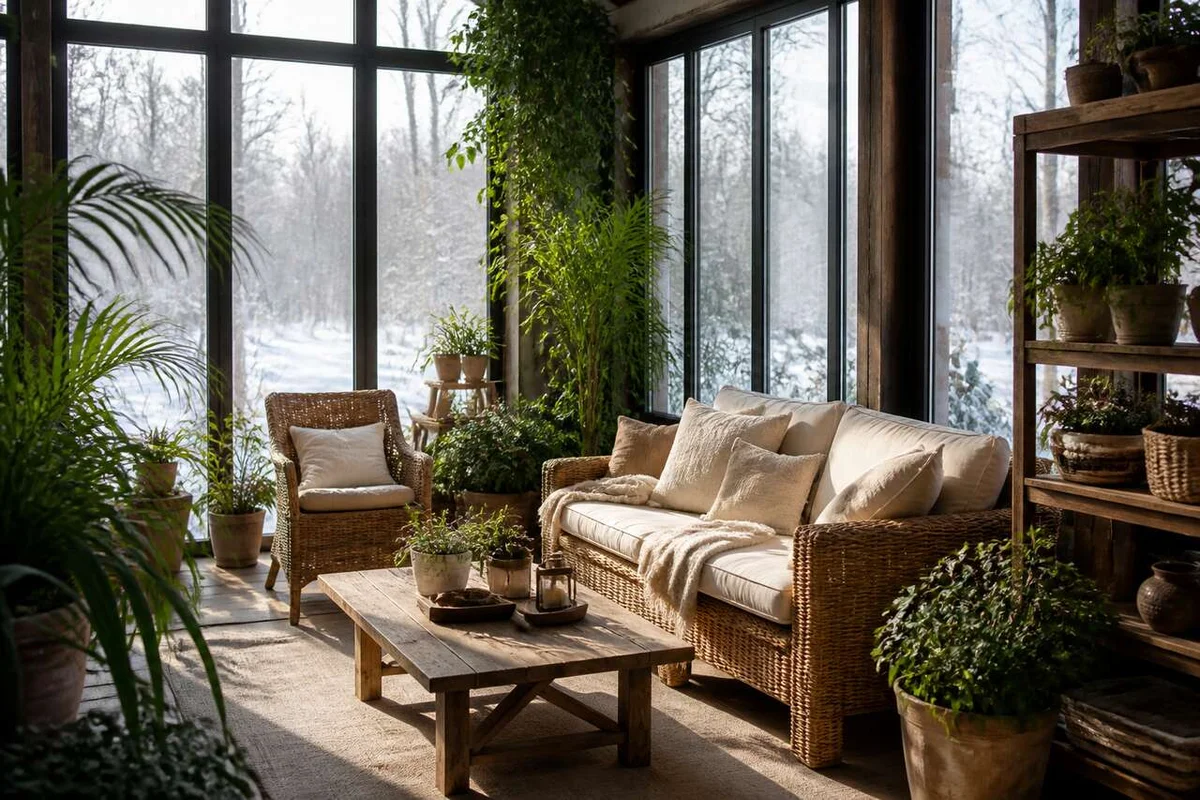
As winter approaches, many gardeners face the challenge of maintaining greenery and vibrancy in their outdoor spaces. Whether it’s a sunlit conservatory, a sheltered balcony, or a bright room often overlooked between November and March, these locations serve as ideal starting points for establishing a winter garden. The goal here is not to create an artificial summer but to design a space where hardy plants, effective insulation, and cohesive decor come together to thrive during the colder months without overspending or losing plants.
Key Takeaways
- A winter garden should be planned differently based on whether it is indoors (like a conservatory or a bright room) or outdoors (such as a terrace or balcony), each with specific frost constraints.
- South-east, south-west, or east-west orientations maximize natural light in winter when the sun hangs low in the sky.
- Maintaining an indoor temperature between 15 to 20°C with controlled humidity is sufficient to limit condensation and diseases.
- Three reliable plants that withstand the cold with minimal maintenance are cyclamen, hellebore, and skimmia.
- Proper drainage, mulching, and winter covers are the best defenses against frost and root rot.
Understanding What a Winter Garden Is
A winter garden typically refers to an indoor garden set up in a glass-enclosed space. The concept is straightforward: harness natural light and plant colors to enjoy a leisure area even as temperatures drop. Unlike a greenhouse, which is primarily for plant cultivation and care, a winter garden is designed to be a living space, often warmed by sunlight rather than an active heating system.
Indoor Winter Gardens
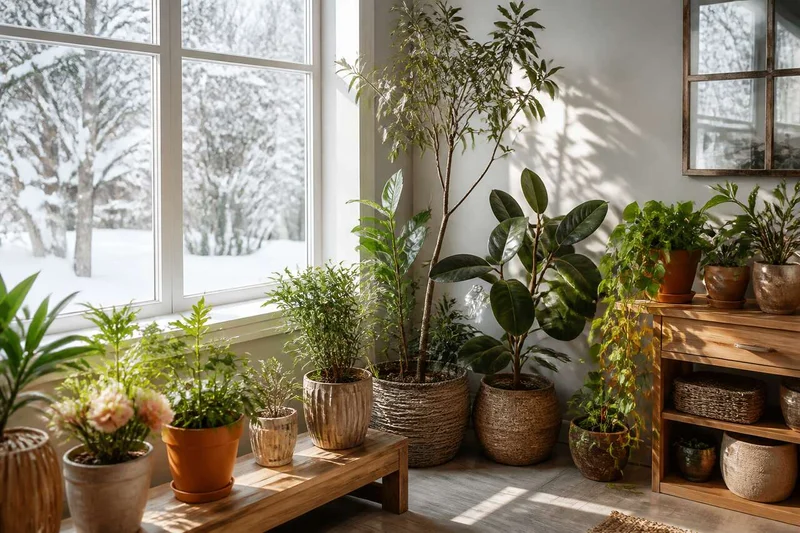
This type of garden can be situated in a conservatory, a covered patio, or simply in the brightest room of the home. The key factor is the availability of natural light and the ability to maintain a stable temperature. For standalone houses, a conservatory is often the preferred option, as it combines brightness with passive solar heating.
Outdoor Winter Gardens
On a terrace or balcony, the approach changes: one must contend with frost, wind, and temperature fluctuations. Here, there is no protective glazing; instead, solutions like winter covers, mulching, and the selection of hardy or evergreen plants come into play. This type of winter garden requires more careful maintenance but is feasible even in small spaces. It is crucial to determine the exact location for this green corner, taking into account light, exposure, and the specific climatic conditions of each home.
Choosing the Right Location: Light, Exposure, and Winter Constraints
In winter, the sun follows a lower trajectory across the sky, which alters the dynamics compared to summer. Opting for intermediate orientations such as south-east, south-west, or east-west is advisable, as they capture the low sun's rays for a longer duration throughout the day without causing excessive overheating, which can occur with a full southern exposure in warmer seasons.
For Houses
A conservatory remains the most suitable location: it is a glass-enclosed space integrated into the home that benefits from both natural light and passive solar heating. The cost of establishing a winter garden in a conservatory generally ranges from €800 to €1,500 per square meter, compared to €1,500 to €3,000 per square meter for a traditional brick extension. This difference is largely due to the amount of glazing involved: up to 80% for a winter garden versus a maximum of 30% for a conventional extension.
For Apartments
If a conservatory is not available, the sunniest room should be prioritized, and adequate ventilation must be considered. A balcony shielded from prevailing winds or a terrace protected by a wall can also host an outdoor winter garden, provided that there are no cold drafts that could harm the evergreen plants.
Once the location has been selected, the next step is to stabilize the internal conditions of this space to prevent temperature and humidity fluctuations that can stress the plants.
Creating a Comfortable Microclimate: Insulation, Ventilation, and Humidity
The ideal indoor temperature for a modern winter garden is between 15 and 20°C, which is significantly lower than the constant 25°C often maintained in traditional warm greenhouses. This difference justifies the use of lightweight insulation solutions rather than a complex heating system.
Insulating Without Altering the Space
- Thermal curtains at glass openings to minimize nighttime heat loss.
- Thick rugs on the floor to prevent cold from rising.
- Sealing and caulking old window frames, which are often responsible for heat loss.
Managing Humidity and Ventilation
A closed glass space can promote condensation, especially when there is a significant temperature difference between the inside and outside. Therefore, it is essential to ventilate daily, even if briefly, to refresh the air and prevent mold growth on the substrate or walls. An additional hygrometer can help monitor ambient humidity and adjust watering accordingly. This careful climate management directly influences the choice of plants that can thrive over time.
Selecting Plants: The Cold-Resistant Trio and Reliable Choices
Three plants stand out for their cold resistance and ease of maintenance, suitable for both indoor winter gardens and outdoor versions on terraces or balconies.
The Cold-Resistant Trio
-
Cyclamen: Known for its generous winter blooms, it tolerates cooler temperatures and adds a splash of color in the heart of the cold season.
-
Hellebore: An evergreen plant often referred to as the "Christmas rose," it blooms as soon as the first frosts arrive and withstands light freezing conditions effortlessly.
-
Skimmia: This evergreen shrub features dense foliage and is valued for its decorative berries that persist throughout the winter.
-
Nouvelles Graines De Fleurs De Cyclamen Persicum Pour Un Beau