Caring for Peegee Hydrangea: A Guide to This Spectacular Panicle Hydrangea
The Peegee hydrangea, known for its generous blooms and exceptional hardiness, transforms gardens into floral spectacles. This guide covers its care, ideal conditions, and maintenance tips.
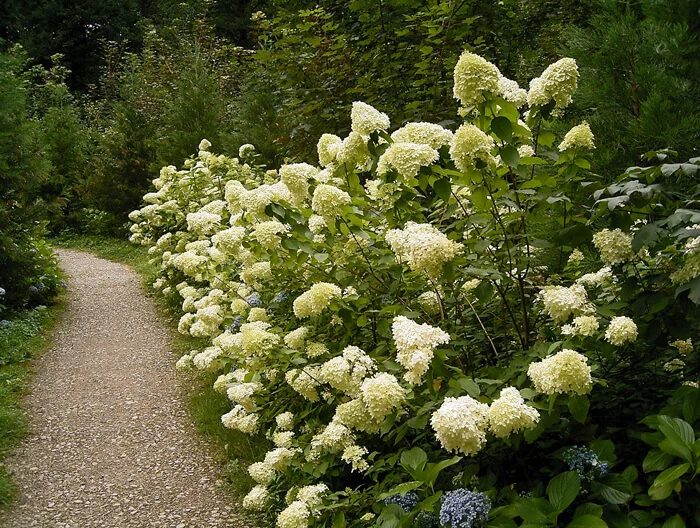
The Hydrangea paniculata ‘Grandiflora’, commonly referred to as Peegee, captivates gardeners with its abundant blooms and remarkable resilience.
This Asian-origin shrub transforms gardens into vibrant floral displays from July to October, showcasing large white panicles that gradually shift to rosy hues in the autumn.
Its remarkable ability to endure extreme temperatures down to -35°C makes it a preferred choice for temperate climates.
The Peegee Hydrangea: A Hardy Shrub with Spectacular Blooms
The Peegee stands out for its impressive size, reaching heights of 3 to 5 meters and a spread of 2 to 4 meters. Its upright and bushy growth habit gives it a majestic presence in any landscape design.
The conical panicles can measure between 20 and 40 cm in length, creating a striking visual impact. The flowering begins with pure white flowers that transition into soft salmon-pink shades, offering a unique color gradient throughout the seasons.
The deciduous foliage features oval leaves measuring 10 to 15 cm long, initially a medium green that transforms into shades of red-orange in the fall. This autumnal change extends the ornamental interest well beyond the flowering period.
With a lifespan exceeding 20 years under optimal conditions, this shrub is a long-term investment for any garden.
Choosing the Ideal Location for Your Peegee Hydrangea
The success of your Peegee largely hinges on selecting the right location. Unlike other hydrangea varieties, it adapts to various conditions while maintaining specific requirements.
Suitable Sunlight/Shade Exposure
Your Peegee thrives in full sun to partial shade. In warmer climates, it’s advisable to shield it from the harsh afternoon sun to prevent water stress.
Too much shade significantly reduces flowering, while optimal sunlight promotes a quicker transition to pink hues. Avoid locations exposed to strong winds, which can damage flower-laden branches.
Recommended Soil Types and Drainage
While the Peegee tolerates a wide range of soils, certain conditions enhance its growth and flowering.
| Soil Characteristic | Optimal Conditions | Tolerance | |---------------------|-------------------|-----------| | pH | Neutral to slightly acidic (6-7) | Not affected by pH unlike macrophylla | | Texture | Moist, rich in humus | Clayey or loamy soils accepted | | Drainage | Well-drained but moist | Add sand or pumice if heavy soil |
Effective drainage is crucial to prevent root rot. In heavy soils, incorporate coarse sand or pumice to improve structure.
Successful Planting Techniques for Peegee
Proper planting ensures optimal rooting and vigorous growth of your shrub. Adhering to best practices at this stage determines long-term success.
Optimal Planting Period
Fall planting between October and November is recommended to encourage rooting before winter. This timing allows the roots to establish gradually without the stress of summer heat.
Spring planting is also possible from March to April but requires more careful watering during the initial growth season.
Detailed Steps for Successful Planting
Careful preparation of the planting hole is essential for your Peegee’s establishment.
- Dig a hole measuring 50x50x50 cm, which should be twice as wide as the root ball.
- Prepare a mix of one-third potting soil, one-third compost, and one-third garden soil.
- Position the plant so that the collar is visible, 5 to 10 cm above soil level.
- Fill in with the prepared mix, lightly compacting it.
- Water thoroughly with 20 to 30 liters of water per plant.
- Apply a mulch layer 10 cm thick using bark or wood chips.
Spacing and Companion Planting
Maintain a spacing of 1.5 to 2 meters between each plant to allow for harmonious development. This distance prevents root competition and ensures good air circulation.
Successful companions include astilbes for complementary blooms, daylilies for contrasting foliage, and climbing roses for creating stunning vertical compositions.
Watering and Hydration for Peegee Hydrangea
Water management is a fundamental aspect of maintaining your Peegee. Its water needs change depending on the plant's age and climatic conditions.
Water Needs by Plant Age
During its first year, your young Peegee requires 20 to 30 liters of water twice a week, even during rainy weather. This consistent irrigation supports root establishment.
Once established, the adult shrub consumes between 2000 and 3000 liters of water per square meter in dry conditions, highlighting its significant water needs.
Watering Frequency by Season
Adjust watering frequency according to seasonal conditions to keep the soil consistently moist without over-saturation.
- Spring: Weekly watering of 15 to 20 liters depending on rainfall.
- Summer: Two waterings per week of 10 to 20 liters each during dry spells.
- Autumn: Gradually reduce based on natural rainfall.
- Winter: Completely stop unless there is prolonged winter drought.
Techniques for Moisture Conservation
Permanent mulching is the most effective method for retaining soil moisture. A layer of 5 to 10 cm of pine bark or wood chips significantly reduces evaporation.
Avoid overhead watering, which can promote fungal diseases. Instead, opt for slow, deep watering at the base, ensuring optimal penetration into the root system.
Seasonal Pruning and Maintenance
Pruning the Peegee follows specific guidelines related to its flowering on current wood. A methodical approach ensures abundant blooms and a balanced shape.
Pruning Methods Based on Goals
Prune in late winter, between February and March, before bud break. This timing minimizes the risk of frost damage to new shoots.
Start by removing dead, weak, or poorly oriented branches at their base. Then, shorten vigorous branches by one-third to one-half of their length, cutting above 2 to 3 well-formed buds.
Maintain a skeleton of 5 to 10 main branches to uphold the shrub's structure. A light pruning at the end of flowering, which involves removing faded flowers, stimulates the formation of new buds.
Annual Maintenance Schedule
Organize your interventions according to a precise calendar to optimize the health and flowering of your Peegee.
| Period | Actions to Take | Frequency | |------------------|-------------------------------------------|-----------| | February-March | Main pruning, cleaning the base | Annual | | March-April | Spring fertilization, renewing mulch | Annual | | June | Potassium fertilizer application, pest monitoring | Annual | | September-October | Remove faded flowers, add compost | Annual | | November | Winter protection for young plants | As needed |
Fertilization Tailored to Peegee's Needs
A balanced fertilization program supports annual growth of 50 to 80 cm and the generous flowering of your shrub.
In spring, apply a universal or hydrangea-specific fertilizer with an NPK ratio of 10-10-10, at a rate of 100 grams per square meter. In June, boost flowering with a potassium-rich NPK 5-10-20 fertilizer.
Autumn is the ideal time to enrich the soil with well-decomposed compost or manure. Limit to 2 or 3 applications per year to prevent excess nitrogen, which could promote foliage growth at the expense of flowers.
Disease and Pest Prevention and Treatment
Despite its hardiness, the Peegee can be susceptible to certain health issues. Regular monitoring and preventive measures significantly reduce risks.
Common Problems and Symptoms
Chlorosis appears as yellowing of leaves between the veins, usually caused by excessive moisture or poorly drained soil. Powdery mildew manifests as white powder on the foliage, particularly in warm, humid conditions.
Black spots, caused by the fungus Septoria, create brown lesions on leaves. Adult weevils create characteristic notches on leaf edges, while their larvae attack the roots.
Natural Solutions and Biological Treatments
Treat chlorosis with iron chelates applied in spring, while improving soil drainage. For powdery mildew, prioritize sulfur treatments and maintain watering strictly at the roots.
- Copper decoction for black spots.
- Beneficial nematodes against weevil larvae.
- Black soap or horsetail juice against aphids.
- Pheromone traps for adult weevils.
Effective Preventive Measures
Prevention remains the best strategy for keeping your Peegee healthy. Ensure good air circulation around the shrub by adhering to planting distances.
Avoid excess stagnant water and wetting the foliage during watering. Alternate fertilizer types to prevent nutritional imbalances that weaken the plant's natural defenses.
Alternative Varieties and Landscape Uses
The Peegee belongs to a rich family of Hydrangea paniculata varieties, each offering unique ornamental features. This diversity allows for tailored selections based on garden constraints and goals.
Comparison with Other Panicle Hydrangea Varieties
The Peegee ‘Grandiflora’ remains the classic reference with its large panicles, but other cultivars provide interesting alternatives. ‘Limelight’ enchants with its unique green-yellow flowers, while ‘Pink Diamond’ develops pink shades earlier.
‘Vanille Fraise’ offers a particularly decorative white-pink gradient, and ‘Early Emotion’ suits smaller spaces with its compact height of 1.5 meters. These varieties share the same cultural requirements as traditional Peegee.
Uses in Borders, Hedges, or as Stand-Alone Plants
Incorporate the Peegee into a border to create a spectacular focal point, where its imposing panicles dominate floral compositions. When used in hedges, plant it in a line to form a natural, flowering barrier, with a spacing of 1.5 to 2 meters ensuring dense coverage.
Utilize it as a stand-alone specimen to highlight its upright and bushy silhouette, especially effective in medium-sized gardens where it attracts attention. Pair it with plants like astilbes or daylilies to enrich surrounding textures and colors.
Container Cultivation and Specific Constraints
Container cultivation suits the Peegee in limited spaces, provided a pot of at least 50 liters is used to accommodate its root system. Repot every two years to refresh the substrate and promote healthy growth.
Water daily during hot weather, as pots dry out faster than ground soil. Protect potted plants from severe frosts with a winter cover, and ensure optimal drainage to prevent water accumulation.