A New Perspective on Plants: From Background to Vitality
This article explores the profound relationship between humans and plants, emphasizing the importance of recognizing their vital roles in our ecosystems and the need to shift our perspective from seeing them merely as background to appreciating their complexity and value.
For a long time, plants were as ubiquitous to me as water is to a fish. They surrounded me in forests, fields, along roads, in gardens, and orchards, shaping the landscape of my life. They provided food, shade, coolness, shelter, timber, and beauty. Yet, perhaps because they were so plentiful, I failed to truly see them.
They were so close that they became invisible.
I would glance at the greenery—forests, trees, gardens, firewood—but I did not recognize plants for what they truly are: living, complex, generous, and indispensable beings.
This may seem strange, especially coming from someone who now works with gardens, plants, biodiversity, and sustainability. However, it was indeed my reality for many years; plants were a part of my life without me grasping their profound significance.
Then, one day, everything changed.
It wasn't an epiphany or a dramatic revelation, but rather a gradual transformation, akin to the slow, steady growth of plants themselves.
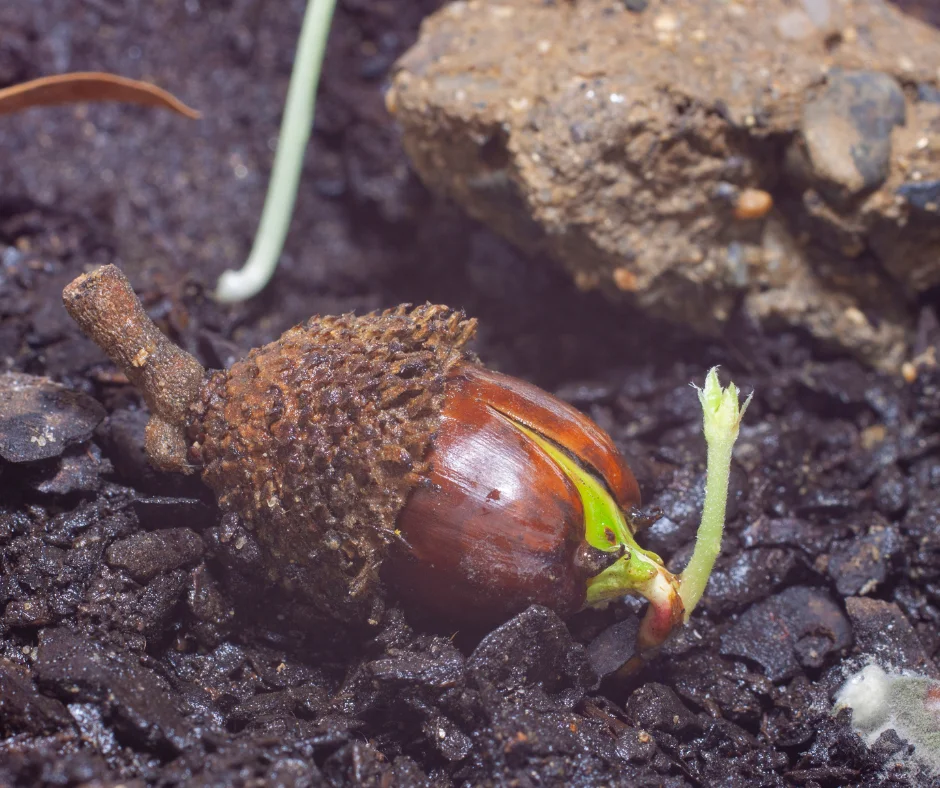
It all began with a seed.
The Blindness to Vegetation: When Green Becomes Background
Today, I understand that our difficulty in truly seeing plants has a name: plant blindness, or more recently, a disparity in awareness towards plants. In simple terms, it means that humans often notice animals more easily than plants. For instance, when viewing a photograph of a jungle, our attention is likely drawn to a monkey, a parrot, a snake, or a hidden feline among the leaves, while the vast green backdrop that sustains these creatures risks fading into obscurity.
Yet, without that plant world, there would be little to observe.
This phenomenon has always struck me as a poignant reflection of our distracted relationship with plants. Animals move, they look at us, they make sounds, and they resemble us more closely. In contrast, plants appear stationary. They do not demand attention noisily; they do not flee, growl, chase us, or gaze back with eyes.
Thus, they often become mere scenery.
Background.
Generic green.
When something becomes background, we risk losing sight of its value.
I have experienced this blindness very concretely—not as a scholar or an external observer, but from within, through my hands, my back, my labor, and my hard work.
For years, I worked as a lumberjack.
When Trees Were Measured in Quintals
Being a lumberjack fosters a physical relationship with the forest. You feel it in the morning chill, the sound of tools, the weight of firewood, and the exhaustion of a long day. It is a tough, ancient job filled with practical gestures and knowledge that cannot be learned from books.
Thus, I wish to discuss it with the seriousness it deserves.
The forest can and must be managed. Timber is a resource, and well-executed work can hold dignity, value, and utility. However, the crux of the matter is that for a long time, I viewed trees primarily through a specific lens: that of material.
A tree was often, if not primarily, wood.
When I looked at a forest, my thoughts would turn to the quintals I could harvest, the labor required to cut, move, load, and sell. I assessed the trunk, its diameter, and its yield. I tried to gauge how much material was contained within, how much effort would be needed, and what economic value could be derived.
This perspective was functional.
Useful for work, undoubtedly.
But limited.
While I recognized the weight of the wood, I failed to appreciate the weight of life.
A standing tree is not merely a trunk that can someday become lumber; it is already so much more. While it lives, it builds relationships, alters the climate around it, protects the soil, shelters animals, nourishes insects, communicates with fungi and microorganisms, retains water, offers shade, creates landscapes, and gives identity to a place.
These are all contributions that cannot be easily quantified in terms of quintals.
That is precisely the point.
For a long time, I could measure what I could sell, but I did not yet recognize all that lacked immediate monetary value. I saw the extracted value, not the inherent value. I understood what a tree could become after being cut down, but I did not sufficiently appreciate what it was while alive.
Today, this realization prompts much reflection.
Not out of sterile guilt, as the past must be understood rather than used for self-flagellation. But it does make me think about how our perspective can be shaped by habit, work, culture, need, and the language we use.
If you refer to a plant as "material," you end up treating it as such.
If you call land a "surface," you forget that beneath it lies a world.
If you label a lawn as "green," you risk neglecting the life within it.
Words may not be everything, but they do shape our perspective.
At a certain point, my perspective began to shift.
The Seed That Opened My Eyes
Interestingly, it was not the grand trees that first taught me to see plants differently.
It was the vegetables.
More specifically, it was the seeds.
When you start to cultivate a vegetable from a seed, something remarkable happens. Initially, you hold almost nothing—just a small, dry, silent point. You look at it and struggle to believe that an entire plant is already contained within.
Yet, it is.
You place that seed in the soil, cover it, water it, and then you wait. For several days, it seems as though nothing occurs. The surface remains still, mute, almost indifferent. Then one morning, you look closely and notice a slight swelling, a tiny crack, a barely noticeable sign. The earth lifts, and a green curve begins to push toward the light.
This is a small scene.
Almost insignificant, if viewed carelessly.
But if you pause and truly observe, within that scene lies a world.
Because that seed does not require you to explain how to become a plant. You do not need to teach it where to send its roots, how to seek light, or when to open its first leaves. You can create the conditions, assist, protect, and minimize mistakes. But the force driving that process is not you.
This realization was monumental for me.
It made me understand that cultivating does not mean commanding; it means accompanying.
And this shift changes everything.
Until that moment, I often viewed plants based on their utility. From then on, I began to see them through the lens of their vitality. This is a significant difference.
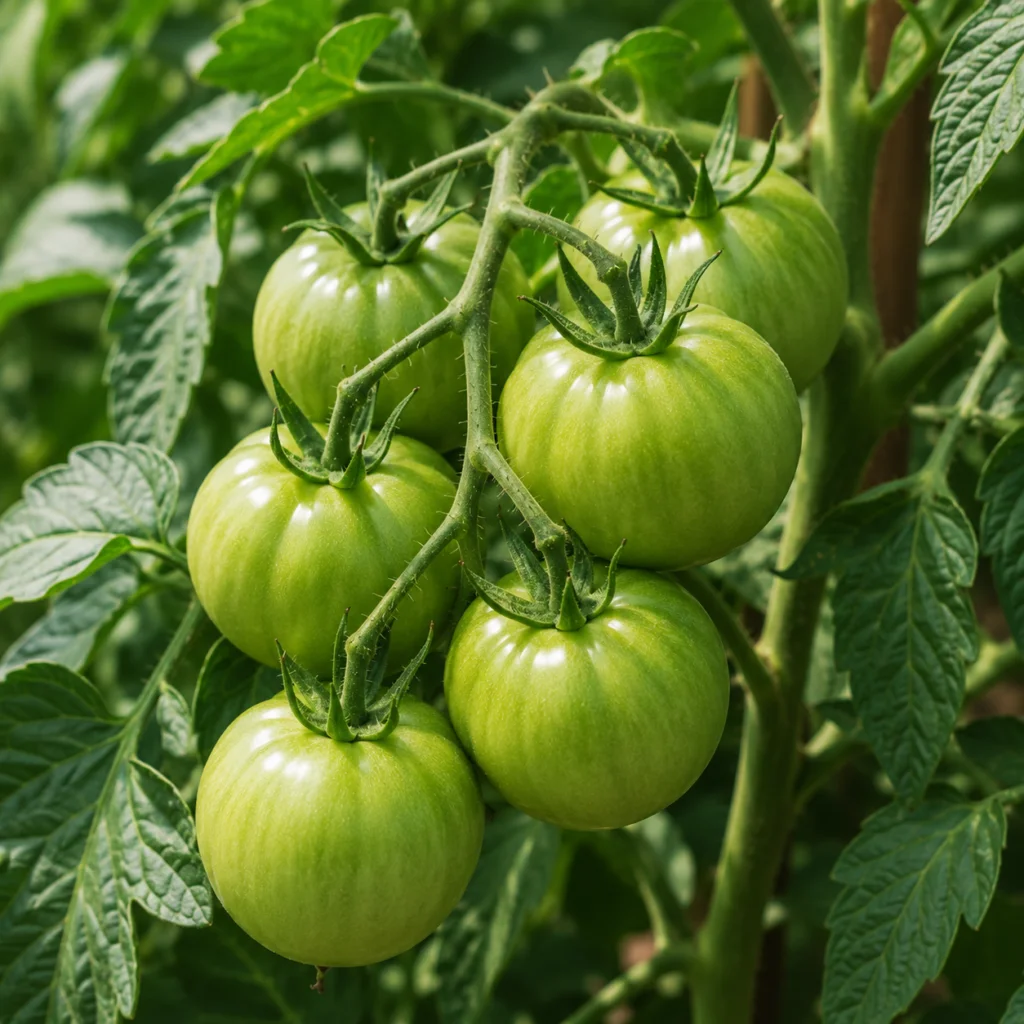
A tomato sprouting from a seed was no longer just a future crate of fruits; it was a life taking shape before my eyes. A life distinct from mine, certainly, distant from my human way of feeling and thinking, but no less deserving of attention.
In fact, perhaps precisely because it was so different, it compelled me to broaden my perspective.
From Generic Green to Living Entities
Gradually, the plants ceased to be merely "green."
This term, "green," can be convenient at times, but it can also become a trap. We use the term "green" to discuss gardens, forests, parks, flower beds, hedges, trees, lawns, and orchards. Everything is lumped together under one word, flattened into a color.
But plants are not generic green.
They are diverse lives.
As you begin to observe them, you realize that each has its own way of existing in the world. Some occupy space assertively; others appear more discreet. Some seek support; others spread low across the ground. Some withstand heat with small, tough, silver, fragrant leaves, while others require fresh, rich soil. Some attract insects, while others deter them. Some protect the soil, while others prepare better conditions for those who will come after.
At that point, you no longer look at a plant merely to judge whether it is beautiful or ugly, useful or useless, neat or messy.
You begin to ask what role it plays.
And this question transforms the garden, the orchard, the forest, and even the edges of a road.
Because if a plant has a role, then it is no longer a mere object. It is no longer decoration. It is no longer just a splash of color. It is part of a living system.
From here, at least for me, a different understanding of gardening emerged.
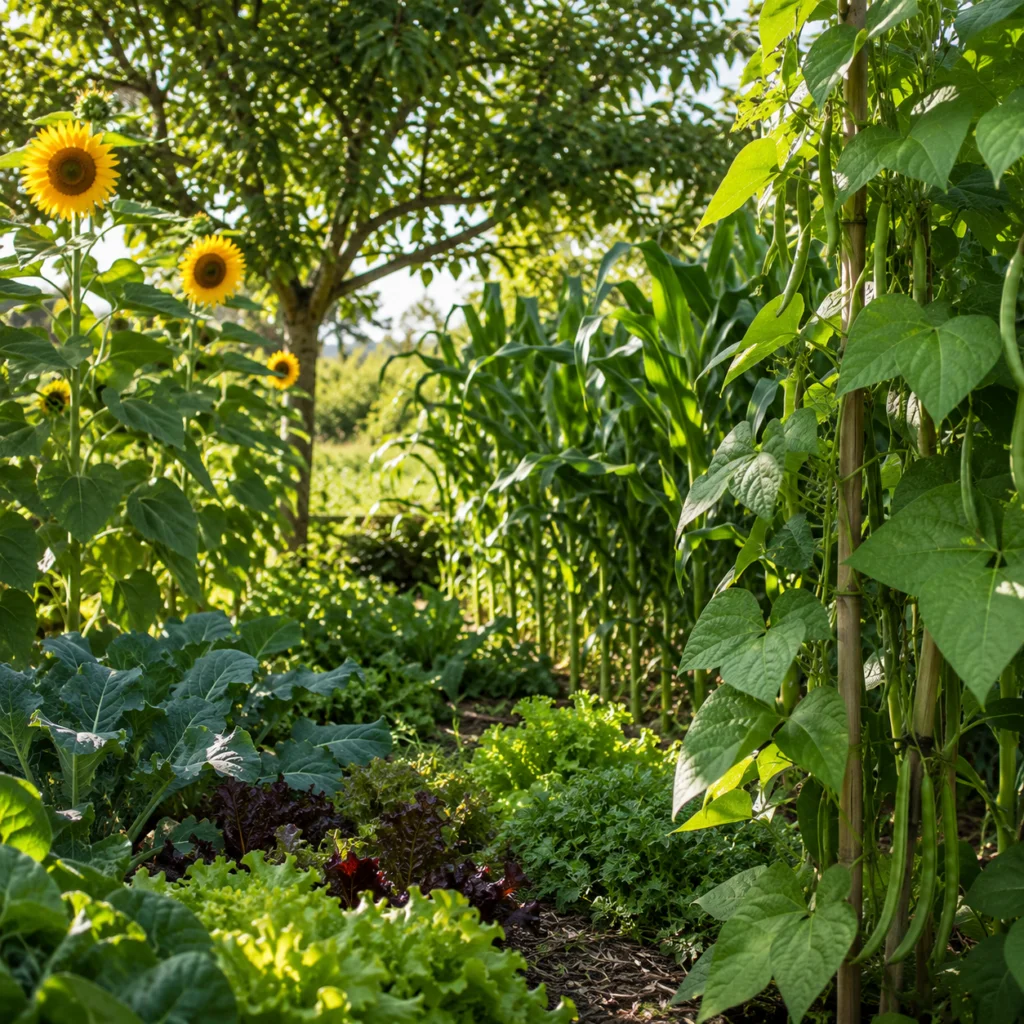
A garden is not a backdrop to be kept tidy and static. It is a place that changes, breathes, hosts, consumes or conserves resources, creates or destroys biodiversity. It can be a problem or a small solution. It depends on how we conceive it, how we build it, and how we manage it.
And it all starts with our perspective.
Before technique.
Before the choice of plants.
Before the irrigation system, mulching, lawn, borders, and pruning.
First, we must see.
The Silent Life
I believe one of the reasons we underestimate plants is that their life does not resemble ours.
We are drawn to what moves quickly, what emits clear signals, what we can interpret with our codes. A wagging dog is immediately understood. A hissing cat too. A singing bird hits us directly. A galloping horse stirs our emotions.
In contrast, a plant operates on a different timeline.
And often, we are too impatient to notice.
A plant moves, but not in the way we expect. It seeks light, explores the soil, orients its leaves, opens and closes stomata, reacts to heat, cold, drought, attacks, and injuries. It collaborates with fungi and microorganisms, produces substances, builds tissues, accumulates energy, and communicates through chemical signals.
Yet it does all this without spectacle.
In a society accustomed to showmanship, what remains unexhibited risks being mistaken for passivity.
But passive plants do not exist.
They are silent, which is something entirely different.
Perhaps we should learn from this: not all life screams. Not everything that matters demands attention loudly. Some of the most important events unfold quietly, subtly, away from our haste.
Like a root growing in the dark.
Like a seed opening.
Like a tree that, year after year, alters the climate of a place without anyone saying thank you.
The Value We Cannot Measure
When I reflect on the trees I once viewed solely as quintals of wood, I realize this issue extends beyond the forest. It touches on how we have learned to assign value to things.
We tend to recognize what we can weigh, sell, buy, or immediately transform into utility. The rest, if it does not disappear, still takes a backseat.
A cut tree has a more evident price than a living one.
This is absurd, if you think about it.
Or at least, it is absurd if we view the matter with broader eyes. Because a living tree works every day. It cools, shades, protects, retains, shelters, and connects. It enhances a place even when no one notices. Sometimes, it increases the value of a home, makes a street more livable, improves the air quality in a square, or gives memory to a garden.
Yet many of these contributions do not appear on a receipt.
They are not easily invoiced.
You cannot load them onto a truck.
You cannot sell them by the quintal.
Perhaps this is why we forget them.
But forgetting does not diminish their worth. It merely indicates that our measuring system is impoverished.
Very impoverished.
This is why I believe that discussing plants, gardens, and sustainability is not just a technical issue. It is also a cultural one. We must learn to recognize what we cannot measure, what does not shout, what quietly breathes life into our world.